

/images/ppid_a911dc6a-image-177866786671453268.webp)
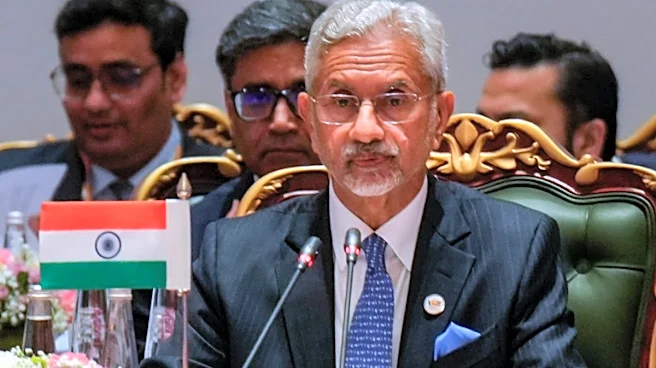
India on Thursday underlined the need for stronger co-operation among BRICS nations amid rising geopolitical tensions and economic uncertainty, with External Affairs Minister S Jaishankar asserting that the grouping is expected to play a “constructive and stabilising role” in an increasingly volatile world order.
Addressing the BRICS Foreign Ministers’ meeting, Jaishankar said the gathering comes “at a time of considerable flux in international relations”, marked by “ongoing conflicts, economic uncertainties, and challenges in trade, technology, and climate”.
“There is a growing expectation, particularly from emerging markets and developing countries, that BRICS will play a constructive and stabilising role,” he said in his welcome remarks.
The
minister stressed that the changing global environment had made dialogue and convergence among member countries more important than ever.
“Gathering together for the BRICS meeting is, however, a special occasion. It allows us to exchange perspectives and encourages us to develop convergences. And in this complicated and uncertain world, that is of ever greater importance,” Jaishankar said.
Highlighting India’s priorities as the BRICS Chair, Jaishankar said New Delhi had already organised over 80 BRICS meetings with “active participation from all members”, adding that the engagements had strengthened co-operation across sectors.
‘Essential BRICS Members Appreciate Group’s Consensus’
He also pointed to ongoing efforts aimed at expanding the grouping’s institutional framework and integrating new members.
“It is essential for the smooth advancement of BRICS that later members fully appreciate and subscribe to the BRICS’ consensus on various important issues,” he said.
Focusing on key global challenges, Jaishankar said development concerns remained central for several countries grappling with “energy, food, fertiliser and health security, as also access to finance”.
Also Read: Iran Welcomes India’s Peace Push, Says One BRICS Nation Blocking Consensus On War
“BRICS can help them respond more effectively,” he added.
The External Affairs Minister also stressed the importance of economic resilience through “reliable supply chains and diversified markets”, while calling climate change a “pressing concern”.
“Our discussions must advance sustainable development while upholding the principles of equity and common but differentiated responsibilities,” he said.
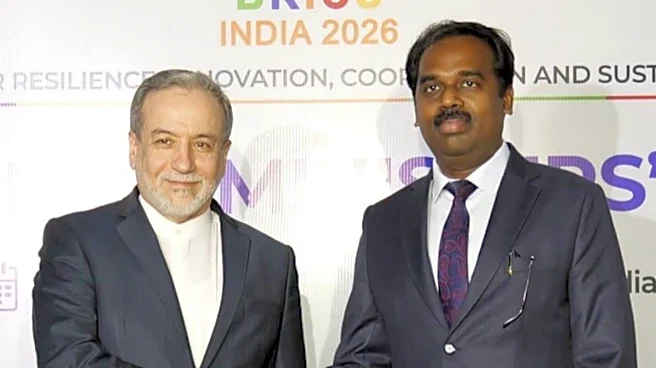
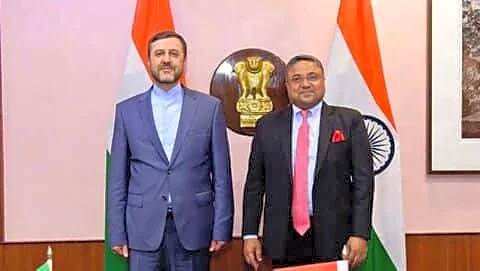
The remarks came a day after Iran’s Deputy Foreign Minister Kazem Gharibabadi said that one BRICS member country has prevented the group from reaching a consensus over the ongoing US-Iran war, making an apparent reference to the United Arab Emirates.
The group has till now, not been able to build a consensus position on the US-Iran war.
‘Conflicts Underlined Importance Of Dialogue, Diplomacy’
On peace and security, Jaishankar said recent conflicts had reinforced the importance of diplomacy and dialogue.
“Peace and security issues remain central to the global order. Recent conflicts only underline the importance of dialogue and diplomacy. There is also a deeply shared interest in strengthening cooperation against terrorism,” he said.
Jaishankar concluded by urging member nations to engage in “an open and constructive exchange” and contribute towards “meaningful outcomes” during the discussions.
BRICS, which originally comprised Brazil, Russia, India, China, and South Africa, expanded in 2024 and included Egypt, Ethiopia, Iran and the United Arab Emirates. Indonesia also joined the group in 2025.
/images/ppid_59c68470-image-177874005761818117.webp)





/images/ppid_a911dc6a-image-177860284108364200.webp)