

/images/ppid_a911dc6a-image-177062202898221219.webp)
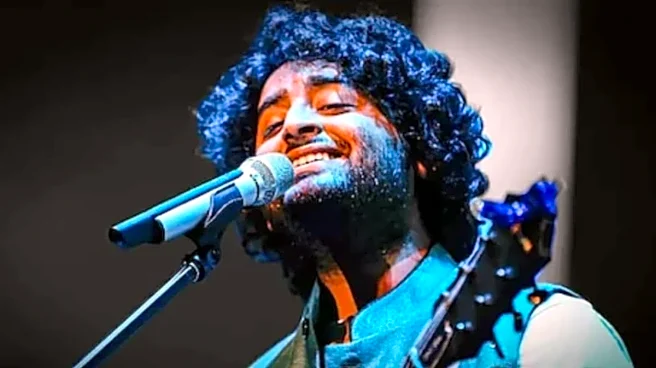
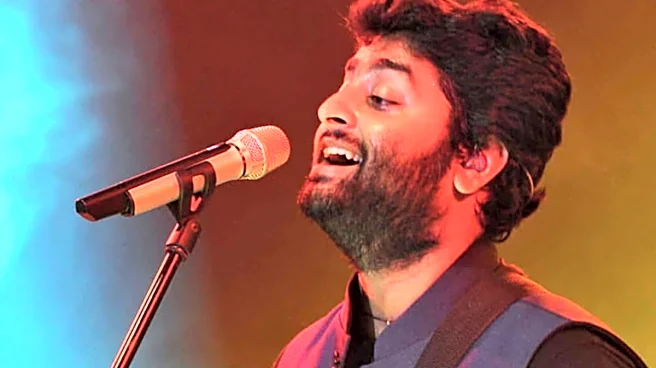
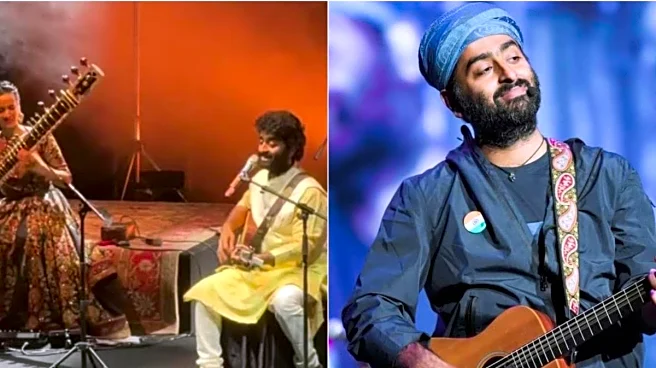
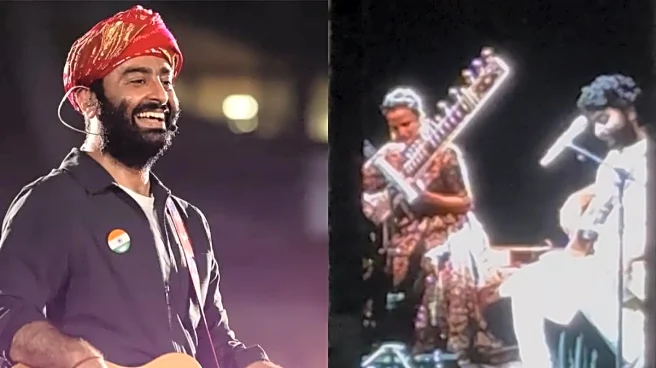
Arijit Singh’s decision to step away from film playback singing arrives without drama or defiance. A brief acknowledgement that the journey has been fulfilling—and that it is, for him, complete. In an industry addicted to spectacle, the understatement is striking. And misleading. Because while the decision itself is personal, the conditions that made it inevitable are structural. Arijit’s exit is less an ending than a symptom—of how Hindi film music has slowly stopped asking singers to feel anything specific at all.
At some point, Hindi film music stopped asking singers to feel something specific. This is not nostalgia disguised as criticism, but an observation about how systems evolve. Songs were once written as emotional labour—love articulated
as vulnerability, grief as melodic restraint, longing as suspended breath. A singer’s job was not merely to sound pleasant but to carry interior states that cinema itself could not always articulate.
For a long time now, songs have been written as functions—dance numbers. Lounge track. Festival anthem. Breakup vibe.
These are not emotions. They are categories—designed to travel across trailers, reels, playlists, and algorithmic moods. The singer’s role, accordingly, has shifted from emotional interpreter to sonic compliance officer. The task is not to deepen a feeling but to fit cleanly into a pre-defined aesthetic box. Once music started getting organised this way, a crucial thing happened quietly: emotional authorship disappeared.
This is often blamed on corporates, streaming platforms, or marketing teams, but that explanation is too convenient. Non-artists have always controlled Hindi film music. Producers once prided themselves on their “music sense.” Gulshan Kumar could make or break careers overnight. Film music has always been an industry nearly as long as it has been an art. What changed wasn’t control—it was intent.
Earlier, even commercial instincts were aligned with emotional clarity. A song sold because it meant something recognisable. Over time, as promotion replaced memory as the primary goal, music stopped being written to last inside people and started being designed to circulate outside them.
This transformation didn’t happen in isolation. It coincided with another, more profound shift—one that permanently altered the grammar of film music. When A. R. Rahman arrived, he re-centred composition around programming, texture, and mood. Classical correctness became optional. Voices could be imperfect, even untrained, as long as they served the sonic atmosphere.
On the one hand, Rahman liberated composers from the tyranny of tradition. He also professionalised the backend—royalties, ownership, control—repositioning the composer as auteur. On the other hand, it had consequences. In putting mood over melody and texture over technique, the system quietly demoted the classical playback singer from emotional custodian to interchangeable component. Singing became less about depth and more about suitability. If the voice fit the vibe, it worked. If not, another could be found. The paradox of Rahman’s legacy is this: he made music more personal for the composer, and less personal for the singer.
Over time, the distinction between singer, performer, and personality collapsed. Actors sing. Directors sing. Celebrities sang. This is where a Farhan Akhtar becomes pivotal—not as a vocalist, but as a cultural marker.
Farhan is not a limited, failed singer pretending otherwise. He knows the system embraces him because it no longer requires singing to justify itself on musical terms alone. His concerts sell not because of vocal virtuosity but because authorship, persona, and performance have fused into a single consumable identity. This is not a critique of Farhan. It is an acknowledgement of what the ecosystem now rewards.
In this ecosystem, singing is no longer a craft pursued for its own sake but an extension of brand visibility. The question is no longer “Who sings best?” but “Who sings recognisably enough?” It is against this backdrop that Arijit Singh becomes interesting—not as a celebrity making a career move, but as a figure structurally out of place.
Arijit belongs to a lineage that grew up listening to a kind of film music that no longer exists. More importantly, he emerged not just as a singer but as a music programmer. He understands timbre, layering, spatial balance. He hears what most singers are not trained to notice: when something works emotionally and when it merely functions acoustically.
That knowledge is a liability in a system built on repetition.
When songs are assembled rather than written—when they arrive with predetermined tempos, hooks, and emotional instructions—the singer’s interior life becomes surplus. You are not being asked to interpret; you are being asked to execute. Over time, even the most gifted voice begins to feel like a delivery mechanism for emotions it did not help shape.
This is where boredom enters—not as petulance, but as diagnosis.
Boredom is what happens when an artist is asked to repeat outcomes without participating in intention. In pop culture, boredom is treated as a moral failure. But in creative work, boredom is often the first honest signal that authorship has been outsourced. In a career spanning a decade and a half, despite the scale of his output, only a limited number of Arijit’s songs feel destined for long cultural afterlives. They might survive the test of time, but will they be in the same category as a Kishore Kumar or Kumar Sanu? Not entirely impossible, but tough.
Seen this way, stepping away from playback singing consciously is an act of alignment more than anything else. Arijit does not need film music, anymore, to validate him. His repertoire is packed enough to survive the death of his playback singing. His concerts sell out not because he is ubiquitous, but because audiences trust the emotional contract he offers. In this sense, Arijit’s withdrawal is less about leaving something behind and more about recognising that the system has already moved on—and choosing not to follow it into creative dilution.
Every cultural era produces artists who thrive within its logic and a few who quietly opt out. Not because they are purists but because they recognise when the terms of engagement have changed beyond repair. When film music stopped being emotional work, singers like Arijit Singh were always going to face a choice: adapt to being useful, or step back in order to remain meaningful. Arijit, it seems, has chosen authorship through absence—not silence.
The writer is a film historian. Views expressed in the above piece are personal and solely that of the author. They do not necessarily reflect News18’s views.
/images/ppid_a911dc6a-image-177063607691813949.webp)

/images/ppid_a911dc6a-image-177062212972356582.webp)
/images/ppid_59c68470-image-17706300317733198.webp)