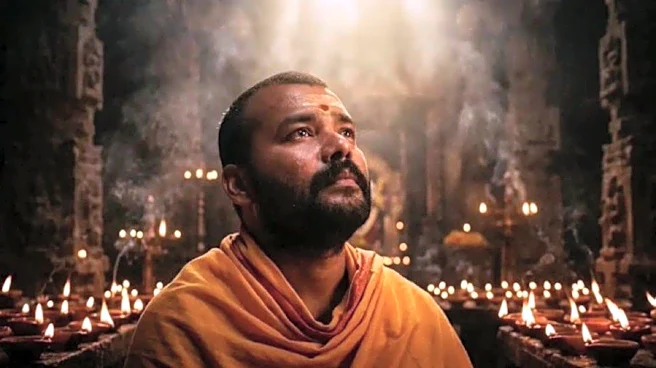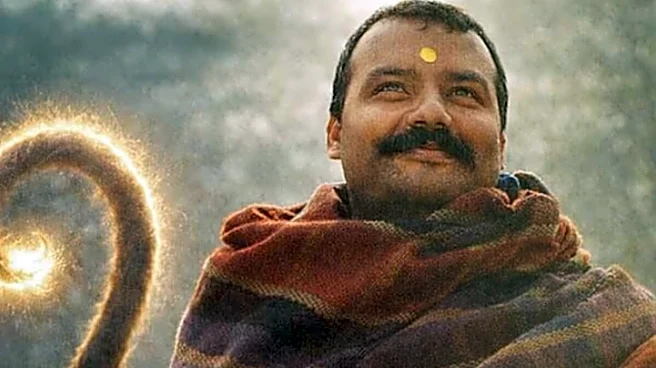


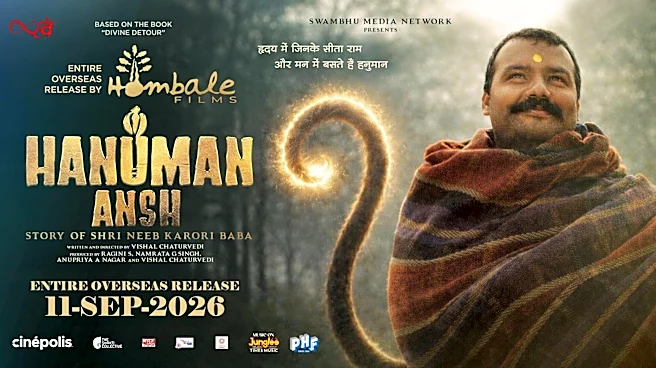
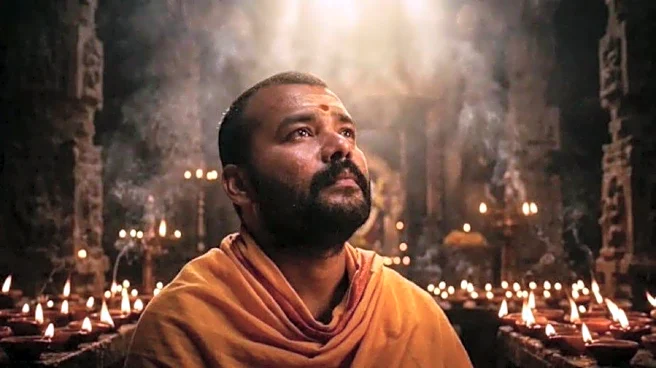
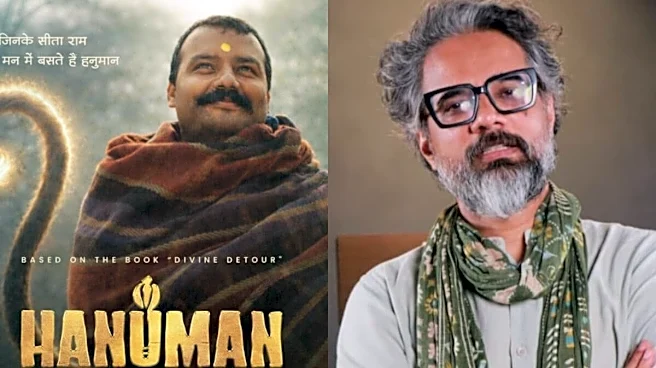
Hanuman Ansh has emerged as one of the biggest box-office surprises of 2026. The devotional drama, made on a reported budget of around ₹2 crore, opened in theatres on August 7 with just ₹10 lakh. Yet, 26 days later, the film has collected around ₹54.13 crore net in India, with its India gross standing at ₹63.82 crore, according to trade figures reported on Wednesday.
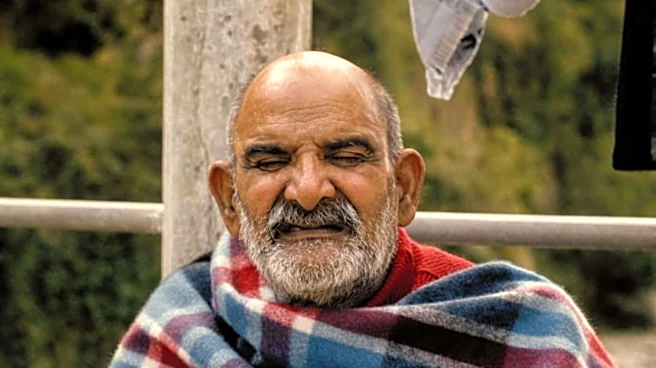
The film’s performance is striking because it did not have a big star at the centre of its campaign or the kind of promotional spending normally associated with a theatrical success of this scale. Based on the life of spiritual leader Neem Karoli Baba, Hanuman Ansh has instead grown steadily through its theatrical run, with its biggest gains coming after a slow first two weeks.
Hanuman
Ansh Box Office: From ₹10 Lakh Opening To ₹54 Crore
The film’s trajectory is what has caught the trade’s attention. After its ₹10 lakh opening day, Hanuman Ansh had made only around ₹1.48 crore in its first two weeks. It then saw a sharp turnaround, with Day 17 alone bringing in ₹2.20 crore. By Day 24, its India net had reached around ₹40 crore, and it has now crossed the ₹50 crore mark.
Taran Adarsh, in an exclusive chat with News18, said that the film’s late growth points strongly towards word of mouth. “I think people are genuinely interested. Otherwise, people won’t be just going into the theatres like that. Everyone’s so busy nowadays. Why would they want to step into a theatre, spend money and watch a film unless it’s worth it? The fact that the collections have risen after the third week is an eye-opener for the industry, actually. The first week was bad. The second week was a total collapse. But from the third week onwards, there was a turnaround, and how!”
That unusual growth is also visible in the film’s screen presence. It began with a limited release, but as audiences continued to come in, the number of shows increased substantially. The film now has more than 6,500 screenings across the country, according to a report published on Wednesday.
‘You Cannot Manufacture A Hanuman Ansh’
Trade analyst Vishek Chauhan takes a slightly different view of the phenomenon. For him, the biggest lesson from Hanuman Ansh is that films like this cannot be turned into a predictable formula. “This kind of cinema is very difficult to predict in terms of box office. You cannot, you might try 100 times to make a Hanuman Ansh, but you will succeed only once or twice. When people were going gaga over The Kashmir Files, that you cannot institutionalise such films. You know, you can institutionalise Spider-Man, you can institutionalise Avengers, you can institutionalise Avara, you can institutionalise Toxic, but you cannot institutionalise these films. These films surprise you. And I think the real reason that they surprise you is because they are not made with the thought process of succeeding at the box office.”
Chauhan argues that the moment filmmakers try to recreate the success of an unexpected hit, they can lose the quality that made the original work. “I think when Vivek Agnihotri was making The Kashmir Files, he was probably just trying to make a good film. And then whatever he followed up after The Kashmir Files, he was trying to make The Kashmir Files. He was desperate for that box office. And when that corruption sets in, that cinema which is not institutionalised, it just fails.”
Content, Not Just Faith, May Be Driving Hanuman Ansh
The devotional element is an obvious part of Hanuman Ansh, but its box-office performance raises a larger question. Faith-based films are released regularly, yet not all of them turn into theatrical successes. “I think Hanuman Ansh was never made with the intention of being a blockbuster and doing ₹50 crore or ₹60 crore. Neither was what happened last year, there was a Gujarati film called Laalo, which was made at ₹40 lakh, and it went on to do ₹100 crore. Then there was this film called Narasimha Avatar, which did amazing numbers. Then there was Kantara, which broke out pan-India.”
He believes the intention behind making such films matters. In the case of Hanuman Ansh, the film was made as an ode to Neem Karoli Baba rather than as a calculated box-office product. “When you make a film like Hanuman Ansh, and when you make these really small, faith-driven, some-sage biopic, you made it because you were paying an ode to that sage. But these films are very difficult to predict. Very difficult to state. But what really connects with the audience is that when you’ve made it with a pure heart.”
Taran Adarsh Says It Ultimately Comes Down To Content
For Adarsh, the film’s success also speaks of a basic rule of theatrical business: audiences will pay for a film when they believe the content is worth their time and money. “It all boils down to the content. If the content is really worth it, then people are going to watch it.”
A small film that struggled to get audiences in its opening days has managed to build enough momentum to remain a major theatrical draw weeks later. “It’s an eye-opener completely. It still has braved Spider-Man. It has braved Batwara 1947 and then Toxic. And yet it is now the number one film.”
Why The Film’s Success Is Difficult To Replicate
Vishek Chauhan’s larger point is that Hanuman Ansh should not necessarily be treated as a new formula for making low-budget devotional films. Its success, he argues, comes from the fact that it was made with a clear intent rather than a commercial template. “It broke out because there was purity of thought, of intent. I think these films are thought-driven. They are not spectacle-driven or they are not commercially driven. These movies, made on a very small budget, when done with honesty, land with the audiences.”
Hanuman Ansh is running in theatres.



/images/ppid_59c68470-image-178836252907720795.webp)