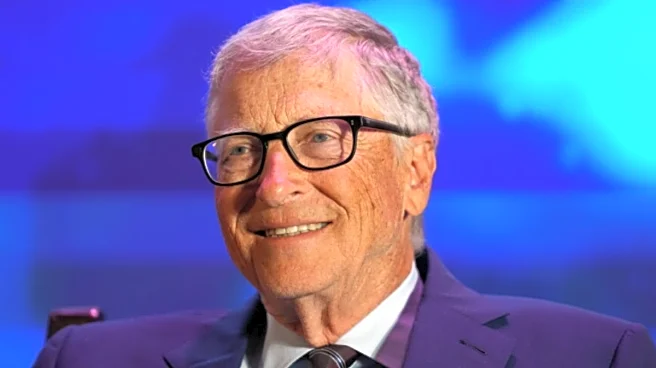

Microsoft co-founder and philanthropist Bill Gates warned that global child deaths will rise for the first time this century because wealthy nations have sharply cut international aid. In an interview
with AFP, Gates called the reversal “tragic”, saying the progress made since the early 2000s is now at risk.
He said the United States has made the deepest cuts, blaming Elon Musk’s so-called Department of Government Efficiency (DOGE) for abruptly halting USAID grants. The move, Gates said, was “responsible for a lot of deaths.”
Britain, France and Germany have also “disproportionately” slashed overseas aid, he added. According to LiveLaw, the Gates Foundation’s Goalkeepers report projects that under-five deaths will rise to 4.8 million in 2025, up 200,000 from last year.
Aid to developing nations has fallen 27 percent this year, threatening progress against HIV, malaria, polio and other preventable diseases. If current cuts of around 30 percent persist, Gates said modelling shows 16 million additional child deaths by 2045.
“That’s 16 million mothers who are experiencing something that no one wants to or should have to deal with,” he said.
Gates criticised the “chaotic” situation created after DOGE dismantled USAID under President Donald Trump. “I’m talking to President Trump about encouraging him to restore aid… I don’t know if I’ll be successful,” he said.
He also voiced disappointment that the US did not renew its funding for the Gavi vaccine alliance, noting that US Health Secretary Robert F. Kennedy Jr sent a video repeating “extremely debunked and misguided” anti-vaccine claims.
While acknowledging tight budgets, Gates said European nations were unfairly targeting international aid. After speaking with French leaders, he urged them not to undermine lifesaving programmes. He expressed optimism that new medical tools — including RSV and pneumonia vaccines and a twice-yearly HIV-prevention injection, lenacapavir — could bring child mortality down again within five years.
Gates, who plans to give away his entire fortune by 2045, remains one of the most influential figures in global health. Researchers say that with government aid shrinking, his influence is likely to increase as private philanthropy cannot fully fill the widening gap.