
A scheduled debate on the Delhi air pollution crisis failed to take place in the Lok Sabha on Thursday, shortly after the passage of the G Ram G Bill, with both the government and Opposition accusing each
other of stalling proceedings.
Sources said Opposition parties did not push strongly enough for the pollution discussion, while the Opposition countered that the House was adjourned “without warning,” derailing plans for the debate.
Chaos unfolded when several Congress MPs jumped onto the table directly in front of the Speaker’s desk, demanding that the discussion proceed as planned. According to Opposition sources, Priyanka Gandhi Vadra had prepared her speech and was set to speak on rising pollution levels post-lunch.
“We were ready for it post lunch, but the government hurriedly adjourned till tomorrow, so we are left with no choice but to do it next session,” a senior Congress leader said.
The Opposition insists it was caught off guard, while the government maintains the Opposition “didn’t want a discussion.”
Union Minister Kiren Rijiju accused the Opposition of avoiding the debate, saying they “don’t want” a proper discussion on pollution. Priyanka Gandhi, responding outside Parliament, said the discussion “agle satr mein ho jayegi,” indicating the issue will now be taken up in the next session.
Earlier, the schedule was that Parliament would take up the matter after the G Ram G Bill was passed, and Union Environment Minister Bhupendra Yadav was to respond to that after 5 pm.
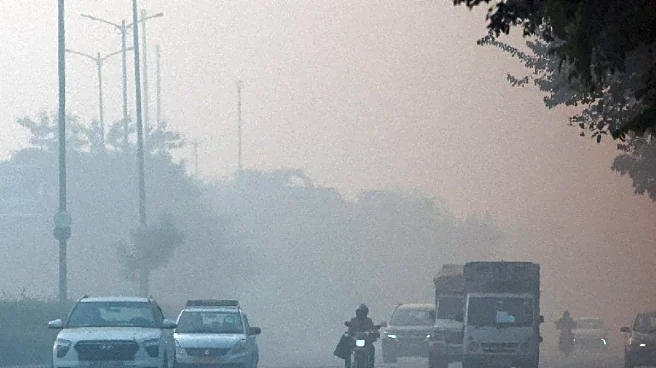
However, the discussion did not take place today, leaving both sides blaming each other as the capital and several cities across India continue to choke under hazardous air.
Given the alarming state of air pollution in Delhi, the government has decided to ban the entry of non–BS VI vehicles from Thursday. The move, part of emergency measures to curb the capital’s toxic air, has triggered widespread anxiety among residents across the NCR who rely on cross-border travel for work, business and family obligations.
On Wednesday, the Supreme Court modified its earlier order, allowing Delhi–NCR authorities to act against end-of-life vehicles that fall below BS-IV emission standards. A bench of Chief Justice of India Surya Kant, Justice Joymalya Bagchi and Justice Vipul Pancholi passed the order after the Delhi government sought permission to act against older cars. The court clarified that vehicles with BS-IV engines will be exempted from action.
The impact of the restrictions is expected to be significant. Official figures show Gurgaon alone has nearly 2 lakh privately owned vehicles that do not meet BS-VI norms, including about 1.5 lakh BS-III petrol cars and over 36,000 BS-IV diesel vehicles.
The city also has more than 47,000 commercial BS-IV diesel vehicles, over 2,000 BS-III petrol vehicles and around 2,200 BS-III and BS-IV buses. Additionally, nearly 92,000 diesel vehicles in Gurgaon have already crossed the 10-year age limit and would be barred under existing rules.






/images/ppid_a911dc6a-image-17709104325969952.webp)

/images/ppid_59c68470-image-177091003748320658.webp)

/images/ppid_59c68470-image-177091003360947404.webp)