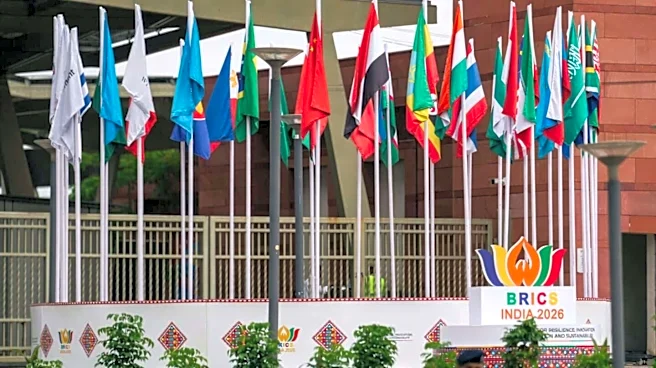


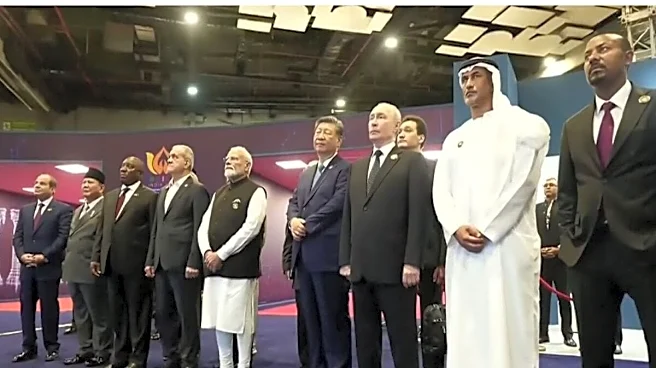

As leaders assembled in New Delhi for the XVIII BRICS Summit, a distinct common denominator anchored their discussions. Beyond regional rivalries and bilateral frictions, the shadow of aggressive US protectionism, tariff threats, and unilateral financial sanctions under President Donald Trump’s administration has galvanised the expanded bloc into a unified front for economic resilience.
Uniting Against Tariff Escalations
The New Delhi Declaration unanimously adopted by member states makes no secret of this shared anxiety. The bloc explicitly condemned the surge in unilateral tariffs, non-tariff barriers, and protectionist economic policies, declaring them inconsistent with World Trade Organization rules.
For diverse economies like India, China, Brazil, and South Africa, indiscriminate
tariff threats have altered strategic calculations. Rather than treating economic integration solely as a long-term goal, protectionist moves from Washington have transformed supply chain diversification and trade protection into immediate necessities for the Global South.
Accelerating Local Currency Settlements
The push away from US dollar reliance—once a slow-moving, theoretical debate within BRICS—has gained unprecedented momentum under current geopolitical pressures. Secondary sanctions and economic leverage wielded through global banking channels have pushed member nations toward practical countermeasures.
- Cross-Border Payments: The summit endorsed technical progress under the BRICS Payment Task Force to build seamless, low-cost settlement mechanisms.
- Local Currency Trade: Intra-bloc bilateral trade is increasingly migrating to local currencies, shielding member economies from currency fluctuations and external sanctions.
- Financial Safety Nets: India’s initiative to establish a BRICS Risk Lab at the GIFT City IFSC in Gujarat underscores a collective drive to build independent insurance and reinsurance frameworks.
Bridging Bilateral Frictions
The external pressure from Washington has produced a striking side effect: it is forcing traditional regional rivals to find common ground. Key Asian economies like India and China, while maintaining distinct strategic outlooks, share an overriding mandate to secure their export markets, protect energy imports amid West Asia volatility, and insulate critical supply chains.
Rather than allowing internal divisions to fracture the grouping, the shared vulnerability to unilateral trade measures has encouraged pragmatism. The summit demonstrated that even as members hold differing geopolitical alignments, defending economic sovereignty provides a robust binding force.
Redefining Multilateral Rules
Ultimately, the economic strategy unveiled in New Delhi represents more than a defensive posture. By calling for urgent structural overhauls of the World Trade Organization, the International Monetary Fund, and the UN Security Council, BRICS is leveraging its economic weight to demand equal participation in writing the rules of global trade and governance.
By pushing member states to protect their markets and diversify their global partnerships, Washington’s aggressive trade stance has inadvertently provided BRICS with its strongest sense of unified purpose in two decades.


/images/ppid_59c68470-image-17892100345427432.webp)