

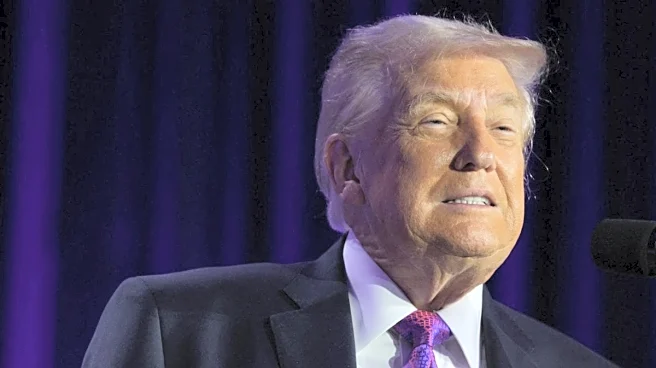
Washington DC [US], January 9 (ANI): The US Supreme Court will not be issuing any ruling in the much-anticipated case concerning US President Donald Trump’s sweeping tariffs, Reuters reported on Friday.
According to Reuters, the US apex court released only one decision on Friday, which pertained to a technical matter involving criminal procedure. The US Supreme Court heard arguments on the matter in November. Its decision could redefine Trump’s presidential authority over trade and reshape global economic relations. The case, Learning Resources Vs Trump, will determine whether a US President can invoke emergency powers under the International Emergency Economic Powers Act (IEEPA) to impose tariffs without congressional approval. The outcome could have sweeping implications for Donald Trump’s “Liberation Day” tariffs and for global trade policy. According to a note by the Global Trade Research Initiative (GTRI), if the Supreme Court rules against Trump, it could force the administration to withdraw tariffs imposed under IEEPA. It stated, “Such a ruling would mean all ‘Liberation Day’ tariffs–and subsequent rate hikes–lack a lawful basis. The administration would have to roll them back or face injunctions halting their collection.” Trump could attempt to reimpose similar tariffs under Section 301 or Section 232, but those statutes require new investigations and public justification, delaying action and inviting further legal challenges. GTRI noted that if the Supreme Court strikes down Trump’s use of emergency powers, the ruling would have far-reaching implications beyond the US. The decision would undermine the foundations of several recently negotiated trade arrangements with key partners, including the European Union, Japan, South Korea, and the United Kingdom. These agreements were struck under the shadow of those tariffs and were premised on reciprocal concessions. It would also disrupt ongoing trade talks with India, where tariff leverage has shaped Washington’s negotiating position. The case is being closely watched not just in the US but around the world, including in India. It is seen as a test of executive power and the constitutional separation of powers between the White House and Congress. Two core legal questions are at the heart of the case. The first concerns jurisdiction: whether the case belongs in a federal district court or the Court of International Trade (CIT). The petitioners, led by Learning Resources, Inc., argue that their claims arise under IEEPA itself, not under any law “providing for tariffs”, and therefore should be heard in a district court. The second and more consequential issue is whether IEEPA allows the president to impose tariffs at all. The petitioners, represented by Akin Gump Strauss Hauer & Feld LLP, contend that the law’s language permitting regulation of “importation or exportation” does not extend to setting customs duties, a power reserved for Congress. Three lower courts have already ruled against the Trump administration. The case was first heard in the US District Court for the Northern District of Illinois, which, on April 26, 2025, rejected the government’s argument that IEEPA allowed broad tariff powers and referred the matter to the trade courts. The US Court of International Trade, in a June 14, 2025, decision, held that IEEPA does not authorise the president to levy general tariffs and that Trump’s use of emergency powers for routine trade matters violated the Constitution’s separation of powers. The US Court of Appeals for the Federal Circuit upheld that ruling on August 2, 2025, finding that Congress had never delegated such sweeping authority to the executive branch. (ANI)


/images/ppid_59c68470-image-177069761118650612.webp)

/images/ppid_59c68470-image-177071003473193707.webp)

/images/ppid_59c68470-image-177070520508144474.webp)
/images/ppid_59c68470-image-177061752983951184.webp)
/images/ppid_59c68470-image-177060256415162911.webp)