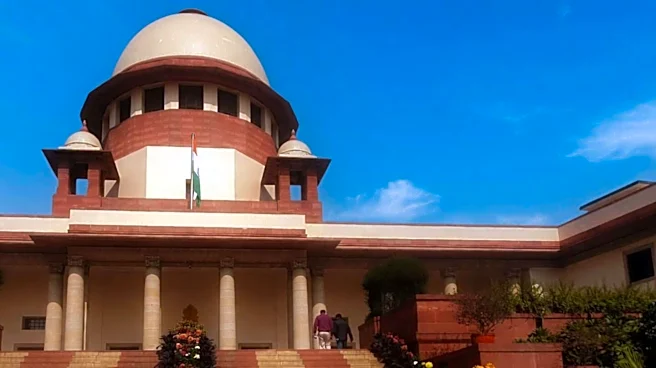




The Supreme Court on Wednesday upheld the constitutional validity of the Election Commission’s Special Intensive Revision (SIR) of electoral rolls, ruling that the exercise was aimed at strengthening the integrity of elections and “breathes life into the Representation of the People Act”.
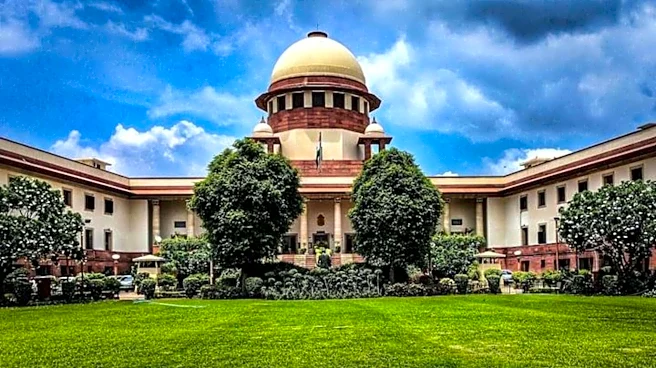
A bench headed by Chief Justice Surya Kant, along with Justices Joymala Bagchi and Vipul M Pancholi, delivered the verdict on a batch of petitions challenging the legality of the SIR exercise conducted in Bihar and several other states.
Pronouncing the judgement, the bench said it had “shortlisted the controversy that arose from the SIR notification” and framed four broad questions for determination, including whether the Election Commission of India (ECI) had the power
to conduct the exercise, whether the process was proportionate and legally justified, whether it violated the Representation of the People Act, 1950, and whether the ECI could scrutinise citizenship for inclusion in electoral rolls.
The court ultimately ruled in favour of the poll body, holding that the SIR process was constitutionally and legally sustainable.
In its observation, the bench said the exercise “does not distract from the constitutional obligation of free and fair elections” and instead advances that mandate.
“We are equally satisfied that the object sought to be achieved by the SIR bears a direct nexus to the constitutional goal of free and fair elections,” the court observed.
The bench further said, “We hold that the electoral SIR advances the constitutional imperative of free and fair elections.”
The court also upheld the proportionality of the exercise, noting that the measures adopted by the Election Commission were neither “manifestly excessive” nor arbitrary.
“We are therefore satisfied that the impugned exercise meets the requirements of proportionality,” the bench said.
According to the judgment, “The measures adopted bear a reasonable nexus to the objectives sought to be achieved, are not manifestly excessive and are accompanied by sufficient procedural safeguards to prevent arbitrary exclusion.”
The court further held that the exercise was rooted in a “legitimate and constitutionally grounded purpose, namely the restoration of accuracy, completeness and integrity of the electoral rolls.”.
The court held that the Election Commission had not acted outside its statutory powers merely because the SIR differed from the ordinary electoral roll revision process.
“It can’t be said ECI acted outside the statutory powers by exercising SIR. It can’t be said ultra vires because the exercise is different from what is ordinarily conducted,” the bench observed.
The judgment also rejected arguments that the SIR process violated provisions of the Representation of the People Act and related rules.
“Since SIR is legally tenable, it is not in violation of the RP Act,” the court said.
The bench additionally clarified that the requirement of issuing show-cause notices had been incorporated in the process and that the safeguards built into the exercise addressed concerns of arbitrary deletions from electoral rolls.
PETITIONERS HAD CALLED IT ‘NRC-LIKE’
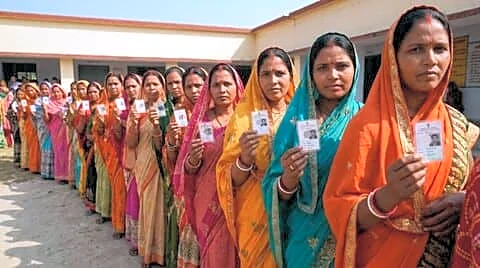
The case arose from multiple petitions challenging the SIR exercise in Bihar, where the Election Commission had revised electoral rolls and removed around 65 lakh names from the draft list.
Petitioners had argued that the Election Commission lacked powers under Article 326 of the Constitution and the Representation of the People Act, 1950, to undertake such a large-scale revision exercise.
The pleas, including one filed by NGO Association for Democratic Reforms (ADR), alleged that the exercise resembled an “NRC-like process” where citizenship was effectively being verified, a function they argued falls within the domain of the central government.
Senior advocate Prashant Bhushan, appearing for ADR, had also questioned the timeline of the exercise and the basis on which lakhs of voters were categorised as dead, migrated or shifted to other constituencies.
The Election Commission, however, defended the exercise and maintained that Aadhaar cards and voter identity cards could not be treated as conclusive proof of citizenship.
Under the SIR notification, voters whose names did not appear in the 2002 or 2003 electoral rolls were required to establish ancestral linkage with someone listed in those rolls.
The Supreme Court, while upholding the process, said the Commission retained discretion in framing the verification mechanism, though such discretion was “not unbounded”.
The bench added that the framework for documents used in verification must maintain a rational connection with the objective of preserving electoral integrity.
/images/ppid_a911dc6a-image-177984826180848912.webp)


/images/ppid_a911dc6a-image-177986126004534343.webp)
/images/ppid_a911dc6a-image-177973128947692746.webp)
/images/ppid_a911dc6a-image-177973131604472962.webp)