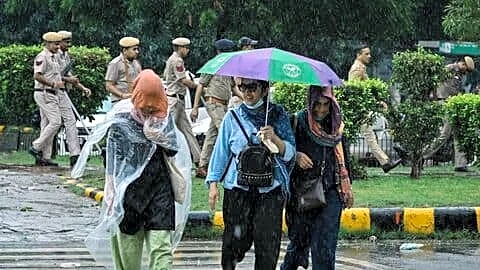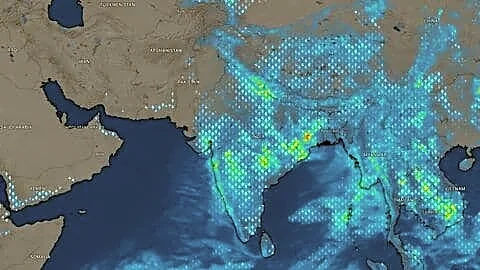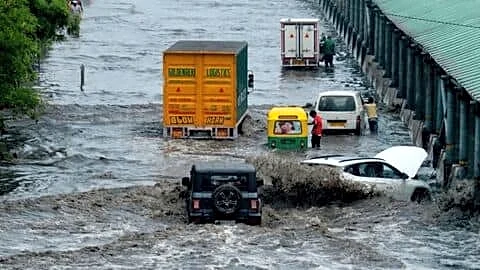




When torrential monsoon showers hit the National Capital Region on Tuesday, issuing red alerts and turning arterial roads into rushing streams, a familiar question resurfaced: which NCR city actually manages urban flooding better?
While all three metropolitan hubs—Delhi, Gurugram, and Noida—face severe rain-induced traffic snarls and waterlogging, their underlying urban planning, natural topography, and drainage architecture lead to vastly different outcomes when the skies open up.
Noida: Grid Planning Wins the Drainage Race
Noida, Uttar Pradesh: Continuous rainfall across Delhi-NCR since morning has led to waterlogging in several parts of Noida. Near Shopprix Mall in Sector 61, water has accumulated on the road, causing significant inconvenience to commuters and motorists. The persistent
rain has… pic.twitter.com/5P4dSkH33s
— IANS (@ians_india) July 28, 2026
Noida routinely emerges as the most resilient NCR hub during intense downpours. Built as a meticulously planned industrial township in the late 1970s, the city benefits from a sector-based grid system designed with wide arterial roads, deep roadside stormwater drains, and generous green belts.
- Natural Gradient: Noida’s geographical layout naturally slopes towards the Yamuna and Hindon rivers, allowing stormwater to discharge relatively quickly.
- Proactive Sector Design: Unlike organic urban expansions, Noida’s master plan preserved dedicated channels for rainwater runoff, preventing massive water accumulation in residential sectors.
- Localised Vulnerabilities: While specific underpasses and low-lying market sectors experience temporary waterlogging, the city rarely suffers the multi-day paralysis seen elsewhere in the region.
Gurugram: High-Rises on Fragile Concrete Slopes
Designed for Quicker Drainage! 📍AIT Chowk
As rain falls, GMDA’s upgraded drainage network at AIT Chowk is helping stormwater flow out faster. The newly developed drainage link to Creek No. 4, along with surface channels and road gullies, is improving rainwater evacuation and… pic.twitter.com/aUmJuyRh4e
— GMDA (@OfficialGMDA) July 28, 2026
In stark contrast, Gurugram—the region’s premier corporate and financial hub—chronically struggles whenever heavy rain strikes. Millennium City’s rapid, private-sector-led expansion outpaced its civic drainage infrastructure, creating severe vulnerabilities.
- Encroached Natural Drains: Rapid construction over natural ridge catchments and traditional channels, such as the vital Badshahpur drain, severely reduced the land’s natural absorption capacity.
- Concrete Siltation: Heavy concrete paving along major corridors like Golf Course Road, Subhash Chowk, and key stretches of National Highway 48 prevents ground percolation.
- Runoff Bottlenecks: When intense rain surges down from the Aravalli hills, Gurugram’s stormwater network quickly turns underpasses and major intersections into impassable waterways.
Delhi: Legacy Systems and Multi-Agency Friction
VIDEO | Heavy rainfall triggers waterlogging in parts of Delhi. Visuals from ITO area.#DelhiNews #DelhiRains
(Full video available on PTI Videos – https://t.co/n147TvrpG7) pic.twitter.com/ceOUX9kGV1
— Press Trust of India (@PTI_News) July 28, 2026
Connaught Place – Rain Water gets into iconic restaurants. Heavy water logging. pic.twitter.com/U5E3RV0s6K
— Saurabh Bharadwaj (@Saurabh_MLAgk) July 28, 2026
As a national capital blending century-old infrastructure with modern flyovers, Delhi presents a mixed picture. Its drainage challenges stem less from a lack of planning and more from legacy capacity limits and fragmented administrative jurisdictions.
- Jurisdictional Clashes: Stormwater management is split across the Public Works Department (PWD), Municipal Corporation of Delhi (MCD), New Delhi Municipal Council (NDMC), and Irrigation Department, often delaying desilting operations.
- Targeted Successes: Sustained engineering interventions and automated high-capacity pumping stations have successfully cleared long-standing hotspots like the Minto Bridge underpass.
- Persistent Hotspots: Low-lying market areas, ring roads, and railway underpasses continue to drown under sudden micro-cloudbursts when main trunk drains overflow into local streets.
The Verdict: Master Planning vs Concrete Overreach
When measuring overall urban resilience against monsoon deluges, Noida holds a decisive advantage. Its pre-planned drainage grids and lower density of concrete bottlenecks give it superior capacity to drain storm runoff rapidly.
While Delhi possesses the technical resources to fix targeted crisis points, its sheer size and jurisdictional overlap create systemic delays. Gurugram remains the most vulnerable, serving as a cautionary tale of how private real estate booms without synchronised public drainage infrastructure lead to recurring monsoon gridlocks.