
/images/ppid_59c68470-image-178023252862068660.webp)
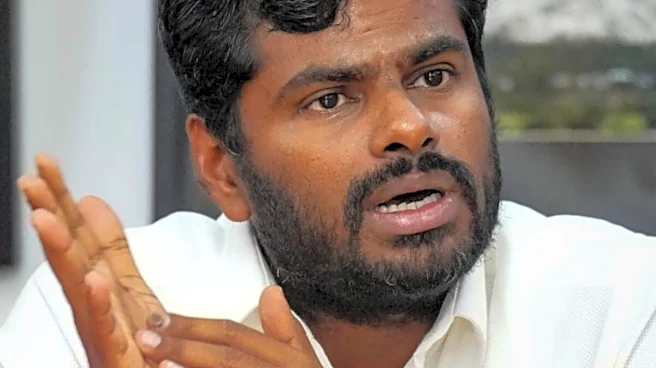
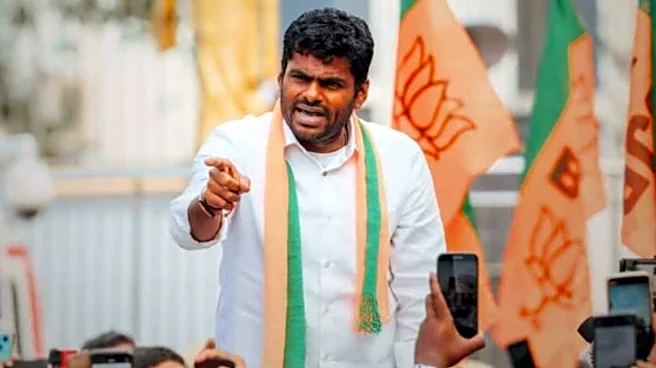
It’s difficult to say who needs whom more. Is the BJP on the verge of losing its best bet in K Annamalai, or has Annamalai gained more from his association with the BJP? Objectively speaking, very few new entrants to the party have been projected as aggressively as the former police officer. Not that his wholesome image and his outsized professional credentials do not deserve the platform. Now, with the two on the verge of decoupling, perhaps this question is superfluous. But what isn’t is the message that the BJP can glean from Annamalai’s disenchantment with the saffron party.
1. Don’t Trade Long-term Ideological Space For Short-term Electoral Gain
The BJP has spent a decade painstakingly creating a distinct nationalist political space in Tamil Nadu. Its vote share has risen from near irrelevance in state politics.
Yet, in 2026, it traded its USP for an alliance with the AIADMK, putting immediate electoral gains above ideological purity. The Assembly election results prove that Annamalai was right in cautioning that voters would punish the BJP for yoking itself to a political culture of factionalism and corruption that serves no public interest. The first lesson for the BJP from Annamalai’s politics is that growth cannot come from inheriting someone else’s social base.
2. Sanatana: A Bridge, Not A Boundary
Annamalai’s entry into the BJP coincided with the party’s more assertive defence of Sanatana Dharma. In Tamil Nadu, sections of Dravidian politics had demonised any attempt at celebrating the grandeur of Hindu civilisation. The genius of Annamalai is that he recognised that the BJP’s challenge goes beyond civilisational reclamation. Annamalai was successful in avoiding making BJP appear culturally exclusive. The emergence of a class of new Tamil voters, as demonstrated by the Assembly poll result in 2026, vindicates Annamalai. These new voters appear receptive to a broad, aspirational message that transcends traditional ideological camps.
3. Tamil Nadu Needs A Son Of The Soil With A Youth Connect
Tamil Nadu’s electorate increasingly rewards leaders who embody local aspirations. Annamalai’s appeal is that he is a first-generation political leader, a former IPS officer, and a relatively young face. The BJP in the future will require being led by a locally rooted leadership capable of connecting with aspirational young voters, entrepreneurs, professionals, and first-time electors.
4. Ideological Seeding Precedes Electoral Harvest
The BJP is up against the same challenge it poses to other parties at the national level and in other states. Tamil Nadu’s politics has long been shaped by an ideology: Dravidianism. The roots of this ideology run deep and cannot be weeded out in a single election cycle. Annamalai showed the BJP that it will need to put in the hard yards to sow its own ideology. Annamalai achieved some success through yatra politics, grassroots outreach, and sustained, almost face-to-face messaging. The current crop of the BJP’s top Tamil Nadu officials lacks that staying power.
5. Build Cadre Before Chasing The Chair
Which brings us to the last point. The BJP’s strongest state-level successes, from Gujarat, Odisha, Tripura, Haryana, and Assam, were preceded by years of organisational expansion. Annamalai may have failed to win the BJP a seat in 2024, but his greatest success might yet be organisational. Under him, the BJP appeared energised, with new blood flocking to it, and that too with a sense of purpose. As the axiom goes, purpose is the lifeblood of all parties, the single greatest ingredient for future victories. What is the BJP’s purpose in Tamil Nadu? If BJP can answer that question with conviction in a post-Annamalai future, it will have won half the battle.


/images/ppid_a911dc6a-image-178033703001134545.webp)