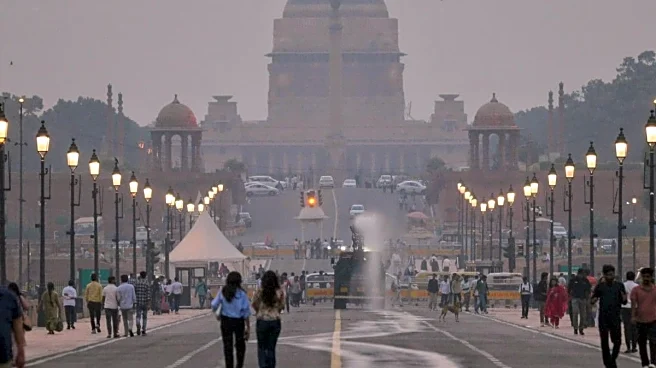

In 2025, the conversation around pollution has shifted dramatically. What was once seen purely as an environmental or respiratory crisis is now revealing a far quieter, deeply personal consequence – emotional
burnout triggered not by relationships, work, or trauma, but simply by the air we breathe. Increasingly, people are reporting an unexplainable heaviness, irritability, and mental exhaustion on days when pollution peaks, signalling a new and unexpected mental health trend that experts say can no longer be ignored.
The New Burnout: When Emotional Fatigue Has No Clear Trigger
Mental health experts are beginning to notice an unusual pattern: clients showing signs of emotional fatigue without any psychological cause.
Devika Irny, Counselling Psychologist at Rocket Health, explains, “I have been noticing an unusual, unexpected emotional fatigue in my clients without the presence of a psychological trigger. Many describe emotional heaviness, irritability, or a foggy feeling that doesn’t improve with rest.”
What struck her most was the similarity across cases. “It aligns well with poor surroundings – air quality, heat waves, noise, and pollutants,” she notes.
From a psychological lens, the link is clear. Chronic exposure to pollutants elevates inflammation and oxidative stress, the very processes that interfere with mood regulation. Constant sensory overload, such as traffic, noise, dust, and heat, keeps the nervous system activated, leaving individuals emotionally drained even when life feels otherwise stable.
How Pollution Alters The Brain And Behaviour
The biological impact of pollution on the mind runs deeper than most realise.
According to Dr. Preeti Singh, Chief Medical Officer at Lissun, “Fine particulate matter enters the bloodstream, crosses the blood–brain barrier, and triggers neuroinflammation. This disrupts serotonin and dopamine, elevates cortisol, and impairs mood regulation.”
Long-term exposure, she adds, can alter brain structure and connectivity, contributing to mood fluctuations, memory issues, cognitive decline, and sleep disturbances.
But the consequences don’t end there. Dr. Singh highlights the cascading social and behavioural effects: children stuck indoors with reduced outdoor exposure, elderly individuals developing isolation and mobility issues, and working adults feeling frustration and helplessness as they remain unable to avoid exposure due to livelihood constraints.
She explains, “Mental health consultations tend to rise during pollution spikes, as irritability, anger, and low frustration tolerance increase across all age groups.”
Why Yoga And Breathwork Are Emerging As Everyday Anchors
As pollution-driven emotional burnout becomes more widespread, experts emphasise the need for grounding rituals that help regulate the nervous system.
Saurabh Bothra, Yoga Teacher and Co-Founder of Habuild, observes this shift firsthand. “More people tell me they feel low, restless, or unusually drained on days when air quality dips. It’s not in their head — our mood absorbs that weight too,” he notes.
He believes simple, consistent practices make the biggest difference. “Even 10 minutes of yoga gives the mind something steady to hold on to. It becomes a quiet anchor in an unpredictable world.”
Breathwork, in particular, is emerging as a powerful antidote. Techniques like Anulom Vilom and slow diaphragmatic breathing can immediately signal safety to the nervous system. “People walk into a session overwhelmed and walk out lighter,” Bothra shares.
Rethinking Mental Health Through The Lens Of Environment
As evidence grows, pollution-triggered emotional burnout is poised to become one of the most defining mental health concerns of 2025. The trend underscores a simple truth: mental health isn’t shaped only by relationships or stress. It is deeply intertwined with the world around us. Supporting emotional resilience now requires environmental awareness, holistic care, and everyday grounding practices that protect the mind even when the air doesn’t.

/images/ppid_a911dc6a-image-177104554006886045.webp)








/images/ppid_59c68470-image-177104502841632289.webp)

/images/ppid_a911dc6a-image-17710448296527978.webp)
/images/ppid_a911dc6a-image-177104482828655023.webp)
/images/ppid_a911dc6a-image-177104464363699291.webp)