

/images/ppid_59c68470-image-177502753336043448.webp)

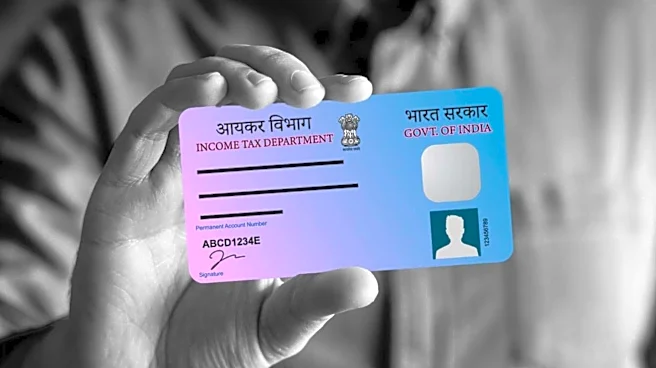
The arrival of April 1, 2026, marks a historic reset for India’s financial landscape. This is not just a new financial year; it is the debut of the Income Tax Act, 2025, which officially replaces the 65-year-old 1961 statute. From a unified “Tax Year” to stricter digital payment rules, the changes hitting your wallet today are significant.
To help you navigate this transition, here is your essential 12-point checklist for Day 1 of the new era.
1. Have you switched to the ‘Tax Year’ mindset?
The most fundamental change under the Income Tax Act, 2025, is the elimination of the confusing “Previous Year” and “Assessment Year” terminology. Starting today, you are operating in a single, unified Tax Year 2026-27. Your Form 16 and all future tax filings will now reflect this simplified nomenclature,
making it easier to track your earnings and liabilities in real-time.
2. Is your income below the new Rs 12.75 lakh ‘Zero-Tax’ threshold?
Under the refined New Tax Regime, the rebate under Section 87A has been enhanced to ensure that resident individuals with a taxable income of up to Rs 12 lakh pay zero tax. When you add the Rs 75,000 standard deduction for salaried employees, your effective tax-free income limit stands at Rs 12.75 lakh. If your salary falls within this bracket, ensure your HR department adjusts your TDS (Tax Deducted at Source) immediately to boost your take-home pay.
3. Have you enabled biometrics for your UPI apps?
Following the RBI’s “Authentication Mechanisms” mandate, April 1, 2026, is the deadline for implementing two-factor authentication with at least one “dynamic” factor for digital payments. Your UPI apps (like PhonePe, Google Pay, or Paytm) may now require a fingerprint or face-ID scan for transactions instead of just a static PIN. This is a vital security layer designed to prevent fraud linked to SMS OTP thefts.
4. Are you a derivative trader facing the 2.5x STT hike?
High-frequency traders and retail investors in the F&O (Futures and Options) segment will notice a sharp rise in transaction costs today. The Securities Transaction Tax (STT) on futures has jumped from 0.02% to 0.05%, while the tax on the sale of options has increased to 0.15%. If you are an active trader, recalibrate your break-even points to account for these higher statutory costs.
5. Did you buy Sovereign Gold Bonds (SGBs) from an exchange?
A major tax arbitrage has ended today for secondary market buyers of SGBs. While those who subscribed to the original government issue remain exempt from tax on maturity, those who bought bonds from the BSE or NSE will now have their redemption gains taxed as capital gains (12.5% if held for more than 36 months). Check your portfolio to see how this affects your net returns.
6. Have you maximised your PPF deposit before the 5th?
The interest rate for the Public Provident Fund (PPF) remains steady at 7.1% for the April-June quarter. To earn interest for the entire month of April, ensure your deposit (up to the ₹1.5 lakh limit) is credited by the 5th of April. Remember, under the Income Tax Act 2025, PPF remains a “Triple Exempt” (EEE) investment, though the deduction is primarily beneficial for those still opting for the Old Tax Regime.
7. Are your Mutual Funds ‘True to Label’ under new SEBI rules?
Starting today, SEBI’s stricter classification rules require several equity fund categories—including Value, Contra, and Dividend Yield funds—to maintain a minimum 80% investment in equity (up from 65%). Review your portfolio statements to ensure your funds haven’t been merged or reclassified, particularly if you hold “solution-oriented” schemes that are being phased out.
8. Are you claiming the higher Rs 200 meal voucher benefit?
In a win for salaried professionals, the tax-exempt limit for employer-provided meal vouchers (like Sodexo or Pluxee) has been significantly increased to Rs 200 per meal. If your company provides this perquisite, check if they have updated their policy to allow you to claim this higher non-taxable benefit, which can save you a tidy sum over the year.
9. Have you checked the new GST 2.0 rate slabs?
For business owners, GST 2.0 is now in full swing with a streamlined four-slab structure (0%, 5%, 18%, and 40%). The 12% slab has been abolished, and many items have been redistributed. Ensure your invoicing software is updated to reflect these new rates to avoid “GSTR-3B” filing blocks caused by mismatches on the portal.
10. Is your NPS strategy ready for the 80% lump sum rule?
The National Pension System (NPS) has become more flexible today. Non-government subscribers can now withdraw up to 80% of their corpus as a lump sum at maturity, rather than the previous 60% limit. If you are nearing retirement, this added liquidity might change your asset allocation strategy for the year ahead.
11. Are you an NRI property buyer? (The TAN relief)
If you are purchasing a house from an NRI, you no longer need to go through the tedious process of obtaining a Tax Deduction and Collection Account Number (TAN). Under the new rules, you can deduct the required TDS using a simple PAN-based challan, significantly reducing the paperwork for individual home buyers.
12. Have you set your ‘Revised Return’ calendar?
Finally, the new Act gives you a longer window to fix mistakes. You now have 12 months from the end of the Tax Year (until 31 March 2028 for the current year) to file a revised return. However, aim to get it right the first time to avoid the new graded late fees that kick in after the first nine months.



/images/ppid_59c68470-image-177514768597971270.webp)


/images/ppid_59c68470-image-177514753094450993.webp)