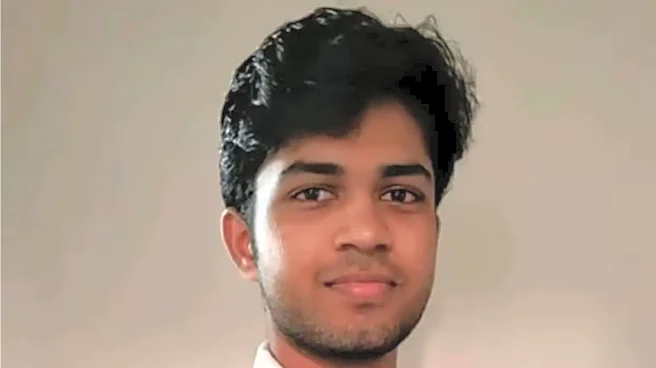

The lynching of Dipu Chandra Das and the ensuing unrest in Bangladesh have once again raised alarm over violence against minorities in the region, prompting warnings from India’s Ministry of External Affairs. The incidents have highlighted the fragile security of vulnerable communities and the pressing need for governments to address extremism decisively.
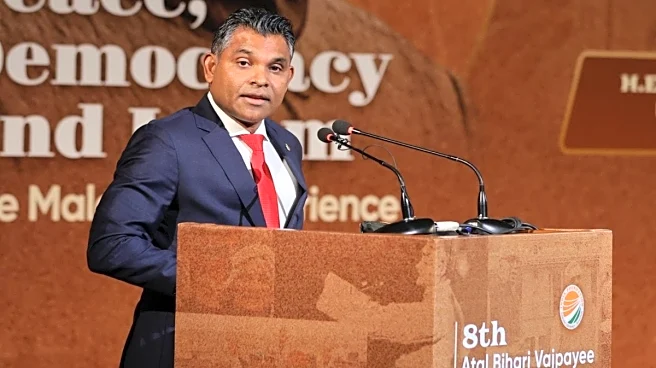
During an exclusive interview with CNN-News18, Faisal Naseem, former Vice President of the Maldives and chief guest at the 8th Atal Bihari Vajpayee Memorial Lecture at the India Habitat Centre in Delhi, discussed violence against minorities in Bangladesh and how the Maldives ensures that religious identity is never used to justify discrimination.
He also spoke about the responsibility of Muslim-majority
countries to call out such violence and the India–Maldives bilateral reset, including Delhi’s role in Malé’s trade strategy and untapped sectors for deeper cooperation.
Edited excerpts below…
We are witnessing disturbing incidents of violence against minorities in parts of South Asia, including recent attacks on Hindus in Bangladesh. As a Muslim-majority nation, what responsibility does the Maldives see for itself in publicly standing against religious extremism in the region?
The Maldives believes that the welfare of people must always come before divisions of religion, ethnicity, or nationality. At the end of the day, we are all human beings, and peace and equal opportunity must be the guiding principles of any responsible government.
As a nation, we place a strong emphasis on coexistence and social harmony. Our belief is simple: every individual deserves dignity, security, and equal treatment, regardless of what they believe or where they come from.
In that sense, governments—particularly in countries with larger populations and greater influence—have a responsibility to actively promote peace and protect all people. If extremism and violence are not confronted clearly and consistently, such incidents risk becoming cyclical.
Prioritising peace and human well-being cannot be optional. It is the only sustainable choice if the region is to move forward.
How does the Maldives ensure that religious identity never becomes a justification for discrimination or violence, and what concrete safeguards exist to protect minority rights within the country?
The Maldives is a small nation, and that closeness plays an important role in how society functions. Institutions, policymakers, and citizens interact closely, which allows concerns to be addressed early and collectively rather than allowing divisions to deepen.
Our democratic culture is rooted in mutual respect. Policies are framed with people at the centre, and there is a strong emphasis on social cohesion and shared responsibility. This has helped ensure that religious identity is never used as a justification for discrimination or violence.
Respect for dignity and equal treatment is not just a principle but a practice. That, in my view, is one of the core strengths of Maldivian democracy and the only sustainable way forward.
Extremism, whether religious or ideological, is destabilising South Asia. Do you believe Muslim-majority countries have a special responsibility to call out violence committed in the name of Islam, especially when silence, though politically uncomfortable, risks deepening Islamophobia?
Governments have a responsibility to ensure equal opportunities for everyone and to work closely with people to address the many challenges societies face. These challenges do not exist on a single front, and people come from different backgrounds and face different problems.
Addressing such issues requires responsible governance and cooperation between governments and citizens. Only through this approach can lasting solutions be found.
Beyond regional responsibilities, India and the Maldives have also had to navigate bilateral tensions. After a visibly tense phase, the relationship saw a reset following Prime Minister Modi’s recent meeting with President Mohamed Muizzu. What, in your view, actually changed behind closed doors, and how durable is this reset?
Maldivians have always believed, even during the most heated phases of the political campaign, that the Maldives must work closely with India for development across all sectors. This relationship spans decades and has consistently benefited the country and its people.
The political tensions we witnessed during that period did not fundamentally change how Maldivians view India or the Indian people. After the election, President Mohamed Muizzu’s visit to India and his engagement at the leadership level underscored a clear recognition of how important strong ties with India are for the Maldives’ long-term interests.
In many ways, the earlier tensions were part of electoral politics. Different leaders adopt different strategies during campaigns, and this is not unique to the Maldives. Such dynamics are seen across democracies worldwide.
Over time, however, people learn from these episodes. Misinformation eventually loses its impact, and the public begins to question why certain narratives were pushed and for what purpose. What ultimately endures is the understanding that constructive cooperation with India is in the best interest of the Maldives.
Was the earlier fallout with India a failure of communication, ideology, or domestic political messaging in the Maldives? And what lessons should both sides take to ensure this does not repeat?
I would see it largely as a product of domestic political messaging rather than ideology or a fundamental policy shift. In many democracies, voters are often drawn to new faces and fresh leadership, driven by the expectation that someone new might deliver better outcomes than before. This is not unique to the Maldives and can be seen across the world.
In this context, certain narratives gained traction during the campaign. Misinformation played a role, and perhaps the government at the time did not place enough emphasis on strategic communication or public outreach. There was a belief that nothing was fundamentally wrong in the relationship with India, and that issues such as India’s presence were self-evident and did not require further explanation.
In hindsight, that assumption proved costly. The key lesson for both sides is the importance of clear, consistent communication. Even strong relationships can be strained if misinformation goes unchallenged. Proactive engagement with the public and transparency in bilateral cooperation are essential to ensure such misunderstandings do not resurface.
As the Maldives looks to diversify its economic partners, where does India realistically fit in its trade strategy, and which sectors hold the most untapped potential for deeper cooperation?
India–Maldives cooperation already plays a role in strengthening multiple sectors of the Maldivian economy, from fisheries and agriculture to housing, infrastructure, and connectivity. These areas have enabled tangible development and remain central to bilateral engagement.
That said, there is still significant work to be done in building human capital and institutional capacity. For any country to truly prosper, it needs a strong, skilled workforce capable of leading growth and innovation.
This is an area where deeper cooperation with India can be particularly valuable. Across sectors, there remains considerable scope for collaboration that supports the Maldives’ long-term development and economic diversification.
If Atal Bihari Vajpayee were alive today, what do you think he would advise India and the Maldives to prioritise: strategic alignment, political sensitivity, or people-to-people trust?
I believe he would have prioritised people-to-people trust, as that forms the foundation for any lasting strategic or political alignment.




/images/ppid_a911dc6a-image-177106302538573741.webp)