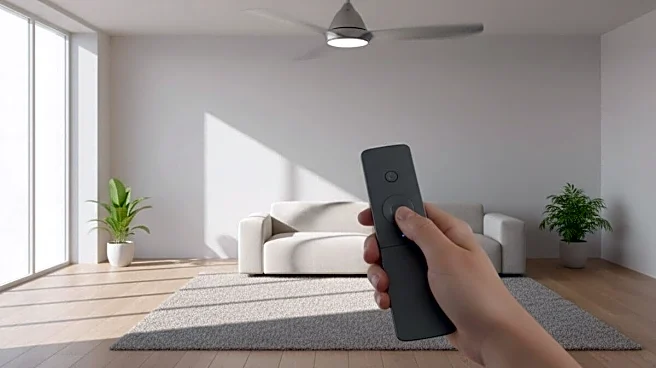




For most Indian households, the regular ceiling fan has been the default cooling appliance for decades. It is simple, widely available and usually costs less to buy. Conventional fans typically use an AC induction motor, which has been a proven technology for household ceiling fans for years.
BLDC ceiling fans, however, have become a serious alternative, particularly in homes where fans run for several hours every day. BLDC stands for Brushless Direct Current, and the technology is designed to deliver similar air movement while using considerably less electricity. Government energy-efficiency material puts conventional ceiling-fan consumption broadly around 70-80 watts, compared with roughly 28-35 watts for BLDC fans.
That difference can become
meaningful over a year. A fan running for eight to 12 hours every day can accumulate hundreds of hours of electricity use, so even a few dozen watts saved per hour can reduce consumption substantially.
For this comparison, we looked at three BLDC ceiling fans and three regular ceiling fans available on Amazon and compared the two categories on electricity consumption, airflow, controls, noise, inverter use, upfront price and everyday practicality.
Which should you buy?
Buy a BLDC ceiling fan if:
– You run your ceiling fans for several hours every day.
– You want to reduce electricity consumption over the long term.
– You are comfortable paying more upfront for an energy-efficient fan.
– You want features such as remote control, timers or multiple speed settings.
– You want longer inverter backup during power cuts.
– You prefer generally quieter operation.
– You are replacing an older, high-wattage ceiling fan.
Buy a regular ceiling fan if:
– The fan will be used only occasionally.
– Your priority is the lowest upfront purchase price.
– You prefer a conventional motor and simpler controls.
– You are buying for a room that does not require long daily operating hours.
– You want to keep the initial replacement cost as low as possible.
– You are comfortable with a conventional wall-regulator setup.
– Electricity savings are less important than the initial purchase price.
| Type | Product | Price was | Price now | Discount | Best for |
| BLDC | Havells Elio 1200mm BLDC Ceiling Fan | Rs 6,670 | Rs 4,049 | 39% | Long daily use |
| BLDC | atomberg Studio Ventra 1250mm BLDC Ceiling Fan | Rs 7,770 | Rs 4,599 | 41% | Quiet and smart cooling |
| BLDC | Orient Electric Aeon 1200mm BLDC Ceiling Fan | Rs 7,500 | Rs 5,999 | 20% | Smart home and premium features |
| Regular | Bajaj Maxima 600 MM Ceiling Fan | Rs 2,890 | Rs 1,779 | 38% | Budget regular fan |
| Regular | Orient Electric Pacific 1200mm Ceiling Fan | Rs 3,150 | Rs 1,929 | 39% | Decorative everyday cooling |
| Regular | Crompton Surebreeze Sea Sapphira 1200mm Ceiling Fan | Rs 2,599 | Rs 1,799 | 31% | Budget high-speed cooling |
Top picks
1. Havells Elio 1200mm BLDC Ceiling Fan
Price: Was – Rs 6,670 | Now – Rs 4,095 | Discount – 39%
2.atomberg Studio Ventra 1250mm BLDC Ceiling Fan
Price: Was – Rs 7,770 | Now – Rs 4,599 | Discount – 41%
3. Orient Electric Aeon 1200mm BLDC Ceiling Fan
Price: Was – Rs 7,500 | Now – Rs 5,999 | Discount – 20%
4. Bajaj Maxima 600 MM Ceiling Fan
Price: Was – Rs 2,890 | Now – Rs 1,779 | Discount – 38%
5. Orient Electric Pacific 1200mm Ceiling Fan
Price: Was – Rs 3,150 | Now – Rs 1,929 | Discount – 39%
6. Crompton Surebreeze Sea Sapphira 1200mm Ceiling Fan
Price: Was – Rs 2,599 | Now – Rs 1,799 | Discount – 31%
Quick comparison
| Feature | BLDC Fan | Regular ceiling fan |
| Motor | Brushless DC motor with electronic control | Conventional AC induction motor |
| Typical power consumption | Around 28-35W for many efficient models | Around 60-80W for conventional models |
| Electricity use | Lower | Higher |
| Upfront price | Generally higher | Generally lower |
| Remote control | Common on many models | Depends on the model |
| Timer functions | Common on many models | Less common on basic models |
| Inverter backup | Longer because of lower power draw | Shorter for the same battery capacity |
| Noise | Generally quieter | Can produce more motor hum |
| Maintenance | Low mechanical wear but electronics are involved | Simple and familiar motor design |
| Best for | Long daily use and lower running costs | Occasional use and lower upfront cost |
How does a BLDC ceiling fan work?
A BLDC ceiling fan uses a brushless direct-current motor and electronic control to rotate the blades. Unlike a conventional induction motor, the BLDC design uses permanent magnets and electronic commutation, helping reduce energy losses during operation.
This is the main reason BLDC fans can produce useful airflow without drawing as much electricity as many conventional fans. The actual power consumption still varies by model and speed, so buyers should check the wattage and air-delivery figures rather than relying only on the BLDC label.
A major practical advantage is that the lower power requirement also makes BLDC fans useful with inverter backup. Because the fan consumes less power, the same battery can generally operate it for longer than a higher-wattage conventional fan.
Where BLDC ceiling fans perform best
BLDC fans are particularly useful in rooms where the fan operates for long periods. Bedrooms, living rooms, home offices and other frequently occupied spaces can benefit because the electricity saving accumulates with every hour of use.
They are also useful in homes with inverter backup. A lower-wattage fan puts less load on the battery, potentially allowing the fan to continue operating for longer during a power cut.
The remote control is another practical advantage. Depending on the model, users can adjust speed, switch the fan on or off and use timer functions without reaching for a wall regulator.
Where BLDC ceiling fans struggle
The main drawback is the higher upfront cost of many BLDC models. The price difference can be significant when compared with entry-level regular fans.
For a fan that runs for only an hour or two a day, the electricity saving may take longer to recover the additional purchase cost. In such cases, a cheaper regular fan can still make financial sense.
BLDC fans also contain electronic control components, so buyers should consider the manufacturer’s warranty and service availability rather than comparing only the purchase price.
How does a regular ceiling fan work?
A regular ceiling fan generally uses a single-phase AC induction motor to rotate the blades. It is a mature, familiar technology and has been used in Indian homes for decades.
The biggest advantage is simplicity. Regular fans are available in a wide range of prices, designs and sizes, and basic models can be considerably cheaper than feature-rich BLDC alternatives.
Where regular ceiling fans perform best
Regular fans make sense for rooms where the fan is not used continuously. A guest room, store room or occasionally occupied space may not generate enough electricity savings to justify spending substantially more on a BLDC model.
They are also useful for buyers who want a straightforward fan without smart controls, remote functions or additional electronics.
Another advantage is choice. Conventional fans remain available across a broad range of price points, designs and sweep sizes, making it easier to find a model that fits a tight budget.
Where regular ceiling fans struggle
The biggest disadvantage is electricity consumption. Conventional induction fans generally draw considerably more power than efficient BLDC models. Government material has cited conventional fan consumption around 70-80 watts compared with approximately 28-35 watts for BLDC fans.
That difference becomes more noticeable when the fan runs for long hours. A regular fan may be cheaper to purchase, but its higher running cost continues throughout its operating life.
Basic regular fans may also lack remote controls and timer functions, although these features are available on selected conventional models.
BLDC vs regular: Which is actually more energy efficient?
If the comparison is purely about electricity consumption, BLDC has the clear advantage.
For illustration, consider a 75W regular fan and a 30W BLDC fan operating for eight hours a day. The regular fan would consume about 219 units of electricity in a year, while the BLDC fan would use about 88 units. That is a difference of roughly 131 units annually. At an illustrative electricity rate of Rs 8 per unit, the saving would be about Rs 1,051 per fan per year.
At 10 hours of daily use, the same example produces a saving of roughly 164 units, or about Rs 1,314 a year at Rs 8 per unit. These are examples rather than guaranteed savings because actual wattage, speed, operating hours and electricity tariffs vary.
The important point is that the saving comes from the wattage difference. The lower the BLDC fan’s actual power draw for comparable air delivery, the greater its potential electricity advantage.
Which is better for Indian homes?
BLDC wins on running cost, while regular fans generally win on initial purchase price.
If your fan runs throughout the day or for most of the night, the BLDC premium is easier to justify because the electricity saving keeps accumulating. If you have multiple fans running for long hours, the difference can become even more meaningful.
Regular fans remain sensible for occasional-use rooms and buyers who want to minimise upfront spending. The right choice therefore depends not just on the purchase price but on how many hours the fan will operate over its lifetime.
For many Indian households, the practical approach is to prioritise BLDC fans for high-use rooms and consider regular fans where usage is limited.
Common usage scenarios
| Common usage | BLDC ceiling fan | Regular ceiling fan | Better choice |
| Bedroom used every night | Lower running cost | Higher running cost | BLDC |
| Living room with long daily use | Excellent for long operation | Works well but consumes more power | BLDC |
| Guest room | Lower electricity use | Lower upfront cost | Regular |
| Home office | Quiet and energy efficient | Suitable for occasional use | BLDC |
| Budget-conscious replacement | Higher initial price | More affordable | Regular |
| Power cuts with inverter | Lower battery load | Higher battery load | BLDC |
| Fan used only a few hours weekly | Energy saving has limited impact | Lower purchase price | Regular |
| Multiple fans running daily | Savings can add up significantly | Higher cumulative consumption | BLDC |
| Need remote and timer | Common on BLDC models | Depends on model | BLDC |
| Decorative low-cost upgrade | Premium models available | Wide range of affordable designs | Regular |
So, which should you choose?
If electricity savings are your main concern, BLDC is the stronger choice because it typically consumes substantially less power than a conventional induction-motor ceiling fan. Government energy-efficiency material has documented consumption around 28-35 watts for BLDC fans versus roughly 70-80 watts for conventional fans in representative comparisons.
If upfront price matters more, regular fans remain difficult to beat. Models such as the Bajaj Maxima, Orient Pacific and Crompton Surebreeze Sea Sapphira are considerably cheaper than several of the BLDC options in our picks.
For a bedroom, living room or home office where the fan runs for many hours every day, BLDC is generally the more economical long-term choice. For an occasional-use room or a very tight budget, a regular fan can still be a perfectly reasonable purchase.
The key is to look beyond the sticker price. A ceiling fan is a relatively low-power appliance, but its long operating hours mean the electricity consumed over several years can matter more than the initial price difference.
FAQs
1. Does a BLDC ceiling fan really save electricity?
Yes. BLDC fans generally consume substantially less electricity than conventional induction-motor ceiling fans. Government energy-efficiency material has cited approximately 28-35 watts for BLDC fans compared with around 70-80 watts for conventional ceiling fans in representative comparisons.
2. How much can a BLDC fan reduce the electricity bill?
There is no single fixed saving because it depends on the fan’s wattage, operating hours and electricity tariff. As an illustration, replacing a 75W fan with a 30W BLDC fan and running it for eight hours daily could save about 131 units of electricity a year.
3. Is a BLDC fan better than a regular fan?
For long daily use, BLDC is generally the better choice because of its lower electricity consumption and additional features on many models. A regular fan can make more sense when the fan is used occasionally or the purchase budget is limited.
4. Are BLDC fans worth the higher price?
They can be, particularly when the fan operates for several hours every day. The additional upfront cost can be recovered gradually through lower electricity consumption, but the exact payback period depends on the price difference, usage and local electricity tariff.
5. Which is better for inverter backup?
BLDC fans are generally better for inverter backup because their lower power consumption puts less load on the battery. This can allow the same inverter system to run the fan for longer than a higher-wattage regular fan.
Disclaimer: The product descriptions mentioned in the article are solely based on the primary and secondary research conducted by our experts. To keep you ahead of the curve with these latest products, News18 utilises affiliate links. This means if you decide to shop through our recommendations, we may earn a small referral commission at no extra cost to you. Please be advised that News18 is not responsible for any claims under the Consumer Protection Act, 2019, or other applicable laws regarding the final performance, quality, or safety of these products.
/images/ppid_59c68470-image-178816252400392880.webp)







/images/ppid_59c68470-image-178801502932929032.webp)