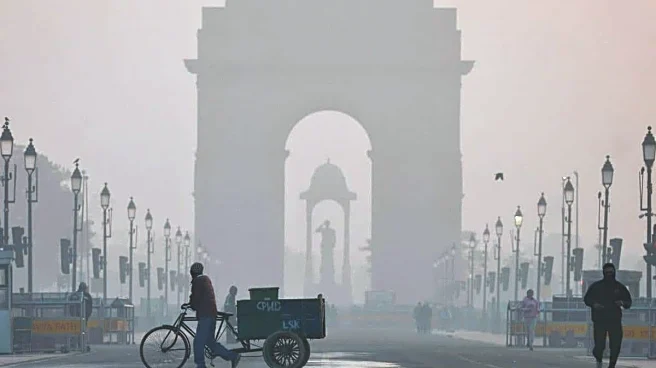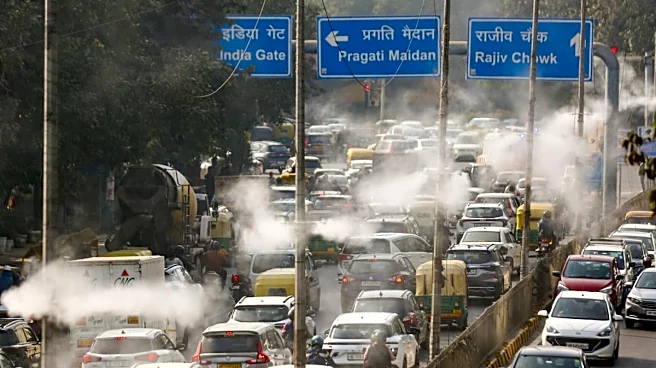


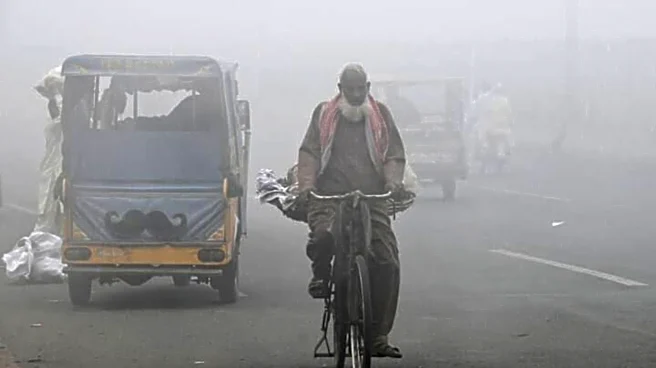
Delhi is often associated with India’s worst winter pollution, but the latest real-time readings point to an even more alarming picture in other parts of the country. Bikaner in Rajasthan has topped the list of India’s 10 most polluted cities, with its Air Quality Index (AQI) reportedly touching 1,357 on the morning of November 4. Bathinda in Punjab follows with a reading of 883, while several cities across Haryana and Uttar Pradesh have also recorded extremely high pollution levels.
According to real-time air quality data published by Navbharat Times on November 4, New Delhi ranks 10th, with an AQI of 630. The national capital, meanwhile, is already under Stage II of the Graded Response Action Plan (GRAP), with authorities enforcing additional
measures to control dust and vehicular emissions across Delhi-NCR.
India’s Top 10 Most Polluted Cities On November 4
Bikaner recorded the highest reading among the cities listed, with its AQI reaching 1,357 at 6.45 am, according to the report. Bathinda followed with 883, while Karnal in Haryana registered 850.
Here is the complete list of the 10 cities and their reported AQI readings:
| Rank | City | State | Reported AQI |
|---|---|---|---|
| 1 | Bikaner | Rajasthan | 1,357 |
| 2 | Bathinda | Punjab | 883 |
| 3 | Karnal | Haryana | 850 |
| 4 | Ghaziabad | Uttar Pradesh | 840 |
| 5 | Sonipat | Haryana | 822 |
| 6 | Meerut | Uttar Pradesh | 812 |
| 7 | Panipat | Haryana | 804 |
| 8 | Hapur | Uttar Pradesh | 786 |
| 9 | Kaithal | Haryana | 769 |
| 10 | New Delhi | Delhi | 630 |
The readings indicate that the pollution problem extends well beyond the national capital. Bikaner’s reported AQI is particularly striking, while Bathinda, Karnal, Ghaziabad and Sonipat are also recording levels that point to a serious air-quality concern.
These figures are from the Navbharat Times report and may differ from readings published by other monitoring platforms. They should not be treated as CPCB readings or directly compared with the official CPCB AQI categories.
Why Is Air Pollution Rising Across North India?
The post-monsoon and winter months often bring a deterioration in air quality across the Indo-Gangetic Plain and adjoining regions. A combination of local emissions and unfavourable weather conditions can cause pollutants to accumulate close to the ground.
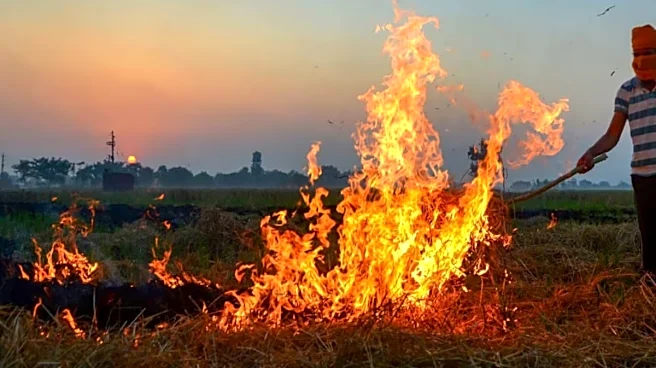
Stubble burning after the paddy harvest in Punjab and Haryana can add large quantities of particulate matter and gases to the atmosphere. However, it is only one of several contributors to regional pollution.
Vehicle exhaust, industrial emissions, construction and road dust, waste burning and the use of solid fuels for heating and cooking also contribute to poor air quality. During winter, temperature inversions and low wind speeds can further limit the dispersal of pollutants, allowing fine particles to remain trapped near the surface.
PM2.5 is a particular concern because these fine particles can travel deep into the respiratory system and enter the bloodstream. Exposure can aggravate respiratory and cardiovascular conditions and affect even people without previously diagnosed illnesses.
Delhi-NCR Under GRAP Stage II: What Triggered The Restrictions?
The Commission for Air Quality Management (CAQM) invoked Stage II of the Graded Response Action Plan across Delhi-NCR on November 2, with immediate effect, after Delhi’s official AQI entered the ‘Very Poor’ category.
🚦 GRAP Stage-II is in effect!
Know what’s allowed on Delhi roads. Follow vehicle norms, keep your PUC valid and drive responsibly.
🌿 Cleaner air begins with responsible choices!
📞 Traffic Helpline: 1095 | Emergency: 112
#GRAPStageII #DTPUpdates #CleanAir #DelhiTrafficPolice
— Delhi Traffic Police (@dtptraffic) November 3, 2026
According to the CAQM, Delhi’s AQI rose from 117 on October 31 to 261 on November 1 and 324 on November 2. The commission attributed the deterioration to unfavourable meteorological conditions and said forecasts indicated that air quality was likely to remain in the ‘Very Poor’ category.
Under the GRAP framework, Stage II applies when the official AQI is between 301 and 400. It adds measures to those already required under Stage I, with the aim of preventing further deterioration.
GRAP Stage II Restrictions Across Delhi-NCR
The measures focus on reducing road dust, controlling construction-related pollution and discouraging the use of private vehicles.
1. Mechanised Road Sweeping And Water Sprinkling
Authorities have been directed to intensify mechanised or vacuum-based road sweeping and water sprinkling on identified roads. These operations are to be carried out regularly, preferably during the night or early morning, with additional machine deployment where required.
Water sprinkling and dust suppressants are also to be used on roads, heavy-traffic corridors and congestion points before peak traffic hours. Dust collected during sweeping must be transported to designated disposal sites.
2. Stricter Checks At Construction Sites
Inspection teams are required to intensify checks at construction and demolition sites to ensure that dust-control rules are followed.
Authorities will also focus on pollution hotspots and take targeted action based on the main sources of pollution in each area.
From November 1, under CM Smt. Rekha Gupta’s leadership, Delhi’s Winter Action Plan 2026-27 comes into effect with stricter pollution controls, stronger enforcement and 24×7 monitoring.
We humbly request all Delhiites to follow the guidelines and contribute towards making Delhi’s air cleaner and healthier.
Together, let’s make a difference!
#ViksitDelhi
— CMO Delhi (@CMODelhi) October 31, 2026
3. Higher Parking Fees
Parking charges at authorised parking facilities are to be increased to discourage the use of private vehicles and encourage commuters to shift to public transport.
4. Measures To Prevent Open Burning
Resident Welfare Associations (RWAs) have been asked to provide electric heaters and electricity connections to security guards, sanitation workers, horticulture staff and other personnel.
The measure is intended to prevent the burning of biomass and municipal solid waste for warmth during winter.
5. Staggered Office Timings
The GRAP Stage II schedule advises the Delhi government and NCR state governments to consider staggered timings for public offices and municipal bodies in Delhi, Gurugram, Faridabad, Ghaziabad and Gautam Buddha Nagar.
Other NCR areas may also consider similar arrangements. The Central Government may take a separate decision on staggered timings for its offices in the region.
Delhi Metro Adds 20 More Weekday Trips
As part of efforts to encourage public transport use, the Delhi Metro Rail Corporation (DMRC) has announced 20 additional train trips on weekdays from November 3.
Service Update
In the wake of implementation of GRAP-II in the capital, Delhi Metro will be running 20 more trips from tomorrow on weekdays, thereby, increasing the total number of additional trips on its network by 40.
This is to encourage more and more people to use public transport than their private vehicles and help mitigate pollution.
— Delhi Metro Rail Corporation (@OfficialDMRC) November 2, 2026
The latest addition takes the total number of extra weekday trips across the Metro network to 40. DMRC said the move is intended to encourage commuters to use public transport instead of private vehicles and help reduce vehicular emissions.
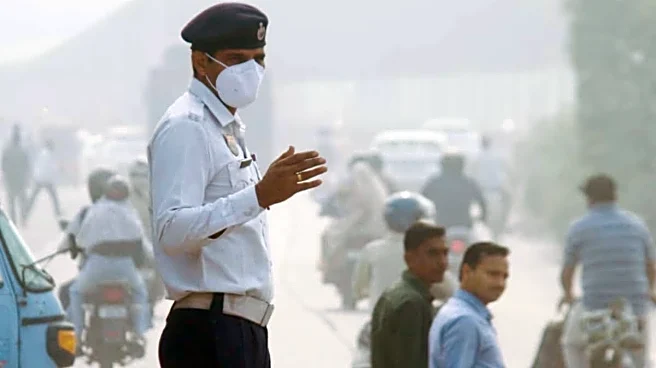
Traffic police are also stepping up deployment at busy roads and intersections to ease congestion. Authorities are intensifying checks for valid Pollution Under Control Certificates (PUCCs) and taking action against visibly polluting vehicles.
What Should Residents Do When AQI Reaches Hazardous Levels?
When air pollution rises sharply, reducing exposure becomes important, particularly for children, older people, pregnant women and those with asthma, chronic obstructive pulmonary disease (COPD) or heart conditions.
Here are some precautions residents can follow:
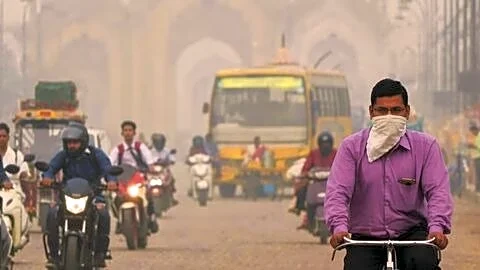
- Wear a well-fitted N95 or N99 mask: Use a properly fitted respirator when going outdoors. Ordinary cloth masks and loose-fitting coverings offer limited protection against fine particulate matter.
- Limit outdoor activity: Avoid jogging, outdoor workouts and strenuous physical activity when pollution levels are high. Children and older people should spend as little time outdoors as possible.
- Keep indoor air cleaner: Keep windows and doors closed when outdoor pollution is severe. Use a HEPA air purifier in frequently occupied rooms, if available.
- Clean without raising dust: Use a damp cloth or wet mop instead of dry sweeping. Avoid burning incense, candles or other materials unnecessarily.
- Take extra care with existing health conditions: Keep prescribed medicines and inhalers accessible. Follow medical advice and seek help if breathing difficulties, chest discomfort or other symptoms worsen.
- Reduce indoor smoke: Avoid burning wood, coal or waste for heating and cooking. Ensure that cooking areas are adequately ventilated.
Residents should also follow official air-quality advisories and use public transport where possible. While dietary choices can support general health, they cannot prevent the effects of polluted air or replace measures to reduce exposure.