
/images/ppid_a911dc6a-image-177633063121333777.webp)

/images/ppid_a911dc6a-image-17763306110077551.webp)
Imagine a factory that never really shuts down. It keeps running through the night, but not because workers are pulling long shifts. There’s no one there.
No workers on the floor, no supervisors checking production lines, and in some cases, not even the lights are on.
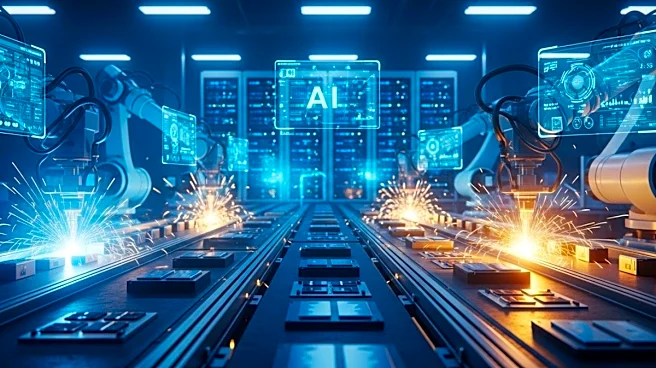
That’s what China’s “dark factories” look like. These are highly automated manufacturing units where machines handle almost everything. Robotic arms assemble products, AI systems keep an eye on quality, and automated vehicles quietly move materials from one end to the other. In some setups, the entire process flows from start to finish without anyone stepping in.
The “dark” part is quite literal. If there are no people inside, there’s no need for lights or typical working conditions.
Everything runs on sensors, cameras and data, not human presence. What makes these factories stand out isn’t just the technology, but how they operate. They don’t pause. There are no shifts to change, no breaks to factor in, no downtime in the usual sense. Production can keep going around the clock, which means higher output and more consistent quality. For companies, that kind of reliability is hard to ignore.
And there’s a reason China is leaning into this.
Factory wages have been rising, and fewer young workers are choosing manufacturing jobs. At the same time, global competition is only getting tighter. Automation offers a way to stay efficient without depending as heavily on large workforces.
But that shift comes with a trade-off.
Factories like these don’t need as many people on the floor, especially for repetitive tasks that machines can now handle faster and more precisely. At the same time, they do create new roles — engineers, technicians, programmers — but those require a very different skill set. Not everyone can make that jump easily, which is where the real tension lies.
These factories offer a glimpse of where manufacturing could be headed. If they continue to deliver on efficiency and cost, it’s likely that more countries and companies will start moving in the same direction. That could mean cheaper products and faster production, but also a world where fewer people are directly involved in making the things we use every day.

/images/ppid_a911dc6a-image-177641805843117794.webp)



/images/ppid_a911dc6a-image-177649853094710367.webp)
/images/ppid_a911dc6a-image-177641463576223407.webp)
/images/ppid_a911dc6a-image-177641457190925107.webp)
/images/ppid_a911dc6a-image-177632833180493791.webp)