

/images/ppid_59c68470-image-178161753595253744.webp)
/images/ppid_59c68470-image-178163002916481556.webp)


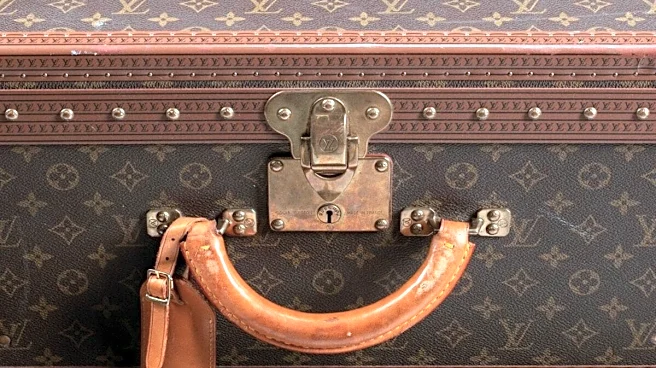
Imagine arriving at a railway station with not one suitcase, not five suitcases, but more than 60 Louis Vuitton trunks.
For Maharaja Jagatjit Singh of Kapurthala, that wasn’t excess. It was simply how he travelled.
Among India’s princely rulers, few were as cosmopolitan as the Maharaja of Kapurthala. A frequent visitor to Europe and an enthusiastic admirer of French culture, he spent much of his life moving between continents, royal courts and luxury hotels. His travels became so famous that they helped turn him into one of Louis Vuitton’s most celebrated royal clients.
By the early twentieth century, Jagatjit Singh had reportedly amassed more than 60 custom-made Louis Vuitton trunks.
These were not ordinary pieces of luggage.
Some were designed
specifically for turbans. Others carried ceremonial robes, formal European suits, shoes, jewellery, documents and personal accessories. Many functioned as portable wardrobes, allowing the Maharaja to maintain the standards of a royal court even while travelling thousands of kilometres from home.
To understand why this mattered, it helps to remember how people travelled at the time.
There were no overnight international flights. Journeys often involved days or weeks aboard ships and trains. Wealthy travellers frequently carried large amounts of clothing and equipment because replacing items during a voyage was not always easy.
Even by those standards, however, the Maharaja’s luggage collection stood out.
Historical accounts suggest that moving his baggage could become an operation in itself. Porters, attendants and staff often accompanied the royal entourage, transforming what would have been a simple journey for most people into something closer to a travelling palace.
The luggage reflected the ruler himself.
Jagatjit Singh was known for blending Indian royalty with European elegance. He spoke several European languages, spent considerable time in France and built the spectacular Jagatjit Palace, whose design drew inspiration from Versailles. Louis Vuitton, then one of Europe’s most prestigious luxury houses, was a natural fit.
Nearly a century later, his trunk collection remains one of the most remarkable examples of the relationship between Indian maharajas and European luxury brands.
After all, most people travel with a suitcase. A Maharaja travelled with an entire wardrobe.
/images/ppid_59c68470-image-178177758794431291.webp)

/images/ppid_59c68470-image-178167502530118646.webp)
/images/ppid_a911dc6a-image-178175407637072804.webp)

/images/ppid_59c68470-image-178176506670041092.webp)


/images/ppid_a911dc6a-image-178177163499255688.webp)

/images/ppid_59c68470-image-178167502568093476.webp)