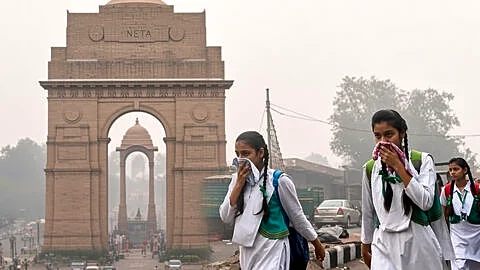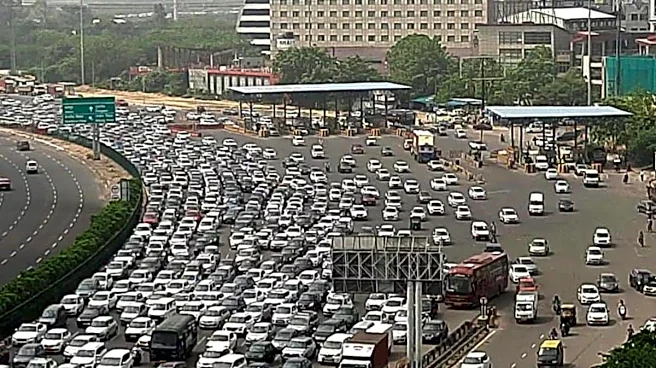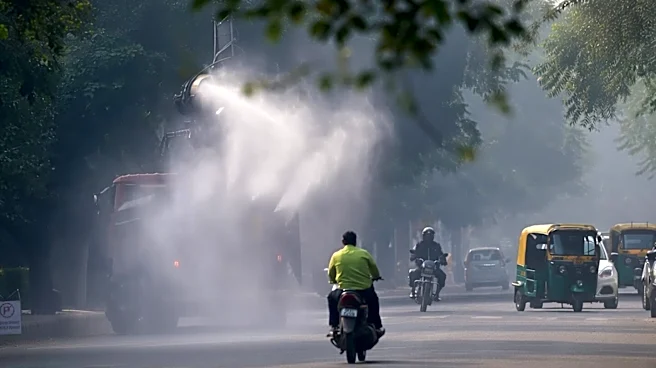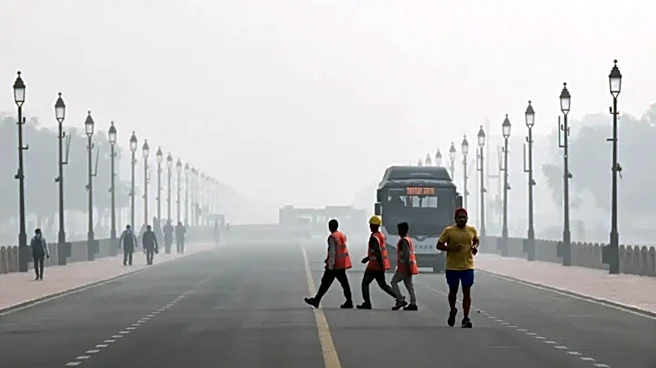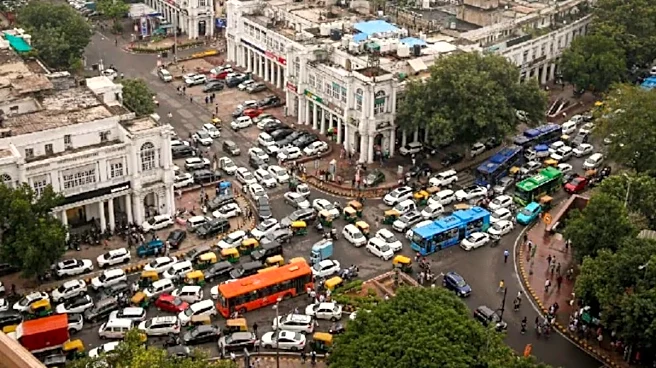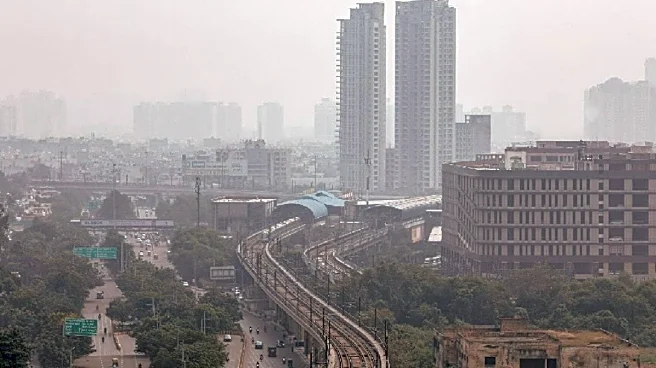



Delhi-NCR’s air pollution is usually discussed as a single crisis. In practice, it is many problems at once. It draws on industry, vehicles, construction, roads, farm fires and waste, and it crosses several state boundaries. A problem of that breadth tends to invite equally broad responses.
The Environment Ministry’s interaction with start-ups on 17 October 2026, part of its “Saaf Hawa Mein Hissedaari, Hum Sabhi Ki Hai Zimmedaari” campaign, was organised around specific problems. Union Environment Minister Bhupender Yadav set out problem statements across nine areas. Innovators were asked how their technologies could be adapted, scaled and deployed on the ground, with the emphasis on affordable solutions that show measurable impact at source
and in real time. Key government stakeholders, such as the Delhi Government, the Commission for Air Quality Management and the pollution control boards, were at the same table.
The solutions presented at the event ranged from detection and monitoring to prediction, enforcement and mitigation: AI-based source apportionment, round-the-clock detection of stubble burning, and pollution mapping at the neighbourhood level.
Bringing regulators and innovators into one room is only half the battle. Innovators often build for problems they assume exist, while regulators need tools that fit specific enforcement gaps, budgets and procurement rules. When the two do not meet, technologies that work in a trial rarely find a buyer in government.
Ask the right question
Technology is most useful in pollution control when it fills a specific blind spot in enforcement, not when it simply adds more data.
Industrial emissions are a case in point. Units report emissions through Online Continuous Emission Monitoring Systems (OCEMS), but a single data stream can be manipulated. Minister Yadav proposed integrating OCEMS data with plant-operation data, with artificial intelligence (AI) flagging the mismatches. The principle is straightforward. An auditor does not rely on a company’s ledger alone; the bank statements tell the rest of the story. Compare two independent records, and tampering becomes harder to hide.
The gain is not merely technical. Enforcement that rests on cross-checked data depends less on who happens to be inspecting, which makes implementation more uniform and more transparent. The same applies to vehicles. A Pollution Under Control (PUC) certificate is only as reliable as the test behind it, and only useful if it is checked. Automated identification of vehicles without valid certificates turns a periodic paper check into continuous enforcement.
Pollution is also a market problem
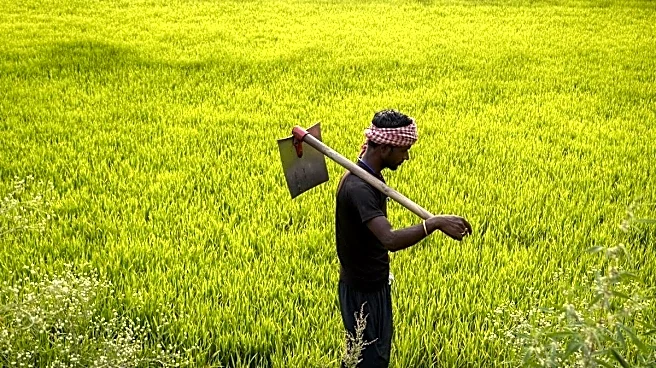
The discussion also covered what happens after a technology works. Farmers burn paddy straw because the window between harvest and the next sowing is short, and because the straw has no easy, paying alternative use. Construction debris is dumped for a similar reason: recycling it costs more than leaving it. The Ministry called for guidelines on parali (paddy straw) storage, to be developed with the Agriculture Ministry and the regulators. Start-ups presented ways to turn straw into bioenergy, compost and packaging, and to connect recycled debris with buyers in the construction sector. Since much of the crop residue that affects Delhi’s air is burnt beyond its borders, any such framework will need to work across states.
Processing technology alone will not change behaviour. Unless straw and debris are linked to supply chains and buyers, there is no incentive to collect, store or upcycle them, and burning or dumping remains the cheaper option.
The criteria for what comes next are clear. Solutions should be integrated, scalable, economically viable and matched to field conditions, and should complement existing measures such as the Graded Response Action Plan rather than replace them.
From trial to adoption
The harder step is moving from trial to adoption. Sensors need maintenance, data needs officials who can act on it, and tools need a route into procurement. The Delhi Government’s Innovation Challenge, which has moved 22 of its 284 entries into field trials under a committee that includes IIT Delhi and the Central Pollution Control Board, now faces the same test. That is the gap IMPACT Bharat, the not-for-profit network that convened the round table, works to close. It brought 15 deployment-ready innovators to the Ministry. Its case rests on a familiar pattern: fewer than 30 per cent of technology pilots ever move to scale, and 84 per cent remain in pilot mode for more than a year.
Delhi-NCR’s air will not improve because of one meeting. A precise question is where policy begins; adoption is where it is proven.
(Anuj Gupta is the MD of BowerGroupAsia, India. Views expressed here are personal.)