

/images/ppid_59c68470-image-17785126346146194.webp)
/images/ppid_59c68470-image-177848003710261605.webp)
Fresh concerns around hantavirus have triggered global debate after reports of a suspected “generation 3” transmission case raised questions about whether the virus may be evolving to spread more efficiently between humans.
However, health experts and global agencies have stressed there is currently no evidence that hantavirus has mutated into an airborne virus like Covid-19.
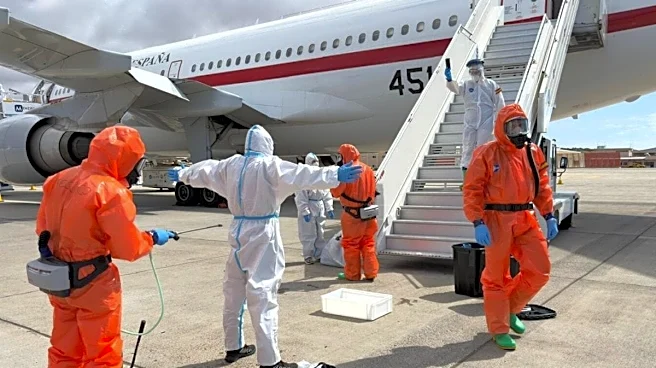
The concerns emerged amid the ongoing hantavirus outbreak linked to the Dutch-flagged cruise ship MV Hondius, where multiple infections and three deaths were reported across several countries.
What Is A ‘Generation 3’ Case?
A generation-based transmission chain refers to how far a virus spreads from the original infected person.
Generation 1: Direct infection from the original sourceGeneration 2: Infection
passed from that person to another humanGeneration 3: Infection passed onward again through another human chain
Reports of a possible third-generation transmission sparked fears online that the virus may be adapting for sustained human-to-human spread.
However, experts say isolated transmission chains do not automatically mean the virus has become highly contagious.
Is Hantavirus Airborne Like Covid?
No. According to scientists and the World Health Organization, hantavirus is still primarily considered a rodent-borne disease and does not spread through the air in the same way Covid-19 does.
Most hantavirus infections occur when people inhale virus particles from rodent urine, droppings or saliva.
Some strains — especially the Andes virus found in South America — can spread between humans in close-contact situations, but transmission remains limited and far less efficient than respiratory viruses like SARS-CoV-2.
Health experts emphasised that hantavirus does not currently show signs of rapid airborne community spread.
Why The Cruise Ship Outbreak Raised Alarm
The outbreak aboard the MV Hondius attracted worldwide attention because infected passengers travelled across multiple countries before cases were confirmed.
The cruise had sailed through Antarctica and the South Atlantic before several passengers fell ill.
The World Health Organization has since notified multiple countries whose citizens may have been exposed during the voyage.
Officials have warned that more cases could emerge because hantavirus incubation periods can extend up to six weeks.
What Symptoms Does Hantavirus Cause?
Symptoms can initially resemble flu-like illness and may include:
- Fever
- Headache
- Muscle pain
- Fatigue
- Nausea or vomiting
In severe cases, patients may develop hantavirus pulmonary syndrome (HPS), a dangerous respiratory condition that can become fatal.
Experts Urge Calm
Health authorities have repeatedly said the outbreak is not the beginning of another Covid-like pandemic.
The WHO has stated the overall public risk remains low because hantavirus does not spread easily between people.
Experts say the current focus remains on contact tracing, monitoring exposed individuals and preventing rodent exposure rather than imposing large-scale restrictions.
Scientists continue studying the outbreak to better understand how transmission occurred in the suspected human-to-human cases.
/images/ppid_59c68470-image-177863757459798867.webp)


/images/ppid_a911dc6a-image-177855722672463117.webp)

/images/ppid_a911dc6a-image-177850964453846759.webp)
/images/ppid_a911dc6a-image-177846503631578287.webp)

/images/ppid_a911dc6a-image-177847323356613106.webp)