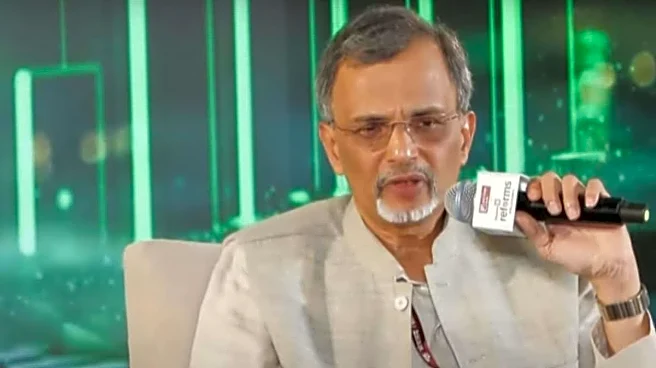


India may face a currency management challenge in the next financial year (FY28), with the rupee potentially coming under appreciation pressure rather than weakening against the US dollar, Chief Economic Advisor (CEA) V Anantha Nageswaran said on Wednesday. Easing global crude oil prices, improving foreign capital inflows and a possible shift in global investments away from artificial intelligence (AI)-related assets could strengthen India’s economic outlook in 2027-28, he said.
Speaking at the Federation of Indian Chambers of Commerce and Industry (FICCI) Annual General Meeting and Annual Convention in New Delhi, Nageswaran expressed optimism about India’s growth prospects, citing improving macroeconomic conditions and the possibility of more
favourable global developments.
“In fact, who knows? Our problem next year may be one of managing rupee strength rather than rupee weakness in FY28,” he said.
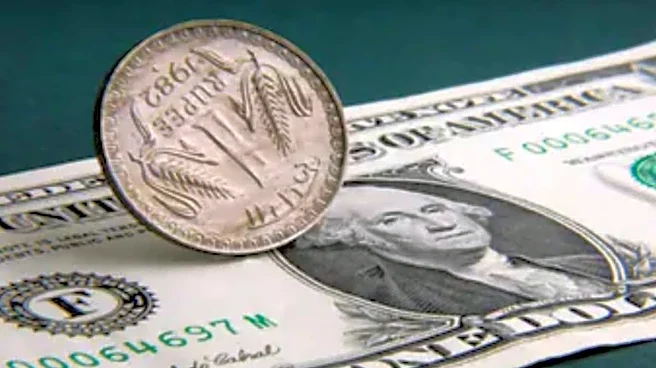
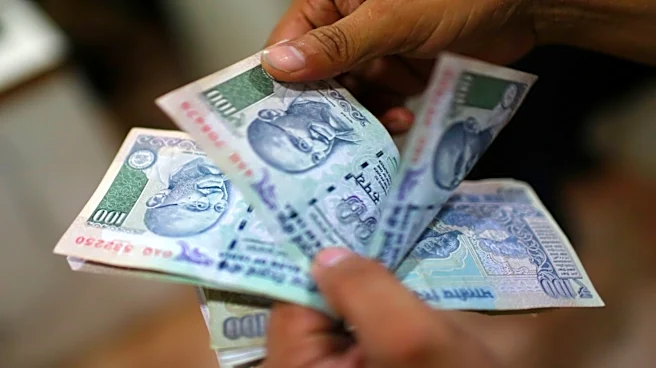
His remarks come as the Indian currency has recovered from its record low against the US dollar in October. The rupee had closed at 96.88 against the dollar on October 8. It has since strengthened, settling at 93.41 on Wednesday, gaining 10 paise from its previous close. On Tuesday, it had appreciated by 43 paise to end at a seven-month high of 93.51.
Falling Crude Oil Prices Could Provide Major Relief
One of the key factors underpinning the CEA’s optimism is the possibility of a decline in international crude oil prices. Several agencies expect Brent crude prices to fall below $80 per barrel next year, which could significantly benefit India’s import-dependent economy.
“If that happens to be the case, then India will have a huge windfall in terms of lower energy prices next year, which will naturally spill over into lower input costs, lower inflation and higher growth as well,” Nageswaran said.
Lower crude oil prices could ease India’s import bill, reduce pressure on the current account deficit and support the rupee by lowering demand for dollars to finance energy imports. Cheaper energy could also help moderate inflation and improve the cost competitiveness of Indian businesses.
AI Valuation Concerns Could Redirect Global Capital To India
The CEA also pointed to the possibility of global investment flows moving away from AI-related assets amid concerns over elevated valuations and the sustainability of investments in the sector.
India, which has relatively limited exposure to the development of frontier AI models, could emerge as an alternative destination for international capital, he suggested.
“So, no further proof is required to suggest that India is being seen as an alternative safe haven,” Nageswaran said, highlighting the relative resilience of Indian equities during periods of selling pressure in US technology stocks.
He noted that India attracted net foreign institutional investor (FII) equity inflows of $5.2 billion during July and August, when concerns surrounding AI safety emerged and India’s landed crude oil costs declined to around $82-85 per barrel.
Further, net FII inflows had reached about $10 billion during November up to Tuesday, he said, pointing to improving foreign investor sentiment towards Indian markets.
Sustained foreign capital inflows could support the domestic currency by increasing the supply of dollars in the Indian forex market.
India On Track For $1 Trillion Exports
Nageswaran also highlighted India’s export performance, saying the country was approaching the end of calendar year 2026 in a considerably better economic position than it was six months ago.
India’s total exports of goods and services reached an estimated $568.84 billion during April-October FY27, registering growth of 16.66% year-on-year. Imports during the same period stood at $662.19 billion, up 16%.
Merchandise exports rose nearly 45% year-on-year to $49.47 billion in October, setting a new record. Services exports for the month were estimated at $40.51 billion.
“Those of us who are not that mathematically challenged can easily extrapolate this to a 12-month figure and say that we will be close to achieving $1 trillion this year,” the CEA said.
He also expressed hope that India’s unsettled trade relations with the United States would improve, providing another boost to the country’s economic prospects.
RBI Measures To Support Rupee
The rupee’s recent recovery has also come amid a series of measures announced by the Reserve Bank of India (RBI) to stabilise the domestic currency and ease pressure on the forex market.
On October 10, the central bank announced several steps, including a special window for oil marketing companies to meet their dollar requirements outside the spot market. The move was aimed at reducing concentrated dollar demand from these companies in the domestic foreign exchange market.
The RBI also tightened rules governing foreign exchange derivatives trades to curb speculative positions against the rupee. Additionally, banks were asked to maintain a 20% reserve against dollar purchases exceeding $2 million.
These measures came amid heightened volatility in the currency market and pressure on the rupee from elevated energy prices and geopolitical uncertainties.
India Must Strengthen Economic Resilience: CEA
Despite the improving outlook, Nageswaran cautioned that India cannot afford to remain complacent amid a rapidly changing global economic environment.
Geopolitical uncertainty, supply-chain disruptions, China’s dominance in manufacturing and the disruptive impact of artificial intelligence remain key challenges for the Indian economy.
“Business as usual will not work,” he said, calling for greater cooperation between the government, private sector and households to strengthen India’s economic resilience.
The CEA added that India’s post-pandemic growth performance, supported by macroeconomic stability and fiscal prudence, had improved its medium-term economic prospects despite repeated global supply shocks.
“This is the backdrop against which we are entering the tail end of the 2026-27 financial year, setting the stage for a fairly decent 2027-28 as well, in terms of how growth numbers and capital inflows would stack up,” he said.
(With Inputs from Agencies)