

Independence Day Quiz Questions and Answers: India’s Independence Day is celebrated every year on August 15 to mark the country’s independence from British rule in 1947. The national occasion is marked by flag-hoisting ceremonies, patriotic programmes and celebrations across the country.
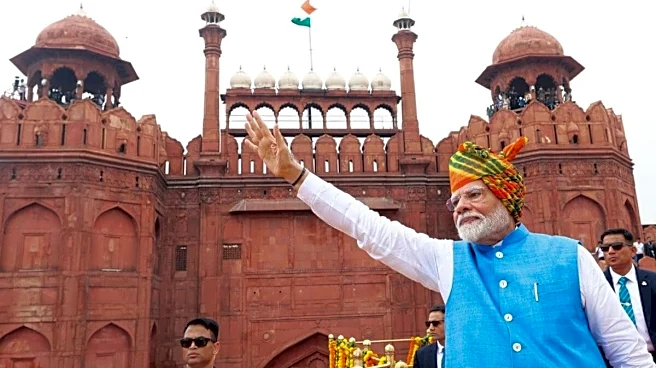
The main national ceremony takes place at the Red Fort in New Delhi, where the Prime Minister addresses the nation. The National Portal of India describes Independence Day as marking the beginning of a new era after more than 200 years of British colonial rule.
Read More: Is Independence Day 2026 India’s 79th Or 80th? History And Facts Explained
As Independence Day 2026 approaches, it is a good opportunity to revisit some of the important events, personalities
and symbols associated with India’s freedom struggle. How well do you remember the date on which India became independent?
Who was the first Prime Minister of independent India? Which British law formally ended British rule in India? When was the Indian national flag adopted? And how much do you know about the Constitution, the national anthem and the historic events surrounding August 15, 1947?
Whether you are preparing an Independence Day quiz for school, a workplace activity, a family game or simply want to test your own knowledge, these questions cover a mix of easy, moderate and challenging facts.
Read More: Independence Day 2026: How To Upload Har Ghar Tiranga Selfie And Get Certificate
Try answering all the questions before checking the answer key at the end.
Independence Day Quiz 2026: Questions
1. On which date does India celebrate Independence Day?
A. January 26
B. August 15
C. October 2
D. November 26
2. In which year did India become independent from British rule?
A. 1945
B. 1946
C. 1947
D. 1950
3. Who became the first Prime Minister of independent India?
A. Sardar Vallabhbhai Patel
B. Dr Rajendra Prasad
C. Jawaharlal Nehru
D. C Rajagopalachari
Read More: Independence Day 2026: 80 Interesting Facts About Indian Independence Day You Should Know
4. Who was the last Viceroy of British India?
A. Lord Curzon
B. Lord Mountbatten
C. Lord Wavell
D. Lord Irwin
5. Who was the first Governor-General of independent India?
A. C Rajagopalachari
B. Lord Mountbatten
C. Jawaharlal Nehru
D. Dr Rajendra Prasad
6. Who was the first Indian Governor-General of independent India?
A. Sardar Vallabhbhai Patel
B. Dr Rajendra Prasad
C. C Rajagopalachari
D. Maulana Abul Kalam Azad
7. Which Act formally provided for the creation of two independent dominions, India and Pakistan?
A. Government of India Act, 1935
B. Indian Councils Act, 1909
C. Indian Independence Act, 1947
D. Rowlatt Act, 1919
8. Who delivered the famous “Tryst with Destiny” speech?
A. Mahatma Gandhi
B. Jawaharlal Nehru
C. Sardar Vallabhbhai Patel
D. Subhas Chandra Bose
9. When was the Indian national flag adopted by the Constituent Assembly?
A. July 22, 1947
B. August 15, 1947
C. January 26, 1950
D. November 26, 1949
10. Who designed the Indian national flag in its present basic form?
A. Pingali Venkayya
B. Abanindranath Tagore
C. Nandalal Bose
D. Bankim Chandra Chattopadhyay
11. What does the Ashoka Chakra on the Indian national flag contain?
A. 12 spokes
B. 18 spokes
C. 24 spokes
D. 32 spokes
Read More: Happy Independence Day 2026 Wishes: Best 15 August Quotes, Messages, Images And Status
12. Which colour appears at the top of the Indian national flag?
A. Green
B. White
C. Saffron
D. Blue
13. What is the ratio of the length to the height of the Indian national flag?
A. 2:1
B. 3:2
C. 4:3
D. 5:3
14. Who is popularly known as the “Father of the Nation” in India?
A. Jawaharlal Nehru
B. Mahatma Gandhi
C. Sardar Vallabhbhai Patel
D. Subhas Chandra Bose
15. Which movement was launched by Mahatma Gandhi in 1942 demanding an end to British rule?
A. Non-Cooperation Movement
B. Civil Disobedience Movement
C. Quit India Movement
D. Swadeshi Movement
16. What was the famous slogan associated with the Quit India Movement?
A. Jai Jawan, Jai Kisan
B. Do or Die
C. Inquilab Zindabad
D. Vande Mataram
17. Who gave the slogan “Give me blood, and I will give you freedom”?
A. Bhagat Singh
B. Mahatma Gandhi
C. Subhas Chandra Bose
D. Bal Gangadhar Tilak
18. Which freedom fighter founded the Indian National Army (INA) and became one of its most prominent leaders?
A. Lala Lajpat Rai
B. Subhas Chandra Bose
C. Gopal Krishna Gokhale
D. Dadabhai Naoroji
Read More: Rangoli Designs For Independence Day: Easy Tricolour Ideas For 15th August
19. Who wrote “Vande Mataram”?
A. Rabindranath Tagore
B. Bankim Chandra Chattopadhyay
C. Sarojini Naidu
D. Muhammad Iqbal
20. Who composed India’s national anthem, “Jana Gana Mana”?
A. Bankim Chandra Chattopadhyay
B. Rabindranath Tagore
C. Subramania Bharati
D. Sarojini Naidu
21. When was “Jana Gana Mana” adopted as India’s national anthem?
A. August 15, 1947
B. November 26, 1949
C. January 24, 1950
D. January 26, 1950
22. When did the Constitution of India come into force?
A. August 15, 1947
B. November 26, 1949
C. January 24, 1950
D. January 26, 1950
23. Why is January 26 celebrated as Republic Day?
A. India became independent on this date
B. The Constitution was adopted on this date
C. The Constitution came into force on this date
D. The first general election was held on this date
24. Where does the Prime Minister traditionally address the nation on Independence Day?
A. India Gate
B. Parliament House
C. Red Fort, New Delhi
D. Rashtrapati Bhavan
25. Which historic speech did Jawaharlal Nehru deliver shortly before India became independent?
A. “Do or Die”
B. “Tryst with Destiny”
C. “Swaraj is my birthright”
D. “Give me blood, and I will give you freedom”
26. Who was the President of the Constituent Assembly?
A. Dr Rajendra Prasad
B. B R Ambedkar
C. Jawaharlal Nehru
D. Sardar Vallabhbhai Patel
27. Who chaired the Drafting Committee of the Constituent Assembly?
A. Dr Rajendra Prasad
B. B R Ambedkar
C. Jawaharlal Nehru
D. Sardar Vallabhbhai Patel
28. Which day is observed in India as Partition Horrors Remembrance Day?
A. August 14
B. August 15
C. January 26
D. November 26
29. Which city is associated with Mahatma Gandhi’s efforts to promote communal peace around the time of Independence?
A. Calcutta
B. Mumbai
C. Pune
D. Ahmedabad
30. India’s Independence Day in 2026 will mark how many years since independence in 1947?
A. 78 years
B. 79 years
C. 80 years
D. 81 years
Independence Day Quiz Answers
1. B — August 15
India celebrates Independence Day on August 15 every year. The National Portal of India lists August 15 as Independence Day.
2. C — 1947
India became independent from British rule on August 15, 1947.
3. C — Jawaharlal Nehru
Jawaharlal Nehru became independent India’s first Prime Minister.
4. B — Lord Mountbatten
Lord Louis Mountbatten was the last Viceroy of British India.
5. B — Lord Mountbatten
Mountbatten became the first Governor-General of independent India.
6. C — C Rajagopalachari
C Rajagopalachari succeeded Mountbatten and became the first Indian Governor-General.
7. C — Indian Independence Act, 1947
The Indian Independence Act, 1947 provided for the creation of the independent dominions of India and Pakistan.
8. B — Jawaharlal Nehru
Nehru delivered the “Tryst with Destiny” speech on the eve of India’s independence.
9. A — July 22, 1947
The Constituent Assembly adopted the national flag on July 22, 1947.
10. A — Pingali Venkayya
Pingali Venkayya is widely credited with designing the basic form of the Indian national flag that evolved into the present Tricolour.
11. C — 24 spokes
The Ashoka Chakra at the centre of the Indian flag has 24 spokes.
12. C — Saffron
The top band of the Indian national flag is saffron, followed by white and green.
13. B — 3:2
The prescribed ratio of the length to the height of the Indian national flag is 3:2.
14. B — Mahatma Gandhi
Mahatma Gandhi is popularly referred to as the “Father of the Nation” in India.
15. C — Quit India Movement
The Quit India Movement was launched in 1942 during the final phase of India’s freedom struggle.
16. B — Do or Die
Mahatma Gandhi gave the “Do or Die” call during the Quit India Movement.
17. C — Subhas Chandra Bose
The slogan “Give me blood, and I will give you freedom” is associated with Subhas Chandra Bose.
18. B — Subhas Chandra Bose
Subhas Chandra Bose was the most prominent leader of the Indian National Army, also known as the Azad Hind Fauj.
19. B — Bankim Chandra Chattopadhyay
Bankim Chandra Chattopadhyay wrote “Vande Mataram”, which is India’s national song. The National Portal of India lists “Vande Mataram” as the National Song.
20. B — Rabindranath Tagore
Rabindranath Tagore wrote the lyrics of “Jana Gana Mana”, India’s national anthem.
21. C — January 24, 1950
The Constituent Assembly adopted “Jana Gana Mana” as the national anthem on January 24, 1950. It was later formally used as the national anthem when the Constitution came into force on January 26, 1950.
22. D — January 26, 1950
The Constitution of India came into force on January 26, 1950.
23. C — The Constitution came into force on this date
January 26 is observed as Republic Day because the Constitution of India came into force on January 26, 1950.
24. C — Red Fort, New Delhi
The Prime Minister traditionally addresses the nation from the ramparts of the Red Fort on Independence Day. Official Prime Minister’s Office records document the annual address from the Red Fort.
25. B — “Tryst with Destiny”
Jawaharlal Nehru delivered his famous “Tryst with Destiny” speech shortly before India became independent.
26. A — Dr Rajendra Prasad
Dr Rajendra Prasad served as President of the Constituent Assembly.
27. B — B R Ambedkar
Dr B R Ambedkar chaired the Drafting Committee of the Constituent Assembly.
28. A — August 14
August 14 is observed as Vibhajan Vibhishika Smriti Diwas, or Partition Horrors Remembrance Day. President Droupadi Murmu referred to the observance in her 2025 Independence Day-eve address.
29. A — Calcutta
Mahatma Gandhi was in Calcutta around the time of Independence, working to promote communal peace amid the violence and upheaval surrounding Partition.
30. C — 80 years
India will observe its 80th Independence Day in 2026. Since independence was achieved in 1947, August 15, 2026 marks 79 completed years and the beginning of the 80th year of Independence. The official national portal identifies August 15 as Independence Day.
How Many Did You Get Right?
25–30 correct: Excellent! You know your Indian history and Independence Day facts very well.
19–24 correct: Great score! You have a strong understanding of India’s freedom struggle and national history.
13–18 correct: Good attempt! A little more revision of important dates and personalities will take you further.
7–12 correct: Not bad. Use the answer section to brush up on key Independence Day facts.
0–6 correct: Time for a quick history refresher. Try the quiz again after reading through the answers.
Independence Day is more than a national holiday. It is an occasion to remember the freedom struggle, honour the sacrifices of those who fought for independence and reflect on the values that continue to shape the country. The National Portal of India describes August 15 as marking the dawn of a new era after British colonial rule.
Whether you are taking this quiz for fun, preparing a school Independence Day activity or organising a quiz for colleagues and friends, these questions offer a quick way to revisit some of the key facts associated with India’s journey to independence.