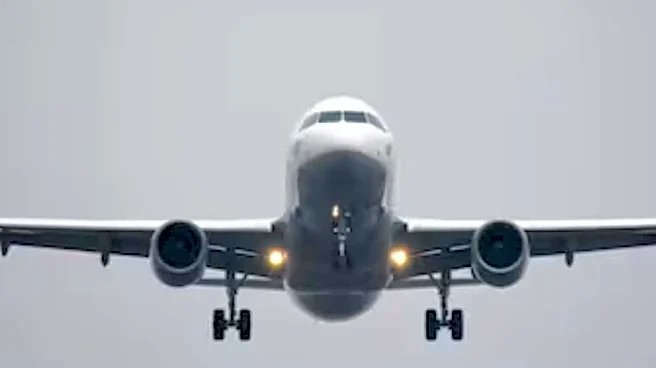


Hindustan Aeronautics Limited (HAL), best known for building frontline fighter aircraft such as the Tejas and Sukhoi-30 MKI, is set to enter a new chapter in its history with a major foray into civil aviation. The state-owned aerospace major has signed a landmark agreement with Russia’s United Aircraft Corporation (UAC) to manufacture the Sukhoi Superjet-100 in India, marking the country’s most significant step yet towards indigenous passenger aircraft production.
The agreement was signed by UAC Chief Executive Officer Vadim Badeha and HAL Chairman and Managing Director Dr DK Sunil. Under the deal, HAL will receive a licence to manufacture the Superjet-100 in India and will also be responsible for its sales, repair and maintenance. UAC will provide
design services, technical assistance and production support to enable manufacturing at HAL facilities.
The Sukhoi Superjet-100 is a 100-seater regional jet, designed by the same Sukhoi Design Bureau that has produced some of the world’s most advanced fighter aircraft. While the aircraft carries Sukhoi’s military engineering legacy, it is a civilian platform aimed at short and medium-haul routes, especially those operating from airports with shorter runways.
Industry experts describe the Superjet-100 as a “powerhouse for short runways”. In a country like India, where airports such as Shimla, Kullu and several facilities in the northeast operate under challenging terrain and limited runway length, large aircraft from Boeing or Airbus often cannot operate efficiently. The Superjet-100 has been designed specifically to take off and land in such conditions, making it suitable for hilly and remote regions.
The aircraft’s strong airframe and aerodynamic design draw directly from Sukhoi’s fighter jet experience, giving it higher structural strength and performance efficiency. Equipped with modern avionics, the jet is capable of operating in poor visibility, fog and adverse weather conditions, reducing the risk of weather-related disruptions and accidents.
India’s civil aviation market currently operates primarily with 70-seater turboprop aircraft at one end and 180-seater narrow-body jets at the other, leaving a wide gap in the 90–100 seat segment. The Superjet-100 is designed to fill this gap, with seating capacity ranging between 87 and 98 passengers. It cruises at speeds of up to Mach 0.81, approximately 870 kmph, significantly faster than turboprops and comparable to larger jets, reducing travel time on routes such as Delhi-Patna or Mumbai-Indore.
Passenger comfort has been a key design focus. Unlike many regional jets that feel cramped, the Superjet-100 features a wider cabin measuring around 3.2 metres, broader than comparable aircraft from Embraer or Bombardier. The standard 2+3 seating layout reduces the number of middle seats, while 18.3-inch-wide seats offer legroom comparable to economy class seating on larger aircraft. Large overhead bins have also been designed keeping passenger luggage needs in mind.
The aircraft is available in two variants; a standard version with a range of approximately 3,000 kilometres and a long-range version capable of flying up to 4,500 kilometres. This allows nonstop operations on major domestic sectors such as Delhi-Chennai, Mumbai-Kolkata, Bengaluru-Guwahati and other key city pairs. The jet can cruise at an altitude of up to 40,000 feet, enabling smoother flights above weather disturbances.
For airlines, the Superjet-100 offers a viable solution on routes where deploying a 180-seater aircraft is commercially unviable due to low passenger demand, while turboprops are too slow for longer distances. By combining jet speed with lower operating costs, the aircraft is expected to improve route profitability, particularly on Tier-2 and Tier-3 city connections such as Prayagraj-Mumbai, Surat-Bengaluru and Jabalpur-Delhi.
The ‘Make in India’ component of the deal is seen as a strategic breakthrough. Until now, India has remained fully dependent on foreign manufacturers like Boeing and Airbus for commercial aircraft. Local manufacturing of the Superjet-100 is expected to reduce costs by eliminating import duties and lowering maintenance expenses through domestic repair and overhaul facilities. Industry estimates suggest the aircraft could be 15-20% cheaper than comparable regional jets such as Embraer models or the Airbus A220, potentially translating into lower airfares for passengers.
The agreement also includes technology transfer, which is expected to help build a civil aviation manufacturing ecosystem in India. With HAL holding maintenance and repair rights, airlines will no longer need to send engines or components abroad, helping conserve foreign exchange and creating skilled jobs domestically.
The Superjet-100 has been certified by international aviation regulators, including the European Aviation Safety Agency and Russian authorities, and meets global safety standards. While the aircraft has faced scrutiny in the past due to isolated incidents, UAC has introduced design improvements and updated safety systems in newer variants. Before entering service in India, the aircraft will undergo additional certification and testing by the Directorate General of Civil Aviation (DGCA).
Although HAL has traditionally focused on military aircraft, it brings decades of aerospace manufacturing experience. The company has previously produced transport and passenger aircraft such as the Dornier-228, used by the Indian Coast Guard and regional airline operators. With UAC’s technical support, HAL is expected to scale up its capabilities for large commercial aircraft production.
The manufacturing programme is still in its early stages. Following the signing of the agreement, certification processes, infrastructure development and production planning will begin. Officials indicate that the first ‘Made in India’ Sukhoi Superjet-100 could take to Indian skies within the next 3-4 years, subject to regulatory approvals and production timelines.

/images/ppid_a911dc6a-image-177073402422810189.webp)





/images/ppid_a911dc6a-image-177060802130265096.webp)
/images/ppid_59c68470-image-177064254055570109.webp)
