


US President Donald Trump’s effort to find a way out of the seven-month war with Iran has run into a new complication: the Houthis.
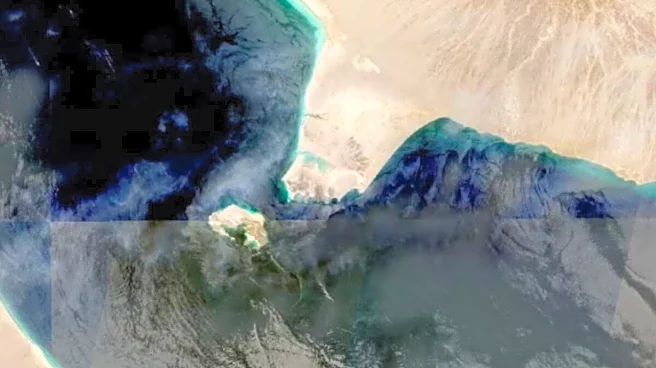
The Iran-aligned group has pushed south along Yemen’s Red Sea coast and seized Perim Island, which sits in the middle of the Bab el-Mandeb Strait between Yemen and Africa. Control of the island strengthens the Houthis’ position around a waterway that carries a significant share of global trade and petroleum supplies.
For Trump, the problem is not simply another battlefield development. His administration has been trying to increase economic pressure on Tehran while avoiding a level of military escalation that would inflict further costs on the US economy.
“Just weeks ago, Trump adopted a strategy of squeezing Iran’s
economy while keeping military conflict at levels too low to squeeze the American economy,” Stephen Wertheim, a senior fellow at the Carnegie Endowment for International Peace, told Reuters.
“The Houthis have shattered Trump’s plan.”
Why The Houthi Advance Matters To Trump
Trump is already under pressure from the economic consequences of the Iran war. Higher gasoline prices in the US have become a political concern ahead of the November midterm elections.
Iran, meanwhile, remains defiant despite being hit militarily and economically.
The Houthi advance now threatens to add another source of pressure at a difficult moment for Washington.
The group’s arrival at Perim is particularly significant because the island lies inside the Bab el-Mandeb, one of the main gateways between the Red Sea and the Arabian Sea. If shipping through the strait is disrupted, the effects would extend well beyond Yemen.
A Second Energy Chokepoint Comes Under Pressure
The Strait of Hormuz has already been disrupted after Iran responded to US and Israeli attacks earlier this year.
Before the war, around a fifth of global oil supplies moved through Hormuz.
Bab el-Mandeb is smaller in terms of petroleum flows, but still carries around 7 per cent of global petroleum supplies and roughly 12 per cent of global trade.
That makes the possibility of pressure on both waterways particularly consequential.
Saudi Arabia has also been relying more heavily on Red Sea ports for oil shipments since the war effectively closed Hormuz, increasing the importance of the route through Bab el-Mandeb.
“This was always the worst-case scenario, that the Iranians exert control not only of Strait of Hormuz but Bab el-Mandeb, two of the leading energy choke points in the world,” David Schenker, who served as Assistant Secretary of State for Near East Affairs during Trump’s first term, told Reuters.
“It’s an enormous amount of leverage that [the Iranians] have in hand.”
The Choice Trump Now Faces
The Houthi advance leaves Washington with an uncomfortable set of options.
A closure or serious disruption of Bab el-Mandeb could push up energy prices and hit global trade. But direct US military action against the Houthis would risk opening another front in a conflict that Washington is already trying to contain.
Saudi Crown Prince Mohammed bin Salman called Trump on Thursday and asked for US military assistance against the Houthis. According to Reuters, Washington said it would not intervene directly for now but would provide intelligence support.
Trump later confirmed that he had spoken to the Saudi crown prince. He also said the Houthis had contacted his administration and asked the US not to become directly involved.
A senior Trump administration official told Reuters that Washington remained focused on national security priorities including freedom of navigation in the Red Sea, while “empowering our regional partners to take the lead in managing and resolving regional security challenges”.
Why Direct Intervention Carries Its Own Risks
The Houthis have survived sustained military pressure before. They seized Yemen’s capital 12 years ago, and a Saudi-led military intervention has failed to dislodge them.
A fresh US campaign would also require significant naval and air resources. US officials say such an operation could involve diverting intelligence assets to identify Houthi positions that have changed since last year. American ships and aircraft could also be required to intercept Houthi drones and missiles, putting further pressure on stocks of air-defence munitions.
The Trump administration has rejected suggestions that the military is running short of resources. “The United States Military has more than enough munitions, ammo, and stockpiles to serve all of the Commander-in-Chief’s strategic goals and beyond,” a senior administration official told Reuters.
There is another complication.
Direct US action against the Houthis would effectively unravel an agreement Trump struck last year under which Washington stopped bombing the group in exchange for an end to attacks on Red Sea shipping.
Renewed fighting could once again expose US forces to missile attacks from Yemen.
What Washington Could Do Instead
With Trump signalling that he does not want to become directly involved militarily against the Houthis, former US special envoy for Yemen Tim Lenderking told Reuters Washington should increase intelligence sharing with Saudi Arabia and step up diplomatic and material support for Yemen’s internationally recognised government.
“This administration came in asking the question, ‘What can Yemen do for us?’” Lenderking said during a webcast sponsored by the Middle East Institute. “Well, Yemen can spoil our day.”





/images/ppid_59c68470-image-178911252781887008.webp)

