
/images/ppid_59c68470-image-177822253296870491.webp)


Back in 1984, researchers working at a US Navy marine mammal facility in California kept hearing what sounded like distant human conversations coming from a whale enclosure. At first, nobody understood where the noises were coming from. Then one diver suddenly surfaced from the tank and asked an unusual question: “Who told me to get out?”
Nobody had spoken to him.
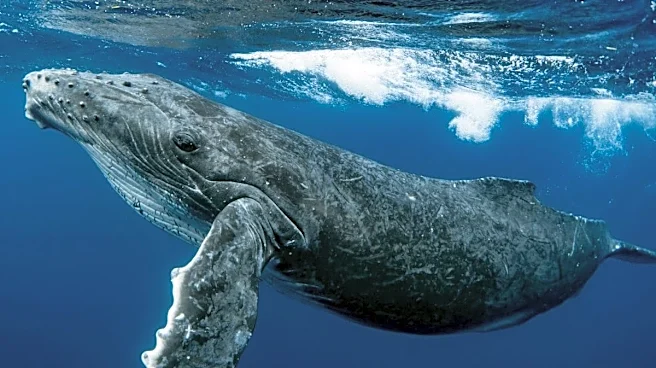
According to scientists, the voice-like sound had actually come from a beluga whale named NOC, a captive white whale living at the National Marine Mammal Foundation in San Diego. Researchers later realised the whale was producing strange vocalisations that sounded remarkably similar to human speech patterns.
The discovery became one of the most famous examples of vocal mimicry ever recorded
in a marine mammal.
Beluga whales are already known as the “canaries of the sea” because of their wide range of whistles, chirps and clicks. But NOC’s sounds were different. Scientists said his vocalisations were several octaves lower than normal beluga calls and much closer to the rhythm and frequency of a human voice.
Researchers eventually trained NOC to repeat the sounds on command so they could study exactly how he was producing them. According to marine biologist Sam Ridgway, the whale had to physically alter the way belugas normally create sounds.
Unlike humans, whales do not speak using vocal cords. Belugas produce sounds through structures in their nasal passages called phonic lips. Scientists discovered that NOC was increasing air pressure in his nasal tract and inflating sacs near his blowhole in an unusual way to create the lower, speech-like noises.
Researchers said the effort involved was extraordinary because the sounds were not natural beluga vocalisations. In one study published in the journal Current Biology, scientists described the whale’s calls as having an “amplitude rhythm similar to human speech.”
Importantly, researchers stressed that NOC was not actually speaking English or understanding language the way humans do. Scientists believe he was likely imitating sounds he heard frequently from divers, trainers and veterinarians around him.
Still, experts say the case demonstrated an unusually advanced form of vocal learning. While parrots and some birds are famous for mimicking human voices, spontaneous imitation of human speech-like sounds in whales had never previously been properly recorded and analysed.
NOC reportedly continued making the strange human-like sounds for about four years before eventually stopping as he reached sexual maturity. He died in 1999 after spending more than two decades in captivity. (Scientific American)
Even decades later, recordings of the whale still circulate online because of how eerily human the sounds appear. Some listeners compare the noises to muffled conversations heard through a wall, while others say it sounds like someone trying to speak underwater.
For scientists, however, the case remains one of the clearest demonstrations yet that some whales may possess far more flexible and sophisticated vocal abilities than previously understood.



/images/ppid_59c68470-image-177822502899469542.webp)


/images/ppid_a911dc6a-image-177834442484455414.webp)


/images/ppid_59c68470-image-177813003832321568.webp)
/images/ppid_59c68470-image-177814257202356602.webp)