



India’s decades-long battle against Left Wing Extremism (LWE) has entered what security agencies describe as its “endgame”, with March 31, 2026, set as the target date to declare the country “Naxal-free”.
The Union government’s strategy has focused on coordinated counter-insurgency operations, surrenders, and development-led stabilisation in erstwhile Maoist strongholds.
According to multiple media reports, the leadership structure of the banned CPI (Maoist) has been significantly weakened in the past two years due to arrests, surrenders and encounters involving several top leaders.
Security forces have intensified operations in key forested zones across Jharkhand, Chhattisgarh and Maharashtra as the deadline approaches, deploying elite units such
as CoBRA battalions to eliminate remaining armed cadres.
MISIR BESRA: THE LAST KEY FACE OF THE MAOIST LEADERSHIP
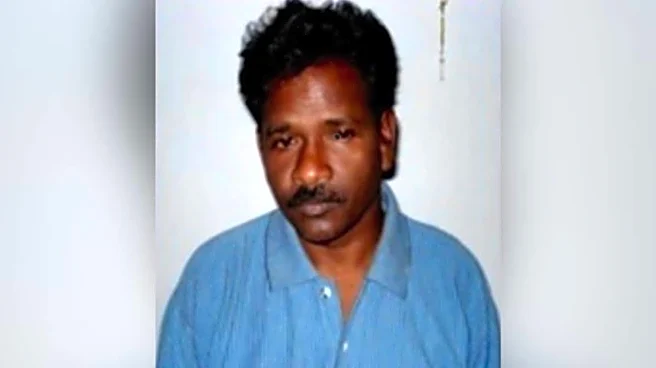
Among the few senior leaders still believed to be active is Misir Besra, also known by aliases such as Bhaskar or Sagar.
He is considered a Politburo member of the CPI (Maoist), placing him among the highest-ranking figures within the organisation’s ideological and operational command structure.
Reports indicate that Besra is believed to be operating in parts of Jharkhand and adjoining forested belts, with security agencies continuing intelligence-led operations to track his movement.
Recent operational reviews, including “Operation Black Forest”, have specifically identified Besra as a priority target as the Centre attempts to dismantle the remaining leadership network of the insurgency.
Media reports suggest that most of the apex leadership of CPI (Maoist) has either been neutralised, arrested or forced to surrender, leaving Besra among the few remaining senior functionaries still underground.
SHRINKING RED CORRIDOR AND MASS SURRENDERS
Data cited by government sources show a steep decline in Maoist activity across traditional strongholds such as Bastar, Gadchiroli and parts of Jharkhand.
In the Bastar region alone, thousands of cadres have surrendered since 2024, shrinking the operational capacity of insurgent groups.
In Maharashtra’s Gadchiroli district, once a major Maoist base, authorities say only a handful of cadres remain active, signalling the near-collapse of armed formations in the region.
The Ministry of Home Affairs has credited a combination of security operations, improved infrastructure, and surrender policies for the weakening of Maoist networks across the so-called “Red Corridor”, which once spanned dozens of districts across central and eastern India.
WHAT HAPPENS AFTER MARCH 31
Security experts caution that even if the March 31 deadline is met symbolically, residual threats may persist in the form of scattered armed cadres, hidden weapons caches and urban networks sympathetic to Maoist ideology.
Officials say the focus beyond the deadline will shift toward dismantling financial networks, clearing IED stockpiles, encouraging further surrenders and accelerating development in affected tribal regions to prevent the resurgence of extremism.
/images/ppid_59c68470-image-177514003537237408.webp)

/images/ppid_59c68470-image-177514009816761473.webp)
/images/ppid_59c68470-image-177514013966041466.webp)
/images/ppid_59c68470-image-177514006504151548.webp)
/images/ppid_59c68470-image-177514002629257038.webp)