


/images/ppid_59c68470-image-178352005577294930.webp)


After transforming passenger travel with the Vande Bharat Express, Indian Railways is preparing to take another significant technological leap, this time with hydrogen-powered trains.
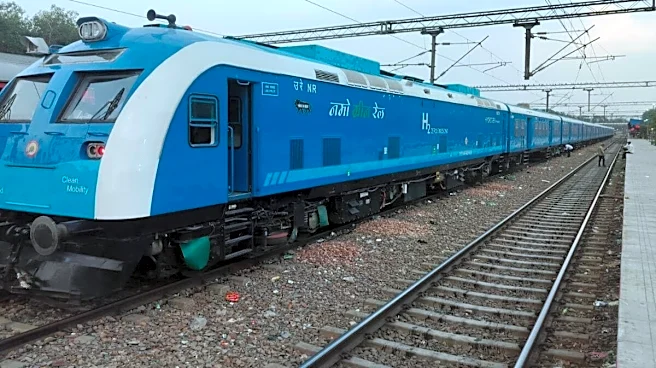
The Railways is set to launch India’s first hydrogen-powered train on the Jind-Sonipat section in Haryana, making the country one of a handful of nations experimenting with hydrogen fuel-cell technology for rail transport. Prime Minister Narendra Modi is expected to flag off the service from Jind on July 17, after which commercial operations are set to begin.
Unlike Vande Bharat, which represents the future of high-speed electric mobility, the hydrogen train is aimed at solving a different challenge: how to decarbonise rail routes where electrification remains difficult,
expensive or impractical.
While the upcoming service is only a pilot, it could shape how Indian Railways approaches sustainable transport in the years ahead.
What Is A Hydrogen Train?
A hydrogen train generates electricity using hydrogen fuel cells instead of relying on diesel engines or overhead electric wires.
The technology works through a chemical reaction between hydrogen and oxygen inside a fuel cell. The electricity produced powers the train’s traction system, while the only direct byproduct is water vapour. Unlike diesel locomotives, the process does not produce carbon emissions or smoke during operation.
This makes hydrogen one of the cleanest alternatives currently being explored for railway transport.
For countries trying to reduce dependence on fossil fuels while cutting emissions, hydrogen trains offer an attractive option, particularly on rail corridors that have not yet been electrified.
How Will India’s First Hydrogen Train Operate?
The pilot service will run on the 89-km Jind-Sonipat section under Northern Railway.
According to the Ministry of Railways, the 10-coach trainset has been developed with a 1,200-kW hydrogen fuel-cell propulsion system and is designed to operate at a maximum speed of 75 kmph. The service will make two round trips every day, covering about 356 km daily.
The train has 682 seats and can accommodate around 2,600 passengers in total.
Supporting the service is a dedicated hydrogen ecosystem at Jind. The Railways has established indigenous hydrogen production, storage and dispensing infrastructure, along with a hydrogen compression system for refuelling operations.
Given hydrogen’s highly combustible nature, safety has been a major focus of the project. The facility has been equipped with hydrogen leak detectors, flame sensors and continuous monitoring systems. Trained personnel will oversee operations, while technical staff are expected to accompany the train during the initial phase of deployment.
According to Forbes India, the compressed hydrogen storage and dispensing systems have also received clearance from the Petroleum and Explosives Safety Organisation (PESO).
Why Is Indian Railways Investing In Hydrogen When It Is Electrifying Its Network?
At first glance, hydrogen trains may appear unnecessary because Indian Railways has been rapidly electrifying its network over the past few years.
However, experts say hydrogen is not intended to replace electrification but to complement it.
The Railways has set an ambitious target of becoming a Net Zero carbon emitter by 2030. Electrification remains the cornerstone of that strategy, but certain routes—including heritage lines, hill sections and remote stretches—can be difficult or prohibitively expensive to electrify.
Hydrogen trains could offer a cleaner alternative on such routes without requiring extensive overhead electrical infrastructure. By replacing diesel traction on these difficult-to-electrify routes, hydrogen trains could help the Railways cut emissions and reduce its dependence on fossil fuels.
Why Does The Pilot Matter?
Beyond testing a new technology, the Jind-Sonipat project is expected to provide valuable operational data on whether hydrogen-powered trains can work reliably under Indian conditions.
The pilot includes retrofitting an existing Diesel Electric Multiple Unit (DEMU) into a hydrogen-powered train instead of building an entirely new train from scratch. Indian Railways has sanctioned Rs 111.83 crore for the pilot, which also includes developing hydrogen production, storage, refuelling and associated ground infrastructure.
If the project proves technically and commercially viable, hydrogen could become another tool in Indian Railways’ clean-energy transition alongside electrification.
How Does The Rest Of The World Use Hydrogen Trains?
India is not entering uncharted territory.
Countries including Germany, Japan, China and the United States have already been experimenting with hydrogen-powered rail systems as they look for cleaner alternatives to diesel locomotives.
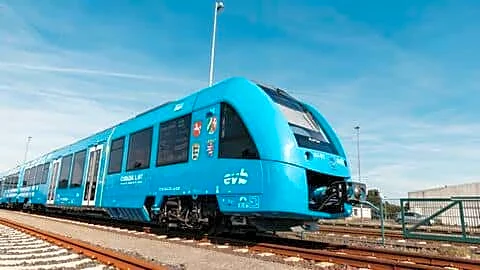
In March 2024, FLIRT H2, a hydrogen-powered passenger train developed by Swiss manufacturer Stadler, set a Guinness World Record after travelling 2,803 km in the US without refuelling or recharging during a run lasting more than 46 hours. Canadian firm Ballard Power Systems, another major player in hydrogen rail technology, said trains using its fuel cells have collectively covered more than 500,000 km while transporting over 600,000 passengers worldwide.
These international projects have demonstrated that hydrogen trains can operate successfully, although widespread commercial adoption remains limited because of cost and infrastructure requirements.
What Are The Biggest Challenges?
Despite their environmental advantages, hydrogen trains face several hurdles before they can become mainstream.
The biggest challenge is cost. Besides the trains themselves, hydrogen requires dedicated production, storage, compression and refuelling infrastructure, making the initial investment significantly higher than conventional rail systems.
Producing green hydrogen at scale also remains expensive. Unless hydrogen can be generated economically using renewable energy, operating costs may remain a concern.
Another challenge is proving the technology’s reliability under Indian conditions. Before hydrogen trains can be deployed widely, their fuel-cell systems will have to demonstrate that they can withstand the country’s varied climate, intensive operating schedules and long duty cycles.
Finally, the success of hydrogen trains will depend on whether they prove commercially viable compared with continuing railway electrification.
/images/ppid_59c68470-image-178367253187394846.webp)



/images/ppid_59c68470-image-178343502388375164.webp)


/images/ppid_a911dc6a-image-178344922340636452.webp)

/images/ppid_59c68470-image-178348503083162804.webp)
/images/ppid_59c68470-image-178344755886484909.webp)
