
/images/ppid_59c68470-image-178341006408344713.webp)
/images/ppid_a911dc6a-image-178332967523220958.webp)
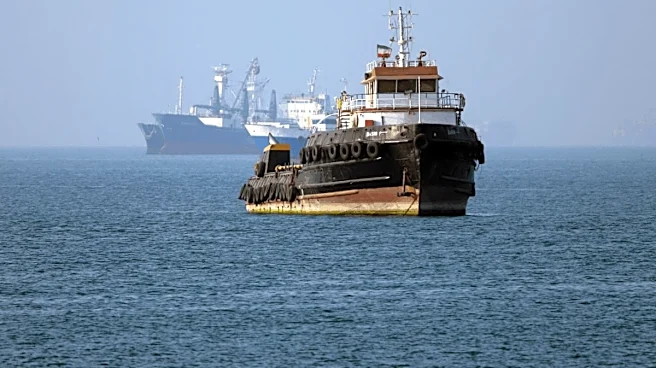


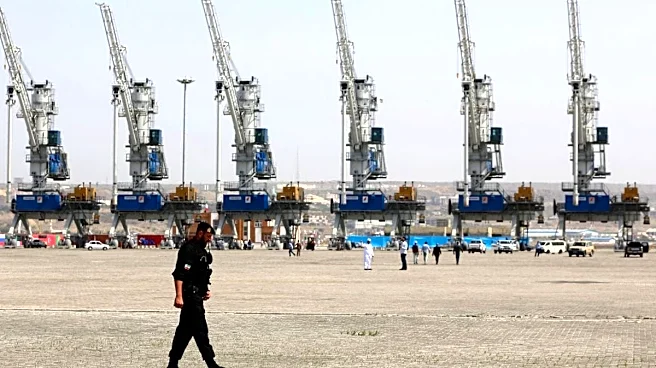
The reported US strikes on Iran’s Chabahar port come at an awkward time for India. A few years ago, such an attack would have directly threatened one of New Delhi’s most ambitious overseas infrastructure projects. Today, the picture is more nuanced.
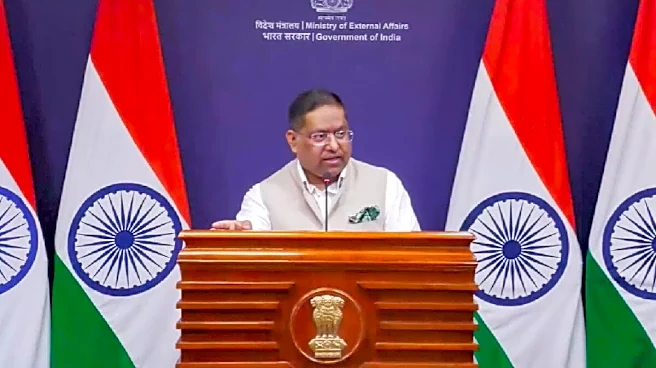
India is no longer directly operating the port after temporarily transferring its stake in the Chabahar Free Zone to a local Iranian entity amid renewed US sanctions. The move was aimed at insulating India’s roughly $120 million investment from sanctions while preserving the possibility of returning once the geopolitical environment improves. India is also understood to be engaged in quiet diplomatic discussions with Washington to seek future sanctions exemptions.
Read More: US Strikes Iran’s Chabahar
Port After Trump Warns Attacks ‘Will Get Much Worse’
As a result, the latest attack may not immediately disrupt an active Indian-run facility. But it still strikes at the heart of a project that has long been central to India’s strategic vision for West and Central Asia.
Why Chabahar Matters To India
For nearly two decades, Chabahar occupied a unique place in India’s foreign policy. Situated on Iran’s southeastern coast, the Shahid Beheshti terminal offered India something it could not obtain elsewhere – a direct route to Afghanistan and Central Asia without relying on Pakistan.
Pakistan has consistently denied India overland access to Afghanistan. Chabahar was designed to overcome that obstacle.
The port was also envisaged as a critical node in the International North-South Transport Corridor (INSTC), a multimodal network linking India with Iran, the Caucasus, Russia and Europe. For New Delhi, the project promised faster trade routes, reduced logistics costs and a stronger economic presence across Eurasia.
Beyond commerce, Chabahar carried significant strategic value.
The project was widely viewed as India’s answer to China’s development of Gwadar Port in Pakistan under the China-Pakistan Economic Corridor (CPEC). While Gwadar lies barely 170 kilometre from Chabahar, the two ports represent competing geopolitical visions. India’s presence at Chabahar ensured that Beijing would not enjoy an uncontested strategic foothold along this crucial maritime corridor connecting the Arabian Sea and the Gulf of Oman.
Where India Stands Today
India’s commitment to Chabahar appeared to deepen in 2024, when it signed a landmark 10-year agreement with Iran to operate the Shahid Beheshti terminal.
However, the geopolitical landscape shifted rapidly. Renewed US sanctions on Iran complicated India’s ability to continue operating the project. Although the Union Budget 2026-27 did not provide a fresh allocation for Chabahar, the omission alone did not signal an Indian exit. Instead, New Delhi adopted a more cautious approach.
According to reports, India temporarily transferred its stake in the Chabahar Free Zone to a local Iranian entity, allowing the assets to remain operational while protecting India’s investment from sanctions. The arrangement effectively preserves India’s long-term interests without requiring direct ownership during a period of heightened geopolitical risk.
What The US Attack Changes
The latest US strikes do not necessarily mean India has suffered an immediate operational loss. Since India has already stepped back from directly managing the project, the immediate disruption to Indian operations is likely to be limited.
The bigger concern is strategic. Every escalation involving Chabahar makes the project’s future more uncertain. A port that was once expected to become India’s gateway to Afghanistan, Central Asia and Russia now faces the twin challenges of sanctions and military instability. Even if physical damage is limited, conflict raises security risks, discourages commercial activity and makes future investment decisions significantly more difficult.
For India, the concern is that Chabahar could become trapped in a prolonged cycle of geopolitical uncertainty, delaying or even undermining the connectivity ambitions that drove the project in the first place.
The US strikes may not have directly hit India’s current operations at Chabahar because New Delhi had already adopted a sanctions-driven workaround. But the attack is still a setback for India’s long-term strategic calculations.
Chabahar was never just another overseas port. It was India’s gateway to markets beyond Pakistan, a counterweight to China’s growing regional influence, and a cornerstone of its Eurasian connectivity strategy. Even from the sidelines, India has a significant stake in the port’s future. Any instability there makes the eventual revival of that vision increasingly difficult.




/images/ppid_a911dc6a-image-178344922340636452.webp)


/images/ppid_59c68470-image-17834875265603670.webp)


/images/ppid_59c68470-image-178343502388375164.webp)