
When global oil markets go into crisis mode, most large importing nations reach for the same limited toolkit—import rationing, emergency stockpile releases, or simply passing the pain on to consumers through higher pump prices. India, under the Modi government, has developed a different instinct. Absorb the shock at the governmental level, protect the pump price, and buy time while the diplomacy works. It has now done this twice in four years under very different conditions, and the results in both cases have held.
The comparison between 2022 and today is instructive, though the crises themselves are quite different in nature. After Russia invaded Ukraine in February 2022, international crude prices surged past $130 per barrel. As a result, Moscow
began offering steep discounts on its Urals crude to allies like India.
New Delhi moved quickly to take advantage. Prior to the war, Russia supplied less than 2 per cent of India’s crude imports. By the end of 2023, that share had risen to nearly 40 per cent. India saved an estimated $5.1 billion on oil imports in 2022-23 and close to $7.9 billion in the following 11 months, according to research by ratings agency ICRA. The government did not moralise about where the oil was coming from. It sourced what it could at prices that worked, kept retail fuel rates frozen since April 2022, and shielded consumers from the worst of the spike.
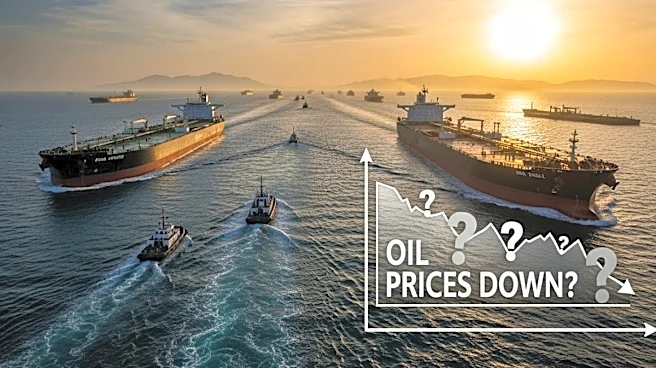
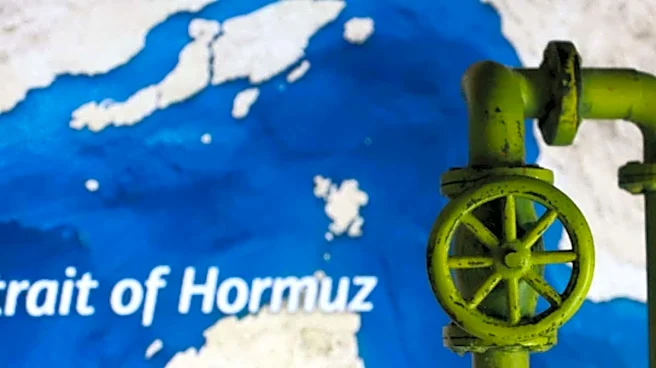
The current crisis is structurally harder. The US and Israel have been landing hard blows on Iran. Tehran has responded by effectively closing the Strait of Hormuz to most vessel traffic. Roughly 40 per cent of India’s crude and over half its LPG pass through that waterway. Unlike in 2022, there is no discounted alternate supplier to simply switch to at scale. The crude basket that Indian refiners were paying averaged $69 per barrel in February; by March 24, it had hit $147.24 per barrel.
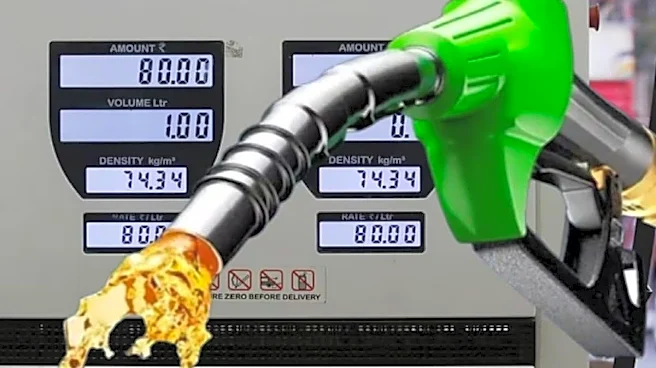
The government’s immediate response was two-pronged. On March 27, Finance Minister Nirmala Sitharaman announced a cut in central excise duty of Rs 10 per litre on both petrol and diesel—reducing the duty on petrol from Rs 13 to Rs 3 per litre, and bringing diesel duty to zero. Petroleum Minister Hardeep Singh Puri confirmed that the government chose to take a “huge hit” on its own revenues rather than pass the cost to consumers.
The fiscal cost is substantial—analysts at Nomura estimate the excise cut will reduce central revenues by roughly Rs 1.6-1.8 trillion, or approximately 0.5 per cent of GDP. At the same time, the government imposed windfall export duties on diesel at Rs 21.5 per litre and on aviation turbine fuel at Rs 29.5 per litre, preventing private refiners from exporting their way to profits while Indian consumers faced shortages.
The third piece of the response was diplomatic, and it reflects a very specific reading of India’s position in the region. When Tehran closed the strait, it named some “friendly nations” whose vessels would still be allowed through: India, China, and Russia. Iran’s foreign minister Abbas Araghchi confirmed this publicly on March 25. India did not join a US-proposed naval coalition to force the strait open. Instead, it negotiated bilaterally with Tehran for passage and has since resumed Iranian crude and LPG purchases after a seven-year hiatus prompted by US sanctions.
By early April, nearly 10 Indian vessels had crossed the Hormuz Strait. Iran’s consulate in Mumbai posted a message calling India a country that holds a “cherished place in our shared history.”
This is not sentimentality. India imports crude from over 40 countries. It has maintained working relationships with Tehran even through the years of sanctions, preserving channels that are now proving useful.
The contrast with what is happening in Pakistan is sharp enough to be worth noting. Islamabad, which imports over 80 per cent of its oil and lacks India’s refining scale or diplomatic latitude, announced a four-day government workweek and emergency austerity measures in early March, including a 6-month pause on cabinet-level salaries. The largest fuel price increase in Pakistani history followed shortly after—petrol hit Rs 458 per litre. The UAE, sensing its own regional pressures, called back a $2 billion deposit from Pakistan’s State Bank. The country faces its energy crisis without the fiscal room to absorb it and without the supply relationships to route around it.
India’s situation is not without genuine difficulty. The excise duty cuts will weigh on public finances. However, with an interim ceasefire between the US and Iran now in place, there are hopes that the worst of this war might be over.
India’s decision to make some strategic trade-offs rather than be overwhelmed by them reflects a decade of deliberate supply diversification. India now buys from over 40 crude suppliers. It has expanded refining capacity. It has built strategic petroleum reserves. It has cultivated relationships across the geopolitical spectrum, with Russia, with Iran, with Gulf producers, and with the United States—ensuring that no single disruption cuts off access entirely. The Russian crude strategy after 2022, controversial as it was in Western capitals, was part of that same logic: reduce dependence on any single corridor, price point, or political alliance.
The Iran crisis has not been without anxiety in India, and it would be wrong to suggest the government has handled everything perfectly. Supply chains remain under pressure, and any prolonged conflict at current crude prices will eventually find its way to consumers regardless of fiscal intervention. But measured against the alternatives, India has done something relatively rare for a large emerging market—it has faced consecutive global energy shocks without a domestic fuel crisis, without panic, and without abandoning the supply relationships that make future crises more manageable. That is not a small thing.
/images/ppid_a911dc6a-image-177564404027877919.webp)

/images/ppid_a911dc6a-image-177564151496553738.webp)
/images/ppid_a911dc6a-image-177563623418111594.webp)
/images/ppid_59c68470-image-17756500682168977.webp)