

/images/ppid_a911dc6a-image-177090209934057401.webp)
/images/ppid_a911dc6a-image-177090206860094611.webp)
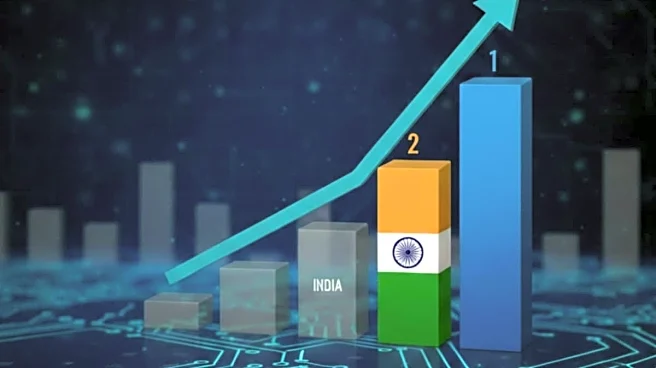
Consumer sentiment in India improved in January 2026, with the national index rising by 1.4 percentage points to 60.7, placing the country second among 30 global markets, according to the LSEG–Ipsos Primary Consumer Sentiment Index (PCSI).
The survey, published monthly by Ipsos, tracks consumer confidence across individual markets and as a global average through the Global Consumer Confidence Index (GCCI).
Economic and job outlook turns upbeat
The improvement in India’s overall score was led by a sharp rise in expectations around the economy and employment. The PCSI Economic Expectations Sub-Index jumped 6.6 points, while the Employment Sub-Index increased by 6.3 points, indicating growing optimism about future economic activity and job opportunities.
However, sentiment was mixed across other indicators. The Current Personal Financial Conditions Sub-Index slipped marginally by 0.6 points, while the Investment Climate Sub-Index declined by 2.0 points, suggesting some caution around household finances and investment decisions.
Commenting on the data, Suresh Ramalingam, CEO, Ipsos India, said the rise in sentiment reflects confidence in India’s economic fundamentals, supported by strong domestic demand, improving employment prospects and a positive growth outlook.
Global confidence improves modestly
Globally, the GCCI rose by 0.5 points to 49.9 in January. After remaining largely flat through much of 2025, the index has now increased for the third consecutive month and stands 1.3 points higher than a year ago, pointing to a gradual improvement in global consumer mood at the start of 2026.
In Europe, consumer sentiment remained stable, with Belgium and Poland recording notable gains. The Asia-Pacific region showed mixed trends, with Australia seeing a strong rise, while Singapore and South Korea reported declines.
Indonesia tops rankings
Among the 30 countries surveyed, Indonesia topped the National Index with a score of 62.6, followed by India at 60.7. These were the only two markets to cross the 60-point mark in January.
The survey was conducted among more than 21,000 adults under the age of 75 across 30 countries between December 24, 2025, and January 9, 2026, using Ipsos’ Global Advisor online platform.






/images/ppid_59c68470-image-177090253948689009.webp)




/images/ppid_59c68470-image-177090263892442922.webp)
/images/ppid_59c68470-image-177090260766158912.webp)
/images/ppid_59c68470-image-17709025718378487.webp)