
/images/ppid_59c68470-image-177476753733063885.webp)
Airports In India 2026:
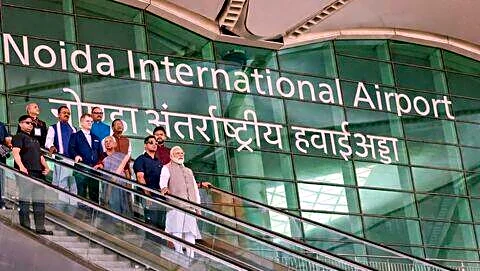
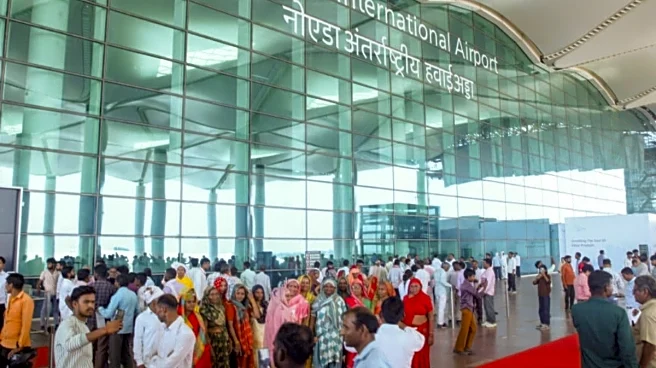
India’s air travel network and regional connectivity have undergone a remarkable transformation in recent years. The country now boasts 164 airports across Tier-1, Tier-2, and Tier-3 cities, a significant jump from 74 airports in 2014. This rapid growth is largely attributed to the UDAN (Ude Desh Ka Aam Nagrik) scheme, launched by the government under Prime Minister Narendra Modi’s vision.One of the most significant milestones in this transformation is the Jewar Airport in Noida, which will be inaugurated on March 28, 2026. This new greenfield airport is expected to further bolster regional connectivity, ease air travel for millions of passengers in the National Capital Region (NCR), and create a significant economic
impact in Uttar Pradesh.
Tomorrow, 28th March is a day of immense importance for the people of Uttar Pradesh and the NCR. Phase I of Noida International Airport will be inaugurated. This will boost commerce and connectivity. It will ease congestion at the IGI Airport in Delhi.
The Noida airport is… pic.twitter.com/oZZAs6tUk6
— Narendra Modi (@narendramodi) March 27, 2026
The UDAN scheme, launched on October 21, 2016, has played a crucial role in making such advancements possible, democratizing air travel across the country by connecting smaller towns and cities with major metropolitan hubs.
ALSO READ: Jewar Airport Flights: When Will Commercial Operations Actually Start?
Since its launch, the UDAN scheme has witnessed tremendous success in opening up the skies for millions of citizens. Implemented earnestly by the Ministry of Civil Aviation, UDAN has, over time, uplifted India’s regional air connectivity landscape.
The first UDAN flight took off on April 27, 2017, from Shimla to Delhi. The occasion can now be recalled as a historic moment. The UDAN scheme today has 625 operational routes, which connect 90 airports across the Indian territory.
ALSO READ: Jewar Airport Inauguration: Check Routes, Traffic Plan And Parking Details
Opening up the skies to Indian citizens across states, UDAN has recorded over 1.49 crore passengers flying by air travel services. April 27, 2026, will mark the ninth anniversary of UDAN’s landmark maiden flight.
India’s Airport Network Expanded
Conceptualised with a 10-year vision under the National Civil Aviation Policy (NCAP) 2016, the UDAN scheme has successfully connected Tier-2 and Tier-3 cities with rest of India. The PM’s vision has been vindicated via a market-driven and financially supported model. In accordance with the scheme, the GOI’s Viability Gap Funding (VGF) incentivises airlines to operate on regional air routes.
Last year, the government of India confirmed it had disbursed Rs 4,023.37 crore as VGF to Indian airlines for bolstering connectivity in underserved and remote regions. Since the beginning of its regime back in 2014, the PM Modi-led government of India has significantly expanded India’s airport network from 74 airports to 164 airports today.
ALSO READ: Jewar Airport Inauguration On March 28: Real Estate In Noida, Yamuna Expressway Expected To Get A Boost
The government’s aviation vision has not only made airline services more affordable and accessible to the common citizen but also boosted regional tourism, trade, health care access and economic growth in Tier-2 and Tier-3 cities.
Stakeholder Initiatives
Apart from the Viability Gap Funding, other stakeholder initiatives have also played a strong role in supporting the GOI’s implemented measures and airline support services for the UDAN scheme. These include:
- Airport Operators: These operators waive landing and parking charges for RCS flights. Besides, the Airports Authority of India (AAI) does not levy Terminal Navigation Landing Charges (TNLC) for UDAN scheme-supported flights. Airlines also benefit from discounts on Route Navigation and Facilitation Charge (RNFC).
- State Governments: The local governments have reduced VAT on ATF to 1 per cent or less for ten years. States have also provided security, fire essentials and utility services at reduced rates.
- Central Government: The first three years of the UDAN scheme saw a limitation of 2 per cent being imposed on the excise duty on Aviation Turbine Fuel (ATF) purchased at RCS airports. Furthermore, airlines have been encouraged to enter code-sharing agreements for expanded reach.
50 New Airports In 5 Years; 400 By 2047
Despite the huge success of the UDAN scheme, the GOI under PM Modi is not willing to rest on its laurels when it comes to its aviation vision. The government has committed to ensuring even greater airport infrastructure development by introducing 50 new airports in the next five years, including new greenfield airports in Bihar, expansion of Patna Airport and development of a brownfield airport at Bihta.
Taking the UDAN scheme and regional air travel connectivity to the next level, the GOI aims to develop over 400 airports by 2047. Having such a vast air travel connection network across states will also further boost India’s economic growth and aid national integration.
The long-term roadmap for the same was confirmed on March 6, 2026, when the Directorate General of Civil Aviation (DGCA) granted an aerodrome license to Yamuna International Airport Private Limited (YIAPL) for the Noida International Airport (NIA) in Uttar Pradesh.
FAQs About Airports In India 2026 And UDAN Scheme
Which States Got the Most New Airports Since 2014?
Since 2014, several states have seen significant airport developments, driven by the government’s focus on regional connectivity.
Among the leading states in airport expansion are Uttar Pradesh, which is set to welcome the new Jewar Airport, and Bihar, where new greenfield airports are being developed.
Additionally, Odisha, Tamil Nadu, and Madhya Pradesh are expected to see further expansion of airport infrastructure in the coming years.
Did UDAN Actually Make Flying Affordable for Ordinary Indians?
Yes, the UDAN scheme has made flying more affordable for the common man. Under this initiative, airfare on Regional Connectivity Scheme (RCS) routes is subsidized, with prices starting as low as Rs 1,500.
The scheme has opened up air travel to millions of people in smaller towns and cities, who previously had limited or no access to affordable flights.
How Different Is the Airport Experience in 2026 vs 2014?
The airport experience in 2026 is vastly different from 2014. With the rise of smaller regional airports due to the UDAN scheme, passengers are now experiencing more efficient and comfortable services in Tier-2 and Tier-3 cities.
Improved infrastructure, upgraded terminals, faster security checks, and better passenger amenities have transformed the overall airport experience. Additionally, increased connectivity and more flight options have made air travel smoother and more accessible for all.
Can India Really Build 350–400 Airports by 2047?
India’s goal of building 350–400 airports by 2047 is well within reach, considering the progress made so far. With ongoing investments in both greenfield and brownfield projects, the country is on track to achieve this ambitious target.
The focus on regional connectivity and airport infrastructure will not only enhance air travel but also support economic growth, regional integration, and improved access to essential services in remote areas.
Which 50 Airports Are Coming Next — and Where?
The government plans to add 50 new airports over the next five years, further expanding the nation’s airport network. Notable upcoming developments include greenfield airports in Bihar, the expansion of Patna Airport, and the creation of brownfield airports in cities like Bihta.
Additionally, many Tier-2 and Tier-3 cities will benefit from new regional connectivity, helping boost local economies and tourism.


/images/ppid_a911dc6a-image-177485885109338149.webp)

/images/ppid_59c68470-image-17747925388168198.webp)