
/images/ppid_a911dc6a-image-177897725672743259.webp)
Prime Minister Narendra Modi’s foreign visits have long been an easy talking point for sections of the opposition, particularly the Indian National Congress and the Aam Aadmi Party. The charge is familiar and increasingly clichéd: excessive travel, extravagant optics, unnecessary global outreach, absence from India.
This criticism, though, increasingly collapses under the weight of facts, as is evident from the gamut of outcomes from PM Modi’s ongoing Europe tour.
In today’s fractured geopolitical landscape, diplomacy is no longer ceremonial. It is strategic warfare conducted through economic alliances, technology partnerships, energy arrangements, and supply-chain positioning. Nations that stay absent from negotiating futuristic deals risk becoming
dependent powers rather than decisive ones. PM Modi’s ongoing multi-nation engagement with the United Arab Emirates, Netherlands and Sweden demonstrates precisely why high-level diplomacy matters.
Far from being symbolic excursions, these visits are directly linked to India’s energy security, technological sovereignty, and strategic resilience.
UAE: Securing India’s Energy Future
The UAE leg of the visit carried one overriding priority—energy security.
At a time when geopolitical tensions continue to destabilise global oil and gas markets, India cannot afford complacency. As one of the world’s largest energy importers, India’s economic stability is deeply tied to uninterrupted energy access.
That is why deeper cooperation on strategic petroleum reserves with the UAE is so critical. Strategic reserves are not abstract policy instruments; they are national shock absorbers during wars, shipping disruptions or price spikes.
Equally important was the strengthening of sovereign investment partnerships through the National Investment and Infrastructure Fund (NIIF) and associated investment platforms. These investments help finance roads, logistics networks, industrial corridors, digital infrastructure, and manufacturing ecosystems—the hard architecture of India’s future growth.
In modern geopolitics, trusted capital is strategic capital. PM Modi’s sustained engagement with Gulf leadership has transformed India’s relationship with the region from a transactional oil partnership into a comprehensive strategic compact.
Netherlands: Technology and Climate Resilience
The Netherlands visit underscored another strategic reality: technological dependency is the new geopolitical vulnerability.
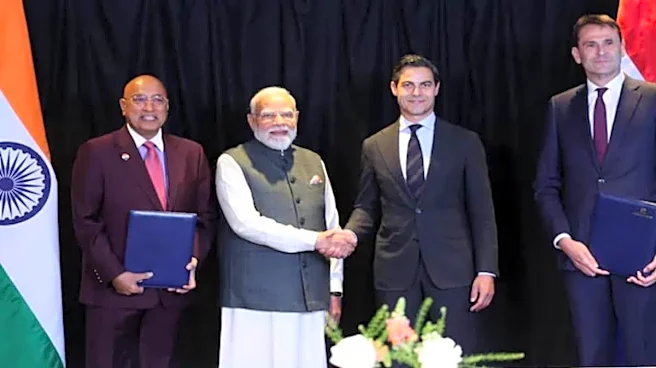
The agreement involving ASML is therefore enormously significant. ASML occupies a near-monopoly position in advanced lithography systems essential for semiconductor manufacturing. Without semiconductors, there is no AI ecosystem, defence modernisation, telecom infrastructure, or digital economy. For India, access to advanced semiconductor ecosystems is no longer optional. It is foundational to national power in the coming decades.
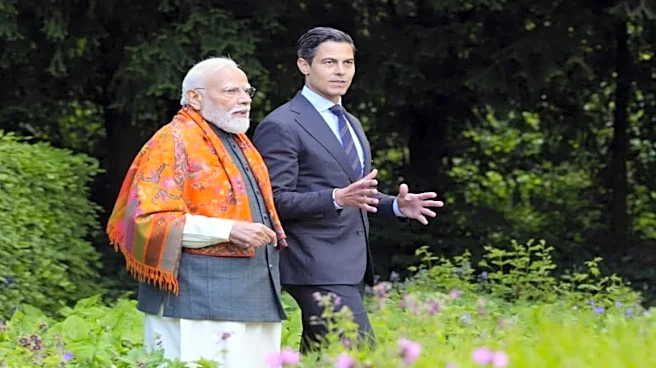
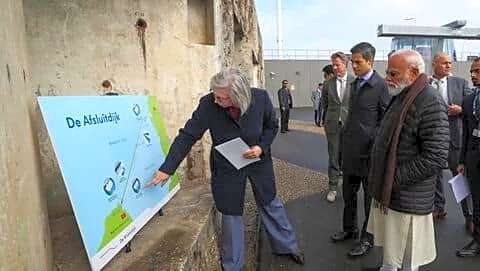
PM Modi’s visit to the Afsluitdijk Dam carried equal strategic relevance. Dutch expertise in flood management and climate-resilient infrastructure holds immense value for India as extreme weather events intensify. Coastal protection, water management and adaptive infrastructure will become defining governance challenges in the years ahead.
This was not sightseeing diplomacy. It was policy-driven engagement with future relevance.
Sweden: Preparing India for the Next Technology Race
In Sweden, the emphasis shifted to frontier technologies.
The strengthening of India-Sweden cooperation on 6G technology is strategically transformative. The next telecom revolution will shape everything from military communications and cybersecurity to industrial automation and artificial intelligence ecosystems. Countries that shape 6G standards will shape the future digital order itself.
Similarly, cooperation on quantum computing networks reflects long-range strategic thinking. Quantum technologies are expected to redefine encryption, intelligence gathering, pharmaceuticals, financial systems and advanced computing capabilities.
India’s participation in these ecosystems today will act as a catalyst in her emergence as a technology leader, beyond being dependent on external innovation architectures tomorrow.
The Gruelling Nature of Modern Diplomacy
Opposition leaders often speak of foreign visits as though they were leisurely diplomatic spectacles. The reality is exactly the opposite.
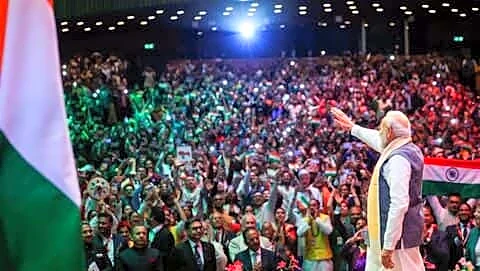
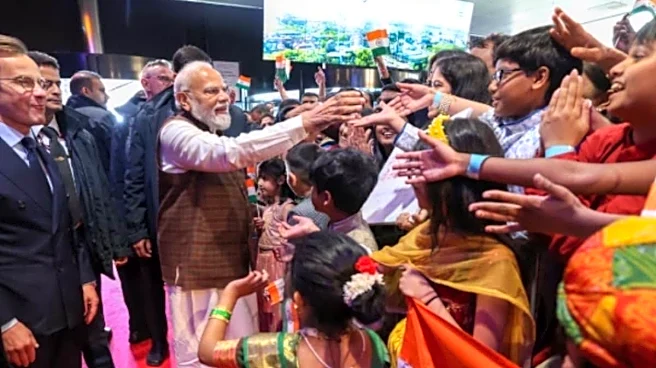
PM Modi’s itinerary across multiple countries involves relentless negotiations, investor meetings, strategic dialogues, policy consultations, technology engagements, and diaspora interactions compressed into extraordinarily demanding schedules.
Modern diplomacy at this level is not ceremonial comfort. It is continuous strategic negotiation.
And unlike the UPA era, where foreign travel often produced symbolic communiqués with little follow-through, PM Modi’s engagements are increasingly outcome-oriented—focused on investments, technology transfer, supply chains, energy partnerships, and security cooperation.
India Cannot Afford Diplomatic Passivity
The world is entering a period of intense geopolitical fragmentation. Energy corridors are being weaponised. Semiconductor access is becoming strategic leverage. Artificial intelligence and quantum technologies are reshaping global power hierarchies.
In such an environment, a rising India cannot retreat into diplomatic passivity.
Every major power today is aggressively securing partnerships, markets, technologies, and strategic access. India must do the same and at scale.
That is precisely what PM Modi’s foreign outreach seeks to accomplish.
Whether in the Gulf, Europe, or the Nordic region, the objective remains consistent: secure India’s long-term strategic interests before future crises emerge.
Beyond Optics, Towards National Security
Ultimately, PM Modi’s foreign visits are driven by one core principle—strengthening India’s national security in its broadest sense: energy security, technology security, economic security, and supply-chain security.
These are now interconnected pillars of national power.
The opposition may continue reducing diplomacy to political rhetoric. But the outcomes of these visits tell a different story altogether.
Strategic oil reserves. Semiconductor partnerships. Climate-resilient infrastructure. Quantum computing cooperation. 6G alliances. Sovereign investments. These are not photo opportunities.
They are building blocks of India’s future.
The writer is a national spokesperson of BJP, besides being an acclaimed author. Views expressed in the above piece are personal and solely those of the author. They do not necessarily reflect News18’s views.

/images/ppid_a911dc6a-image-177901882704542646.webp)

/images/ppid_a911dc6a-image-177896166832365275.webp)
/images/ppid_a911dc6a-image-177903446323720029.webp)
/images/ppid_59c68470-image-177899002820918378.webp)

/images/ppid_a911dc6a-image-177901109030057900.webp)