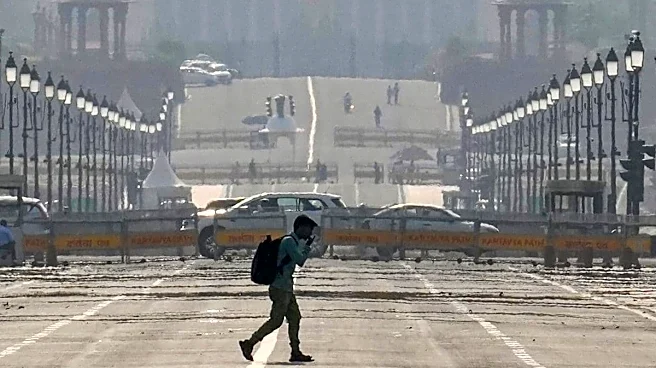



The heatwaves may be taking a toll on the national capital this summer, but the geospatial analysis confirms that nearly 76% of Delhi’s area is persistently heat-stressed due to the shrinking green cover, says a new report.
The report prepared by the New Delhi-based Centre for Science and Environment showed how the extreme heat intensified as the city kept losing its natural defences. While the green cover has shrunk from 25.36 per cent in 2014 to 14.14 per cent in 2024, the waterbody footprints have reduced from 1.25 per cent to 0.99 per cent in the same period. As a result, Delhi’s core area cools 3.8°C less than its peri-urban counterparts, causing heat stress to be retained round-the-clock in its dense, concrete-heavy neighbourhoods.
The team
analysed the Landsat data to identify heat spots and changes in the natural heat sinks. Areas with land surface temperatures above 45°C for more than six consecutive years were classified as heat-stressed. In addition to the industrial areas like Bawana, Mayapuri, and Mundka, and high-density low-rise residential colonies, some newly built complexes like Bharat Mandapam and East Kidwai Nagar also emerged as heat hotspots. It was no surprise that areas like Lutyen’s Delhi, Civil Lines, and Delhi Cantonment remained below the stress threshold due to low density and extensive shading over paved surfaces provided by trees, pointing to the crucial role of dense canopy cover.
The report also noted that the increasing use of air conditioners is not just straining the energy systems but also aggravating the urban heat island effect and heating up the airshed of those who rely on the outdoor environment for cooling. “Essentially, it spurs cooling inequity,” it highlighted.
Insufficient Measures, As Extreme Heat Intensifies
“On May 25, 2026, Delhi’s land surface temperature ranged from 31.5°C to 54.6°C, with a city-wide mean of 43.15°C. The highest surface temperatures, exceeding 50°C in many cases, were observed in the western, north-western and southwestern parts of Delhi, particularly in Karala, Mundka, Begumpur, Bawana, Chhawla and Khera. Delhi recorded its warmest May night in nearly 14 years on May 25 with 32.4°C,” said Mitashi Singh, programme manager, sustainable habitat, CSE.
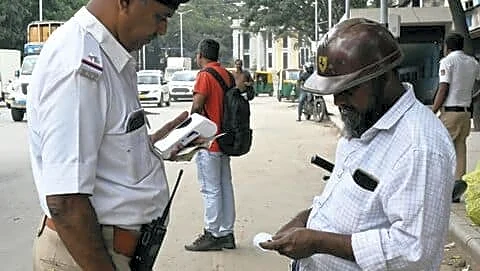
The report also highlighted that while the city heat action plans acknowledge the different vulnerable groups in Delhi, they do not offer any strategies that can increase their resilience. The vulnerable communities, construction workers, street vendors, and informal settlement dwellers, which constitute 50 per cent of the city’s population, are still without adequate means to adapt to the rising heat. “They toil through the day to earn their daily bread; this becomes brutal when the nights do not provide any respite either. To add to this, if there is a heat-related disruption in work—if they fall sick—it means wage losses,” said Rajneesh Sareen, programme director for sustainable habitat at CSE.
According to the report, 92 per cent of construction projects are located in areas where the land surface temperature exceeded the 45°C threshold at least once between 2015 and 2024, and 77 per cent are in areas witnessing recurring extreme heat. Not only that, 80 per cent of Delhi’s workforce is employed in the informal sector, with 75 per cent of the city’s women workers in this sector.
Experts say the solutions lie in fixing the causes that worsened the heat stress—the dense-built form, shrinking green and blue spaces, buildings that do not have appropriate shading and insulation, layouts that are not designed to support ventilation, and surfaces that trap heat and waste from ACs and vehicles. At the same time, looking at focused interventions for exposed populations like enforcing mandatory cooling breaks, staggering work timings, developing standard operating procedures, and dedicated fiscal and medical support during extreme heat emergencies.
“It is important that we do not look at heat as an occasional occurrence but as a harsh reality that is going to stay or perhaps even worsen. It has now become vital for cities to make them liveable in climate-risked times,” said Anumita Roychowdhury, executive director, CSE.







/images/ppid_a911dc6a-image-178060053139613914.webp)

/images/ppid_59c68470-image-178060002904314898.webp)

/images/ppid_59c68470-image-178060002796619371.webp)
/images/ppid_a911dc6a-image-178059974750459021.webp)