
Throughout the history of cricket, there has been a debate about how to pick your team captain. In some cases, it’s quite easy: Virat Kohli ticks every box, and it becomes a debate when he’s not captaining a team.
But when there are multiple options to choose from, there is always an Australian way and an English way to figure out the answer. When cricket was dominated by just those two powers, the Aussies believed that you pick your best 11 first, and then choose the captain from them. Whereas the English felt that a captain was so important that you picked him or her first, and then built a team around.
Mike Brearley, considered one of the greatest ever captains, who wrote the bestselling cricket literature, The Art of Captaincy, was asked this
question head-on by Subash Jayaraman on The Cricket Couch in 2013.
“In an ideal world, your captain would be a member of the team and would be picked as one of the best 11 players,” Brearley said. “It is not always the ideal world. It is the sort of balance of the two. It is very hard to be a good captain if you are not worth your place in the team. On the other hand, a good captain can significantly improve the team. As I said, it is almost like an all-rounder position. I would be inclined to the English way. But, you have to be careful to not go too far in that direction.”
Brearley was renowned for his Test captaincy. But not going too far the English way is arguably even more important in T20s, where every ball counts, and there are only 120 that seven or eight batters can use to positively impact their teams.
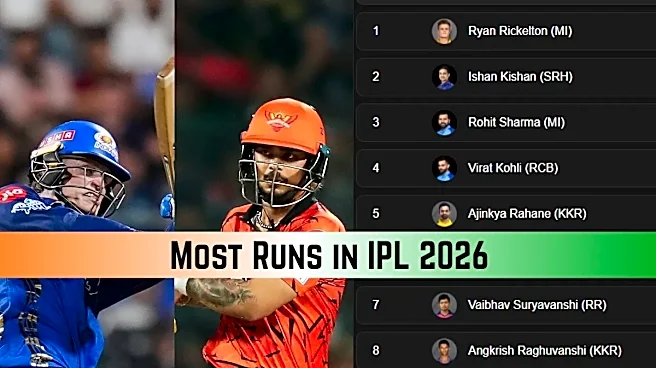
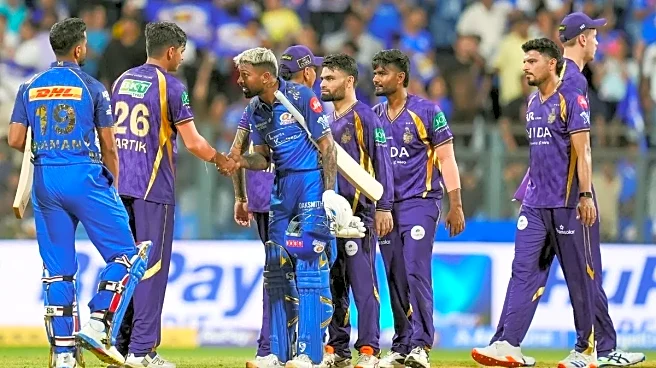
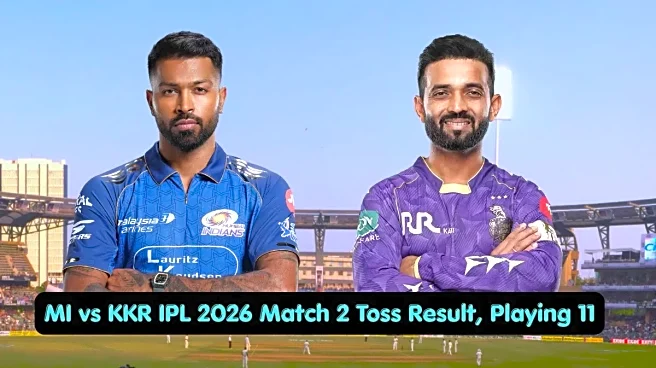
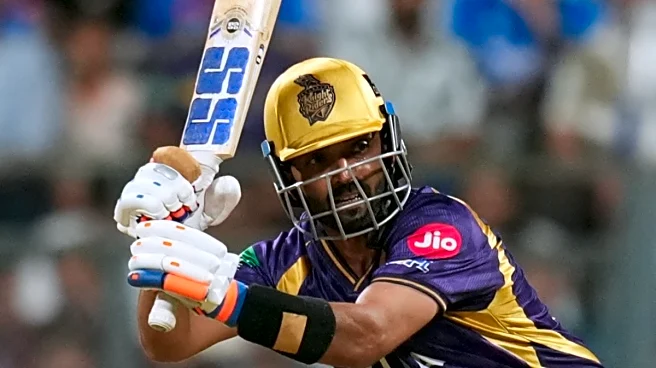
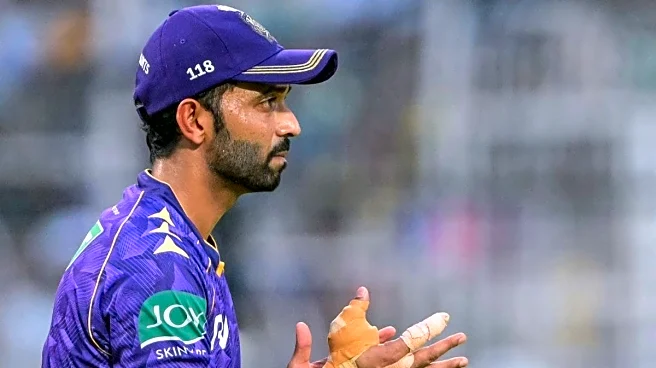
Kolkata Knight Riders (KKR) captain Ajinkya Rahane showed that adequately in the team’s IPL 2026 season opener against the Mumbai Indians (MI) on Sunday. Asked to bat first, Rahane started exceptionally well, scoring 36 runs off his first 18 balls — at the end of the powerplay, he was batting at a strike rate of 200.
He got out in the 14th over, for a score of 67 (40). After the powerplay, his batting strike-rate had come down to 140, which was less than the par strike-rate for the match: 188 (444 runs scored by both teams in 235 balls). That means for 22 deliveries, he negatively affected KKR’s scoring rate.
Rahane hit three sixes in his first 18 balls. In his next 22, he managed two.
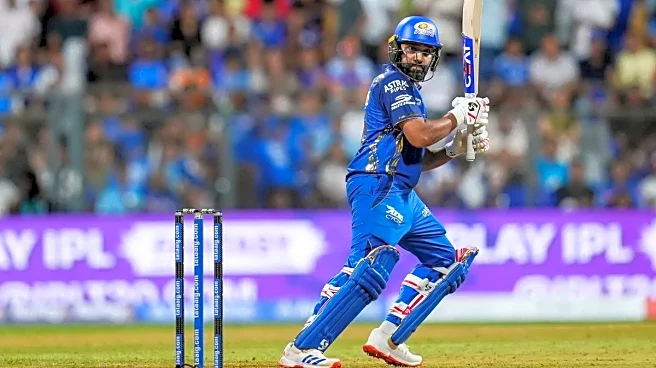
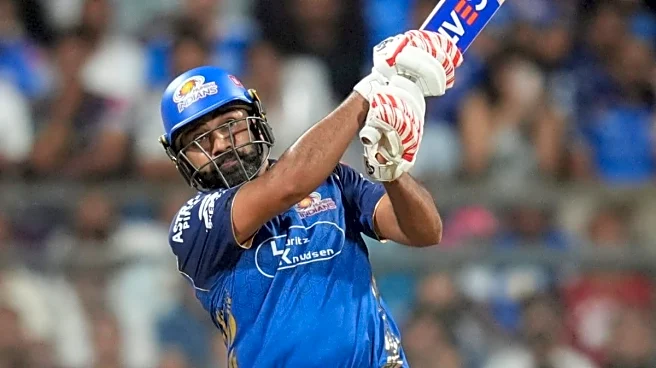
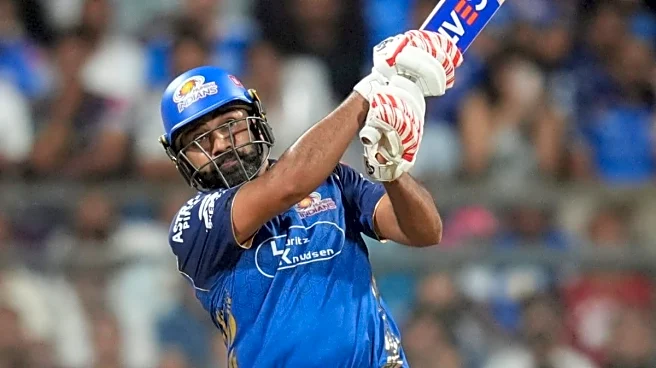
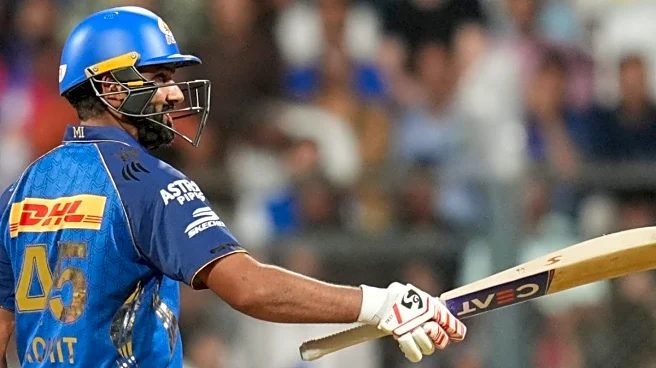
Compare that to Rohit Sharma, who is of similar age, and hasn’t been at his best in the IPL for years. Rohit was batting at 51 (23) at the end of the powerplay, a strike rate of 221. He got out at 78 (38) — his last 15 balls had a strike-rate of 180, still negative, but just about par for the match.
This was not an isolated issue for Rahane. In 2025, his first year as KKR’s captain, he had a powerplay strike rate of 190, which fell down to 106 for the overs 6-10. This is where he got out the most, too.
But look at the impact/ball column. This is calculated using analyst Himanish Ganjoo’s Duckworth-Lewis Pro model: in simple words, given the exact match situation (wickets lost, balls remaining, and era context), how much did this specific batter increase or decrease the team’s expected final score, per ball.
So for every ten balls Rahane faced in the powerplay, he added seven runs above expectations to the team total. But in the 6-10 over phase, every ten balls Rahane faced decreased two runs from the score.
Ajinkya Rahane in IPL 2025:
| Phase | Strike Rate | Average | Impact/ball |
|---|---|---|---|
| Powerplay | 190.400000 | 119.000000 | 0.707934 |
| Overs 6-10 | 106.122449 | 52.000000 | -0.268009 |
| Overs 10-15 | 137.142857 | 6.857143 | -0.800450 |
This is not a 2025 problem either. Indian cricket fans don’t need a reminder about the 2016 T20 World Cup semi-final defeat against West Indies, where Rahane scored 40 (35) while opening the innings.
He needs appreciation for improving his all-round game in the past two years, especially against pace. It has shown in his Syed Mushtaq Ali Trophy returns.
But cricket coaches are as aware of his post-powerplay issues as Suresh Raina’s troubles against the short ball at the end of his career — it’s not as simple as he just needs to take more risk. That is why he was going unsold in the IPL 2025 auction until KKR picked him up for his base price in the accelerated round.
Why the Rahane problem compounds
Rahane could have been a decent backup opening choice for KKR in 2025. But he was awarded team captaincy over Venkatesh Iyer, who was the vice-captain the year before and trusted with a price tag of ₹23.75 Crore.
The result? Because Rahane was the captain, he batted the entire year at number three, while Venkatesh was pushed down to number four and five. KKR chose the captain’s convenience over Venkatesh, who had a career strike-rate of 168.77 at number three and not even 140 at number four and five.
In 2026, the same is happening with Angkrish Raghuvanshi, who has been shunned to number four, despite having his best IPL strike-rate at 155.24 and despite scoring a century from that position in a practice match. The KKR ‘star boy’ was given the freedom at number three in IPL 2024, and his mean strike-rates for phases 2 and 3 were 163.6 and 147.6, respectively.
The Rahane-Angkrish of 36 (28) was the worst of the match for KKR. 4.4 overs went at around eight runs/over in a match where even 12 runs/over was feeling sub-par. In 2025, we saw multiple iterations of this between Rahane-Venkatesh and even Venkatesh-Angkrish.
On flat tracks, each IPL team can accommodate one such player, who can be seen as the ‘glue’ of the team, while others keep hitting. That leaves KKR and Rahane with a choice: either the skipper accepts that he needs to use the ‘retire-out’ option after the powerplay, or take a more permanent high road for the team, as MS Dhoni tried with Ravindra Jadeja in 2022, or as Dinesh Karthik did at KKR in 2020.
KKR have gone too far in the English way of picking the captain. A turnaround is necessary before it’s too late in the season, again.