
/images/ppid_a911dc6a-image-177487703095986314.webp)

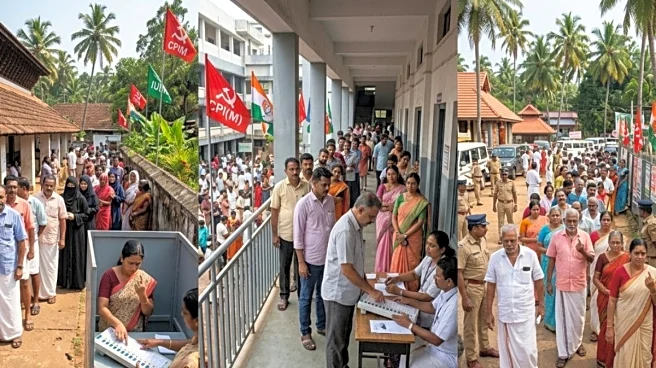
Keralam Assembly Elections 2026: Keralam does not vote as a single bloc. Electoral patterns vary sharply across Malabar, Central Keralam and South Keralam, and these regional shifts play a decisive role in both Assembly and Lok Sabha elections. As the state heads towards the April 9, 2026 polls, this divide once again becomes crucial.
Constituency-wise power mapping?
Keralam’s political landscape is divided into three zones – Malabar in the north, Central Keralam and South Keralam. In 2021, the Left Democratic Front (LDF) secured 99 out of 140 seats, drawing strength mainly from Malabar (24 of 32 seats) and South Keralam(44 of 53 seats). Central Keralam, where the LDF won 31 of 55 seats, remains the key battleground, with the Congress-backed UDF looking to turn it into a deciding
factor.
For 2026, the UDF needs to dominate Central Keralam and limit losses in the north, while the BJP is aiming for breakthroughs in select constituencies.
Malabar, the political battleground
Malabar, stretching from Kasaragod to Malappuram, has 32 seats and remains a high-stakes contest between the LDF and UDF. The LDF’s strong performance in 2021, winning 24 seats, was driven by its base in Kannur and Kozhikode.
However, recent Lok Sabha and local body results suggest the UDF is regaining ground, especially in Malappuram where the IUML holds significant influence with a strong Muslim vote base. Minority voters play a decisive role here, often shaping close contests.
While the BJP has not secured seats in the region, it has pockets of presence in areas like Palakkad. For 2026, the LDF is projected to retain an edge, but signs of cadre unrest in places like Thalassery and Thaliparamba could benefit the UDF.
Central Keralam, the swing belt
Central Keralam, with 55 seats across Ernakulam, Thrissur, Kottayam, Idukki and Pathanamthitta, is the most crucial region in the 2026 election. This area has a mixed urban and semi-urban electorate and often decides the final outcome.
Christian voters, who make up around 18-20% of the population, are central to this region’s voting pattern. Their choices are not uniform. Catholics often lean towards the UDF in areas like Ernakulam and Kottayam, while Orthodox and Jacobite groups are split between the two fronts, particularly in Pathanamthitta and Idukki. Evangelical groups are showing an emerging inclination towards the BJP.
Key issues influencing voters include development, corruption and governance. Data shows development is a priority for over 30% of voters here, followed by party politics and demand for change. Economic concerns, including the impact on remittances from West Asia, are also shaping voter sentiment.
The LDF’s earlier advantage has weakened due to local body losses, while the UDF is gaining traction among youth and middle-class voters. The BJP is targeting select constituencies, especially in Thrissur and Ernakulam, where triangular contests are becoming more visible.
For the UDF, winning over 20-25 seats in this region is essential to form a government.
South Keralam, the decisive edge
South Kerala, covering 53 seats including Thiruvananthapuram, Kollam and Alappuzha, has been a stronghold of the LDF. In 2021, it won 44 seats here, giving it a decisive edge.
The region continues to favour the LDF due to its strong organisational network, especially in rural areas. However, the BJP is making inroads in urban pockets, particularly in Thiruvananthapuram, where it has gained strength in recent local body elections.
This has led to more triangular contests, with the BJP’s rising vote share, around 15-20% in some areas, affecting traditional vote patterns. Candidate strength and leadership also play a major role here, with prominent figures influencing outcomes at the constituency level.
Despite this, projections still place the LDF ahead in the region, though with some pressure from emerging competition.
Why it matters?
The 2026 Keralam election highlights clear regional trends. Identity politics dominates Malabar, urbanisation and development concerns shape Central Keralam, and leadership-driven contests define the South.
No party can secure a majority without performing across all three regions. While the LDF relies on its traditional strength in the north and south, the UDF is banking on a strong performance in Central Keralam. The BJP, though not a dominant force statewide, could influence results in close contests.
With 140 seats divided across these regions, the path to the majority mark of 71 depends on balancing gains and losses across zones. Projections suggest a close contest, with both LDF and UDF within striking distance.
As polling approaches, understanding these regional patterns remains key to decoding Keralam’s political outcome.


/images/ppid_a911dc6a-image-177510906252665408.webp)

/images/ppid_a911dc6a-image-177503563605160464.webp)