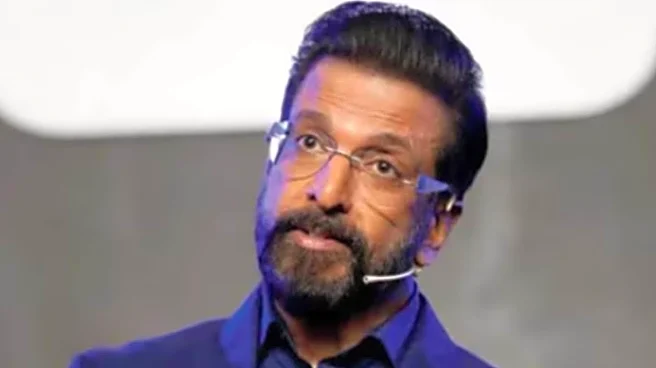

Actor Jaaved Jaaferi has weighed in on the ongoing discussion around A. R. Rahman’s recent remarks about alleged communal bias in the Hindi film industry, offering a broader perspective on how the industry has evolved
over the years. The veteran actor, who is gearing up for the release of his upcoming film Mayasabha, opened up during promotions while speaking to IANS.
With a career spanning over four decades, Jaaved has seen the industry transform across generations, formats and business models. When asked whether he has personally experienced anything similar to what Rahman hinted at, the actor chose to contextualise the issue within larger changes shaping the entertainment ecosystem.
Jaaved Jaaferi on industry changes
Reacting to the Oscar- and Grammy-winning composer’s comments, Jaaved said the industry’s evolution mirrors the rapid changes happening across the world.
“Industry has changed like the world has changed. Digital. AI. The world is changing. Fashion is changing, food is changing. Values are changing. Obviously, the narrative is changing. I just came to know recently that the attention span of Gen Z or Alpha is 6 seconds,” he said.
Jaaved further explained how these shifts are influencing storytelling and decision-making in cinema today.
“Channel heads says that if you cannot capture it in 6 seconds, it’s gone. It’s how rapidly we are changing. That’s it. Fine. There has been some structure. There have been some opportunities. You can narrate a story in long-format, in a film, you get limited time. There are choices but at the same time, there is business. There are numbers. You are making a project. Not a film,” he added.
Rather than directly addressing allegations of discrimination, Jaaved appeared to underline the increasing dominance of data, attention metrics and commercial considerations in shaping creative opportunities.
What sparked the AR Rahman controversy
The controversy surrounding A. R. Rahman began after his remarks during an interview with BBC Asian Network, where he spoke about receiving fewer work offers in Bollywood in recent years. Rahman suggested that shifts in power dynamics and “communal” factors — referring to religion, regional identity and industry politics — may have influenced the nature of opportunities coming his way over the past eight years.
His comments triggered sharp reactions across social media and media platforms, with many interpreting them as an allegation of bias or discrimination within the Hindi film industry.
Following the backlash, Rahman released a video clarification, stating that his remarks had been misunderstood. He emphasised that he “never meant to hurt anyone” and reiterated that India remains his biggest inspiration. The composer also stressed that his music has always been rooted in unity, inclusivity and cultural celebration.


/images/ppid_a911dc6a-image-177042952285046612.webp)


/images/ppid_a911dc6a-image-177036304174559271.webp)