

/images/ppid_a911dc6a-image-177073422588955268.webp)
/images/ppid_a911dc6a-image-177073406474645209.webp)
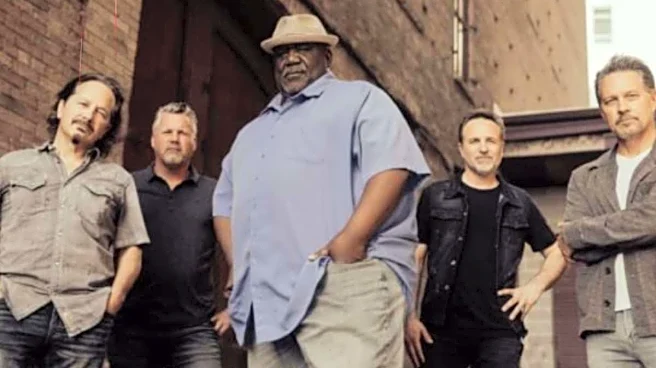
At a festival where the blues is not just heard but felt, Altered Five Blues Band arrive at the Mahindra Blues Festival 2026 with two decades of grit, groove, and lived-in stories behind them. Born in Milwaukee’s working-class music circuit and shaped by years of late nights, day jobs, and relentless songwriting, the band’s sound carries the weight of tradition without being trapped by it. Their blues is raw yet playful, rooted yet restless, drawing as much from everyday modern anxieties as from the ghosts of Chicago blues legends.
As they prepare to play for Indian audiences, many of whom will encounter them live for the very first time, Altered Five find themselves in a rare and invigorating space where discovery replaces expectation. In this
exclusive conversation with News18 Showsha, the band reflects on their journey from reimagined club covers to seven albums of original music, the quiet resilience forged by balancing music with “real life,” and why authenticity still matters in an era of algorithms and instant virality. From their Milwaukee identity to their evolving relationship with the blues, this is a conversation about staying human, staying honest, and letting the groove do the talking.
Here are the excerpts:
Mahindra Blues Festival brings together blues voices from across generations and geographies. What excites you most about being part of that shared space?
This is an incredibly unique opportunity, being able to meet and perform for a completely new audience is very exciting. We hope to make new friends and find new fans.
Mahindra Blues Festival audiences often discover artists live, without preconceived notions. How do you approach a set when many listeners may be hearing you for the first time?
We now have seven albums of original material and will put together a set of the songs we like to perform and think the audience will enjoy.
Forming in 2002 in Milwaukee’s vibrant music scene, how did the organic blend of your individual backgrounds shape the band’s initial vision, and do you see echoes of that early experimentation in your sound today?
Yes, all five of us bring something different to the band and that really shapes our sound. Over the years, we’ve evolved and found what we do best. We’ve built on that sound and tried to develop a distinct style of our own.
Starting with covers in local clubs before shifting to originals, what pivotal moment made you realize Altered Five needed to focus on songwriting that reflected contemporary life, and how did challenges like the loss of your first label head influence your resilience as a group?
Most of our covers were rearranged and heavily altered with a blues approach. While this was fun, and required a significant amount of musical thought, we thought we had more to offer with original music. The Cryin’ Mercy album is when we really figured out how to write our own songs and that was the beginning of what helped us gain popularity. Tim Bradach from Cold Wind Records passed away shortly before that album in 2014, but we learned a lot from him and included a note about him in the liner notes.
Balancing full-time careers, like Taylor’s role as a school principal and Schroedl’s executive position at Hal Leonard, must add unique pressures—how has this “part-time” status fostered a grounded authenticity in your music, and what philosophical insights have you gained about pursuing passion amid everyday responsibilities?
We’ve all been closely tied to the music industry. We are fortunate that this band allows us to focus on writing and performing the music we enjoy, doing it in the purest sense; for the love of music. And over the years, Taylor and Schroedl were able to retire from their full-time jobs.
Your sound fuses Chicago-style blues with funk and rock edges, drawing from legends like Muddy Waters and Luther Allison— in an era where genres blend digitally, how do you navigate preserving blues’ raw emotional core while incorporating modern twists that speak to today’s audiences?
We try not to think about it much and just write and arrange songs that fit with our style. We’ve been influenced by all sorts of blues, jazz, and even rock musicians in our formative years, and still listen to music new and old, but mostly aim for a sound that works for our collective group.
Jeff Taylor’s baritone vocals often draw comparisons to Howlin’ Wolf and Muddy Waters— how do you, as a band, ensure the ensemble supports that vocal swagger without overshadowing it, and what risks have you taken to evolve your collective groove over two decades?
JT is the greatest. We feel the vocal is the most important part of any act, and JT’s vocal is our biggest asset. In our early years, especially, we were testing the waters with our bluesified arrangements of popular songs. This allowed us to stretch and get a feel for what worked best for us a band, and what our fans reacted positively to. That knowledge largely drives how we can push boundaries without overstepping the sensibility of what we think a modern original blues band can be today.
Incorporating themes from everyday experiences into blues traditions, as in tracks addressing modern woes— what internal debates arise when updating classic motifs like heartbreak or struggle to include contemporary issues, and how do you avoid diluting the genre’s historical weight?
We don’t recall any internal debate. We simply write about topics that happen to be part of our lives. We try to keep things real but also have fun with some themes. We’ve covered a lot of territory in the many songs we’ve written.
Signing with Blind Pig Records in 2015 and working repeatedly with Grammy-winning producer Tom Hambridge— how has this partnership challenged your creative process, especially in Nashville sessions, and what unspoken rules of collaboration have you developed to maintain your Milwaukee-rooted identity?
We have been able to keep our identities because we all make the Milwaukee area our home. We believe Tom produces to help maintain the artists’ identity, not trying to make them into something they are not.
Albums like Charmed & Dangerous (2017) and Ten Thousand Watts (2019) earned Billboard chart success and award nominations— reflecting on those highs, how do you respond to the tension between commercial validation and staying true to the underground blues ethos that birthed the band?
It’s always great to get recognition for your work. Awards and accolades are welcome but it is not what drives us.
Celebrating 20 years with Holler If You Hear Me (2021), which featured guest Jason Ricci and multiple Blues Music Award nods— how did that milestone force a reckoning with your legacy, and what vulnerabilities did it expose in balancing nostalgia with forward momentum?
We’re really proud of that album and play many songs from it live. Since then, we’ve recorded two more albums, Testifiyin’ and Hammer & Chisel, and we think they build upon Holler both lyrically and musically. Each album represents our band at a certain time in our lives, and hopefully, our listeners enjoy all of them!
From the all-original Cryin’ Mercy (2014) to hits like “Great Minds Drink Alike” (2019), your discography shows a progression toward humorous, relatable lyrics— how do you craft songs that provoke laughter amid blues’ inherent melancholy, and have fan reactions ever reshaped your interpretation of these tracks?
The blues can be serious but it’s often also fun, and we enjoy both. We like coming up with lyrics that make people smile and feel good. It’s also part of our personality, so comes naturally.
Popular songs such as “Cookin’ in My Kitchen” (2017) and “Three Forks” (2017) pay homage to Robert Johnson while twisting narratives— in what ways do these tributes challenge you to innovate, and do you worry that over-referencing icons might pigeonhole the band in a revivalist category?
We try to stay more on the cutting-edge of modern blues, rather than recreate blues of the past, but at the time, we sometimes like to give a nod to the blues musicians who came before us. “Three Forks” is a special song and really came about almost on accident, but people love it and we still perform it in most of our live shows.
Wins like “Song of the Year” for “Cookin’ in My Kitchen” at the 2018 Independent Music Awards and “Wisconsin Blues Artist of the Year” in 2023— how has this recognition conflicted with or amplified your self-perception as underdogs from Milwaukee, and what broader commentary does it offer on the blues scene’s evolution?
We don’t worry or think much of awards, but we really appreciate when our songs resonate with others. One of our favorite things is to hear other bands cover our songs. There are videos and recordings of people covering our songs in all different countries, and that really means a lot to us.
With the upcoming Hammer & Chisel (February 27, 2026) and lead single “Can’t Shake It” (2025), produced again by Hambridge— what new thematic depths are you exploring in this eighth album, and how does it reflect on the “hammer and chisel” metaphor for carving out a career in blues amid industry changes?
“Cant Shake It” is actually the third single from our upcoming album; “I Got it Good” is the lead single. But Hammer & Chisel is definitely a metaphor for how we have been chipping away for years at honing our sound and building our following. There are no central themes on this album, but we can’t wait for everyone to hear all 11 of the tracks.
Releasing videos like “Full Moon, Half Crazy” in 2024 and planning album release shows with Brew City Horns— how has the post-pandemic shift to digital content challenged your live-centric identity, and what innovative ways are you using visuals to provoke deeper emotional connections with fans?
We have always believed that video content can really help promote our music, trying to release several videos for each album we record. It also helps people from our countries see us if they can’t make it to a live show. Videos really bring our music to life.
Member changes, like the return of Steve Huebler on keyboards, highlight your adaptability— how has navigating lineup shifts tested the band’s core chemistry, and what lessons on collaboration could you share with aspiring groups facing similar transitions?
We benefit from the fact that we get along very well together, and are mature (old) enough to navigate the challenges of most band dynamics. With the very few lineup changes we’ve had over the 20+ years of playing together we still recognize that playing with different people requires us to be open about letting that person bring the best of what they have into the equation. This has been a fundamental idea of Altered Five Blues Band; the sum of the parts is greater than each individual component.
Rooted in Milwaukee, a city not traditionally known as a blues hub— how has this “outsider” status fueled your drive to innovate, and do you envision expanding the band’s reach to international stages, perhaps blending Wisconsin grit with global sounds?
A few of our song lyrics reference places and things from our home, “Guilty of a Good Time”, and “Right On, Right On”. We try not to let our birthplaces narrowly define who we are. But at the same time, we are grounded in our identities and comfortable in our own skins. While we love diverse music genres and welcome and new sounds into modern original blues, it may be a bit of a stretch for us to confidently bring in outside sounds.
Envisioning the next 20 years, especially in an AI-driven music landscape— what provocative role do you see Altered Five playing in preserving blues’ human essence, and how might technology challenge or enhance your commitment to authentic, groove-driven storytelling?
The potential for technology to change the music landscape, even the Blues, is significant. But our understanding of AI-driven music “creation” is only built on what has already been created, a mixing pot from known resources and outputting a derived content. When we write and perform new music, it is from our unique experiences and backgrounds aided by the thought process of what we experience in each moment. The challenge for us and today’s musicians moving forward is largely unchanged; bring our individual unique life experiences to the music and stories and hope that transparency resonates on a deep emotional level with our listeners.







/images/ppid_a911dc6a-image-177073523177496028.webp)

/images/ppid_59c68470-image-177073503438256591.webp)

/images/ppid_59c68470-image-177073507763571006.webp)
/images/ppid_59c68470-image-177073507927493167.webp)
/images/ppid_59c68470-image-177073504502237506.webp)