



Pakistan’s annual inflation jumped from 9.2% in July to 11.1% in August, a 1.9-percentage-point increase that was the largest acceleration among 93 countries analysed by BestBrokers, alongside Fiji.
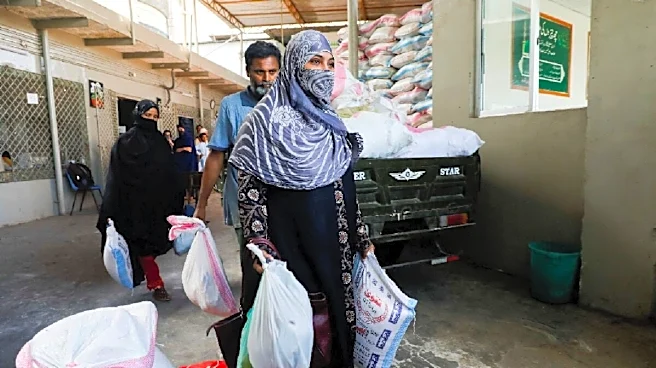
The latest inflation surge comes against a backdrop of mounting economic pressure on Pakistani households. Pakistan’s poverty rate rose to 28.9% in FY26 from 21.9% a year earlier, according to a report by The Friday Times citing the Economic Survey of Pakistan 2025-26.
The number of unemployed people also increased to 5.9 million from 4.5 million, while the unemployment rate rose to 7.1% from 6.3%, the report said.
Pakistan Inflation Returns To Double Digits
The August increase marks a reversal after Pakistan’s annual inflation stood at 9.2% in July.
According to BestBrokers, Pakistan’s 1.9-percentage-point
increase was the largest acceleration across the 93 countries studied, jointly with Fiji.
The comparison measures changes in annual inflation rates between July and August, rather than month-on-month price movements.
Pakistan did not have the world’s highest inflation rate in August. Argentina and Turkey remained far ahead at 33.5% and 31.51%, respectively. Pakistan, at 11.1%, ranked seventh in the dataset.
What Is Driving Pakistan’s Inflation?
The renewed increase is particularly significant given the pressure already facing Pakistani households.
BestBrokers said Pakistan’s inflation outlook remains sensitive to food, energy and imported-cost pressures, which can feed through into transportation, production and retail prices.
The rise in consumer prices comes alongside worsening poverty and unemployment. Pakistan allocated Rs 722.9 billion to the Benazir Income Support Programme (BISP) in FY26, of which Rs 540.27 billion had been released, according to the report citing the Economic Survey.
The Economic Survey said sustained poverty reduction would require stronger job creation, investment in education and skills, improved healthcare access and broader economic growth beyond direct cash transfers.
Pakistan’s Inflation Outlook
The rise also presents a challenge for Pakistan’s monetary policymakers.
The State Bank of Pakistan’s August monetary policy report, cited by BestBrokers, indicated that inflation was expected to moderate gradually and move towards the upper end of its 5-7% target range by the end of the 2026-27 financial year.
The August reading suggests price pressures remain difficult to contain, with sustained inflation capable of further reducing household purchasing power and raising costs for businesses.
Pakistan vs South Asia
Pakistan’s acceleration also stands out among the South Asian figures in the dataset.
Sri Lanka’s annual inflation rose from 7.3% in July to 8% in August, a 0.7-percentage-point increase.
Bangladesh’s inflation, meanwhile, edged down from 8.32% to 8.26%.
Pakistan therefore recorded both a higher inflation rate and a significantly sharper acceleration than Bangladesh during the period.







/images/ppid_59c68470-image-179001502523221525.webp)

/images/ppid_59c68470-image-179001505669287092.webp)