
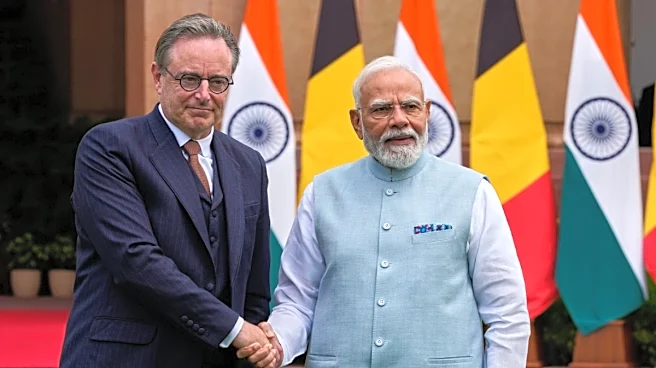
For years, the India-China relationship has been defined by a contradiction: two of Asia’s biggest powers need each other, yet neither fully trusts the other. The coming BRICS summit in New Delhi could offer Prime Minister Narendra Modi and Chinese President Xi Jinping an opportunity to test whether the relationship can move beyond the cautious thaw that began after the 2020 Galwan crisis.
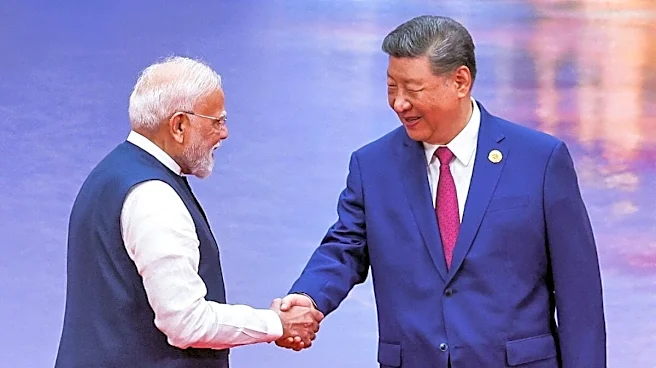
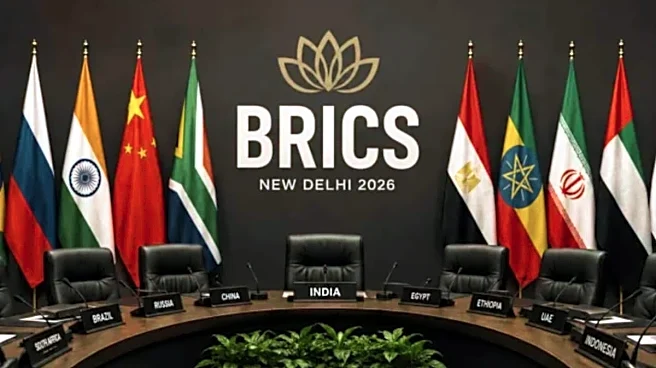
Xi is expected in New Delhi for the September 11-13 BRICS summit, his first visit to India since 2019. His presence is significant because the last time the two leaders met in person in India was before the military confrontation in eastern Ladakh fundamentally altered bilateral ties.
But the real question is not whether PM Modi and Xi can shake hands again.
It is whether the two countries can build enough trust to make their competing interests manageable.
From Galwan To A Cautious Thaw
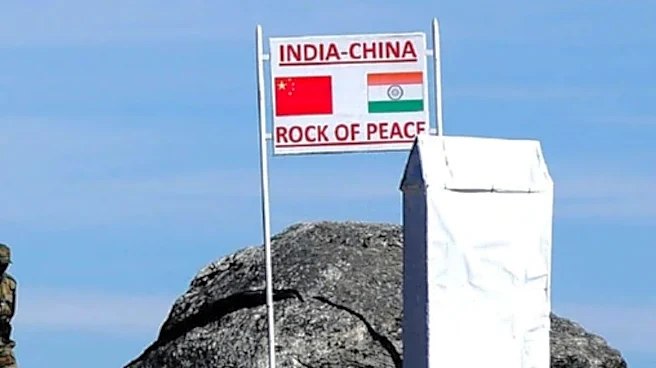
The relationship hit its lowest point in decades after the deadly Galwan Valley clash in June 2020. Thousands of troops were subsequently deployed along the Line of Actual Control (LAC), while India tightened scrutiny of Chinese investments and technology.
The border became the central measure of the relationship. New Delhi repeatedly maintained that normal relations with Beijing could not return unless there was peace and tranquillity along the frontier.
That began to change in October 2024.
India and China reached an agreement on patrolling arrangements in Depsang and Demchok in eastern Ladakh, allowing both sides to resume patrolling in areas where Indian access had been blocked since 2020. The agreement was described as a potential opening for restoring political and economic ties.
The two leaders subsequently met in Kazan on the margins of the BRICS summit on October 23, 2024. According to Carnegie’s reconstruction of the negotiations, the meeting followed the agreement on patrolling and marked an important step towards restarting high-level engagement.
Since then, the two sides have tried to put guardrails around their rivalry. The emerging approach is less about resolving every disagreement and more about ensuring that disagreements do not spiral into another military crisis.
The difference is crucial because India and China are not suddenly becoming friends. They are trying to become better at managing their rivalry.
Why BRICS Matters
This is where the Delhi BRICS summit becomes particularly important.
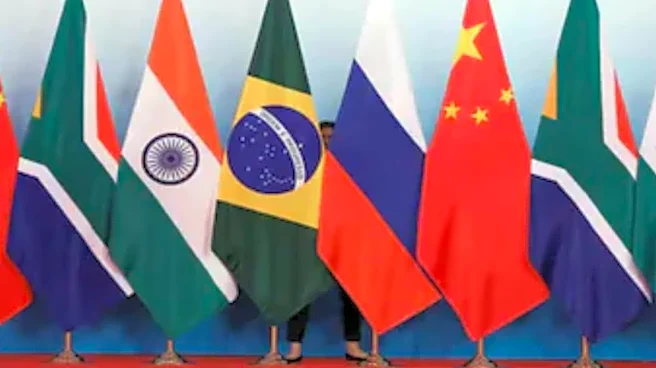
BRICS is one of the few major international forums where PM Modi and Xi sit at the same table not as representatives of two rival military alliances, but as leaders of major emerging economies.
The Lowy Institute has argued that India and China do not necessarily need to trust each other for BRICS to function. They need to find enough common ground to ensure that the grouping works. That may actually suit both countries.
For India, BRICS is a vehicle for strategic autonomy, a platform through which New Delhi can work with China and Russia while simultaneously maintaining partnerships with the US, Europe, Japan and others.
For Beijing, BRICS is an important instrument for building a broader Global South coalition and pushing for greater influence in the international system.
Their interests overlap, but their visions are not identical. And that is precisely why BRICS becomes a test.
The US Factor
The changing relationship between Washington and Beijing is another variable.
India has deepened its strategic partnership with the United States, including through the Quad and defence cooperation. At the same time, New Delhi has refused to turn that partnership into an alliance against China. China, meanwhile, sees the US-led security architecture in the Indo-Pacific as a strategic challenge.
This gives India and China a peculiar area of convergence. Both countries favour a more multipolar international order and oppose a world dominated by a single power. But India does not want multipolarity to become synonymous with a China-led order.
That difference is likely to remain.
India’s participation in BRICS, therefore, should not be read as India moving into China’s camp. New Delhi increasingly relies on what can be described as strategic multi-engagement, maintaining relationships with competing powers simultaneously while preserving decision-making autonomy.
The Border Question Isn’t Over
The biggest obstacle to genuine normalisation remains the LAC. The 2024 patrolling agreement was important, but it did not settle the underlying boundary dispute.
At several locations, disengagement has produced buffer zones and changed the way both armies operate. The agreement restored patrolling arrangements in Depsang and Demchok, but questions remain about the broader military posture along the frontier. The situation at friction points such as Galwan Valley and Pangong Tso have remained unchanged after disengagement.
And the two countries continue to negotiate.
Recent diplomatic contacts, including talks between NSA Ajit Doval and Chinese Foreign Minister Wang Yi, indicate that both sides are trying to institutionalise dialogue rather than leave the relationship dependent solely on leader-level meetings.
That is what the “guardrails” approach means: keep communication channels open, manage troops on the border, revive diplomatic mechanisms and prevent individual incidents from destroying the entire relationship.
But Can Economics Bring Them Closer?
Here too, the picture is complicated.
India and China remain deeply economically intertwined despite political tensions. China continues to be an important source of machinery, electronics, industrial inputs and other goods for India. Yet New Delhi has also spent the post-2020 period reducing strategic dependence on China.
India tightened investment rules involving countries sharing a land border with India, increased scrutiny of Chinese technology and has remained cautious about allowing Chinese firms greater access to sensitive sectors.
Even as the broader relationship improves, that caution has not disappeared.
A recent Reuters report illustrates the problem. India has stalled a proposed connection between UPI and Alipay+, citing concerns including national security, data privacy, cyber fraud and the handling of transaction data. The episode suggests that economic engagement may be returning, but security concerns still set the boundaries.
The BRICS summit could therefore become an important venue for discussing precisely this tension. Indian officials are expected to push discussions on technology imports, investment restrictions and economic ties with China, according to The Indian Express.
So, Can PM Modi And Xi Really Become Friends?
India and China compete for influence across South Asia and the Indian Ocean. They have unresolved territorial differences. China has a close strategic relationship with Pakistan. India has deepened ties with the US and other Indo-Pacific powers. Both are competing for influence in the Global South.
Even when the border is relatively calm, these underlying rivalries do not disappear.
The more realistic possibility is competitive coexistence.
That means no return to the 2020-style military confrontation, regular military and diplomatic communication, greater predictability along the LAC, selective restoration of economic engagement, cooperation where interests overlap, competition where they do not, and neither side expecting the other to abandon its strategic partnerships.
This is close to the argument emerging from recent analysis of the relationship. The Carnegie Endowment, for instance, describes India’s current approach as navigating a relationship that has moved from the severe chill of 2020-24 towards renewed engagement, while still being driven by multiple competing imperatives.
The Real BRICS Test
The Delhi summit, therefore, should not be judged simply by the optics of a PM Modi-Xi meeting.
A handshake, a bilateral meeting or even warm public remarks would only demonstrate diplomatic normalisation. The harder test will be whether the two sides can translate that normalisation into mechanisms that survive the next disagreement.
Can they keep the LAC peaceful? Can they gradually restore economic confidence without compromising India’s security concerns? Can they cooperate inside BRICS without turning the grouping into another arena for India-China rivalry? And can PM Modi and Xi maintain dialogue even when their interests diverge sharply?
If the answer to those questions is yes, India and China may not become friends, but they could become something perhaps more useful: stable rivals who know where the red lines are.
And for two nuclear-armed neighbours with a disputed 3,488-km frontier, that may be a more realistic and consequential goal than friendship.


/images/ppid_59c68470-image-17887475609955937.webp)

/images/ppid_59c68470-image-178876753513579139.webp)