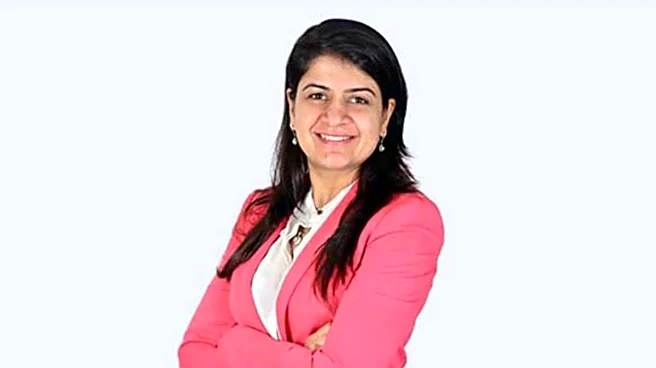



OpenAI has moved Pragya Misra into a new role overseeing business development for India and South Asia, as the ChatGPT maker increases its focus on one of its fastest-growing markets.
Misra announced the change on November 17. She joined OpenAI in April 2024 as the company’s first India hire and initially worked on policy and government engagement before taking on a broader global affairs role.
Her new position shifts the focus towards partnerships, business adoption and infrastructure.
Misra said her new responsibilities will include building partnerships that help businesses use AI, expanding access to OpenAI technology and supporting the infrastructure needed for that growth.
The move comes at a time when India is becoming increasingly important
to OpenAI’s global strategy.
According to information reported following the announcement, India is now OpenAI’s largest market globally by weekly active users. The company’s user base in the country has also doubled since the beginning of 2026.
That growth is pushing OpenAI beyond consumer chatbot usage.
Businesses, universities, developers and government organisations are increasingly exploring generative AI for customer service, software development, research, productivity and automation.
For OpenAI, converting that interest into long-term commercial partnerships is likely to become an increasingly important part of its India strategy.
The company has already expanded its leadership structure in the region.
In March, OpenAI appointed former JioStar digital chief Kiran Mani as managing director for Asia-Pacific. In June, it appointed former Uber India and South Asia president Prabhjeet Singh as managing director for India.
The company has also been expanding its physical presence in India. OpenAI opened its first Indian office in New Delhi in 2025 and has announced plans for additional offices in Mumbai and Bengaluru.
Misra’s new role therefore comes as part of a wider expansion rather than an isolated leadership change.
India is an especially important market for AI companies because of its large technology workforce, rapidly growing digital economy and expanding enterprise sector.
The country’s software companies are also among the largest potential users of AI coding and automation tools.
For OpenAI, the opportunity extends beyond selling subscriptions. Partnerships with large Indian companies could help integrate AI into customer service, software development, financial services, education and other sectors.
Infrastructure is another major part of the equation.
Running advanced AI systems at scale requires significant computing capacity and data-centre infrastructure. As demand grows, OpenAI and its partners will need to build the technical capacity to support Indian users and enterprises.
Misra’s move into business development therefore puts her at the centre of a broader effort to turn OpenAI’s popularity in India into deeper commercial and infrastructure relationships.
The appointment also signals how the company’s India priorities are changing.
Its early presence in the country was heavily focused on policy, government relations and building awareness. The next phase is likely to involve much more emphasis on adoption, partnerships and revenue.
With India already representing a major user base for ChatGPT, the challenge for OpenAI will be turning that popularity into a broader AI ecosystem.