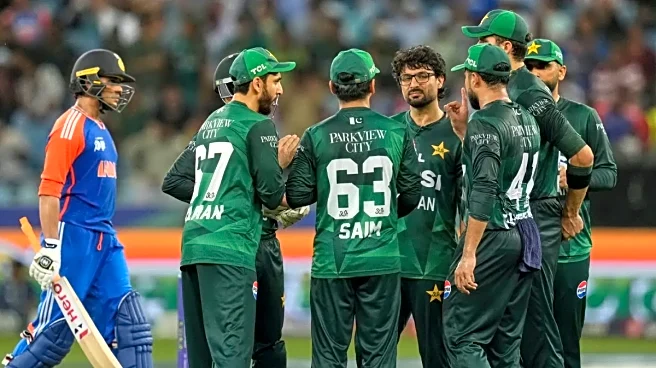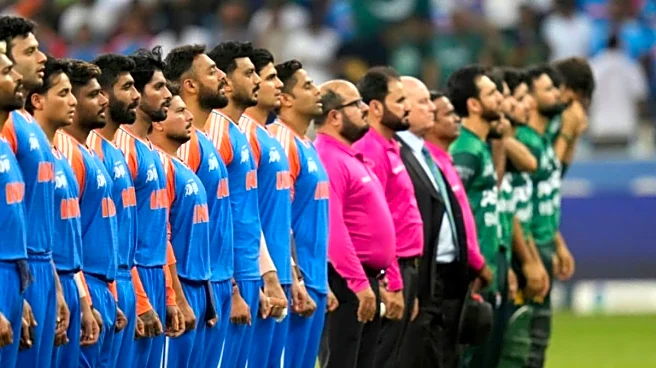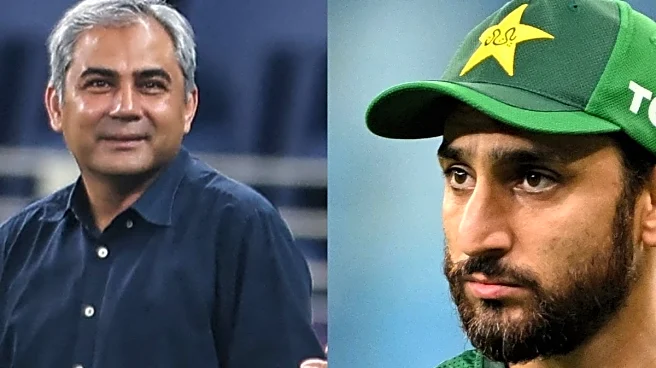


The International Cricket Council (ICC) has called out the Pakistan government’s decision to boycott the T20 World Cup fixture against India in Colombo. On Sunday, the Government of Pakistan announced that it has granted approval for Salman Ali Agha & Co. to participate in the ICC event but will boycott the match against India scheduled for February 15. However, the decision has not been formally conveyed to the ICC.
In an official statement, the International Cricket Council (ICC) said it is still awaiting official confirmation from the Pakistan Cricket Board (PCB).
“While the ICC awaits official communication from the Pakistan Cricket Board (PCB), this position of selective participation is difficult to reconcile with the fundamental premise
of a global sporting event where all qualified teams are expected to compete on equal terms per the event schedule.”
The ICC further stated that the multi-nation tournaments hosted by it are “built on sporting integrity.” As a result, the decision taken by the Pakistan government was not in the interest of the global game or its fans.
“ICC tournaments are built on sporting integrity, competitiveness, consistency and fairness, and selective participation undermines the spirit and sanctity of the competitions. While the ICC respects the roles of governments in matters of national policy, this decision is not in the interest of the global game or the welfare of fans worldwide, including millions in Pakistan.”
Lastly, the global body stated that it expects the PCB to understand the implications of boycotting the game against India and explore a “mutually acceptable resolution.”
“The ICC also hopes that the PCB will consider the significant and long-term implications for cricket in its own country, noting that such a move could impact the global cricket ecosystem, of which Pakistan is both a member and beneficiary.
“The ICC’s priority remains the successful delivery of the ICC Men’s T20 World Cup, which it believes should be the shared responsibility of all its members, including the PCB. It expects the PCB to explore a mutually acceptable resolution that protects the interests of all stakeholders.”