


Chief Justice of India (CJI) Surya Kant on Thursday said he would intervene if the closure of the Supreme Court Metro Station was not resolved by lunchtime, after the Supreme Court Bar Association (SCBA) raised concerns over the hardships being faced by lawyers, litigants and Registry staff in reaching the court amid the ongoing protests in the national capital.
The issue was mentioned before the CJI-led bench by SCBA President Vikas Singh, who submitted that the closure of the Supreme Court Metro Station and several other stations had disrupted access to the court.
“The lawyers or Registry staff can be screened at the metro. It’s affecting us,” Singh told the bench, suggesting that those with valid Supreme Court identification or proximity cards
be allowed to exit the station after security checks.
Responding to the plea, CJI Surya Kant said, “If by lunchtime something does not happen to open it, I will intervene. We have issued that no adverse orders also are passed today for non-appearance etc.”
When Singh further submitted that judicial intervention might become necessary if the issue remained unresolved, the Chief Justice responded, “Yes. By lunch if something… if they don’t… we will look into this.”
No Litigant Should Suffer Due to Metro Closure
The Chief Justice also underlined that the Supreme Court had already taken steps to ensure that parties were not prejudiced because lawyers were unable to reach court owing to the prevailing situation.
Referring to directions already issued, CJI Surya Kant said that no adverse orders should be passed solely because of the non-appearance of lawyers affected by the transport disruption.
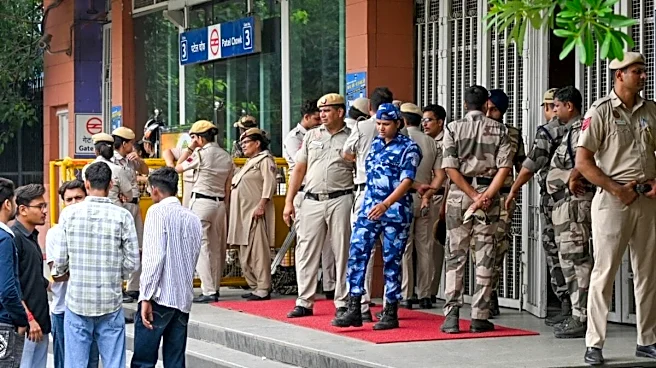
The assurance came as the closure of Metro stations impacted the movement of advocates, litigants and court staff to the Supreme Court on Thursday.
SCBA Proposes Security Screening at Metro Station
During the mentioning, SCBA President Vikas Singh proposed a mechanism that would allow essential court stakeholders to use the Supreme Court Metro station while maintaining security.
He suggested that commuters exiting the station could be screened at the exit point, and only those carrying valid Supreme Court proximity cards, Registry identification or official entry passes should be permitted to leave the station.
“In the metro, there is one advantage, that when they come out of the train, there is an exit point. There they can be screened. People having proximity cards, and Registry staff, can be permitted to come out, and the rest can be told to take the other train and go,” Singh submitted.
Responding to the proposal, the CJI said the Supreme Court administration had already been instructed to engage with the Delhi Metro Rail Corporation (DMRC) and the concerned authorities to examine the suggestion.
“I informed them in the morning. It is up to them to talk to the authorities. He is also exploring this as one of the solutions. By lunchtime, if there is a solution, that is fine. Otherwise, if my intervention is required, I will do,” the CJI said.
16 Delhi Metro Stations Closed Amid Protests
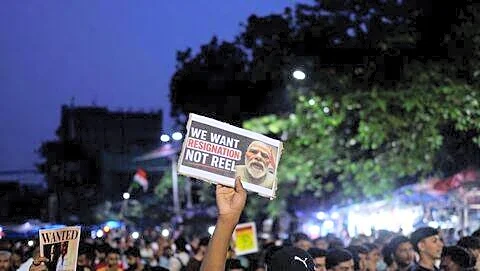
The developments come after the Delhi Metro Rail Corporation (DMRC) announced the closure of 16 Metro stations across the national capital from 7.30 am until further orders due to security concerns amid the ongoing Cockroach Janta Party (CJP) protests.
Among the stations where entry and exit have been suspended are Lok Kalyan Marg, Rajiv Chowk, Patel Chowk, Ramakrishna Ashram Marg, Barakhambha Road, Supreme Court, Seva Teerth, Janpath, Mandi House, Central Secretariat, ITO, Delhi Gate, Indraprastha, Khan Market, Jor Bagh and Shivaji Stadium.
However, interchange facilities continue to remain operational at Rajiv Chowk, Mandi House and Central Secretariat.
The Metro closures come amid heightened security arrangements in central Delhi as authorities respond to the ongoing demonstrations.





/images/ppid_a911dc6a-image-178497032530039415.webp)

/images/ppid_a911dc6a-image-178497035761410954.webp)
/images/ppid_a911dc6a-image-178497032799512636.webp)