

/images/ppid_a911dc6a-image-17791592287636658.webp)

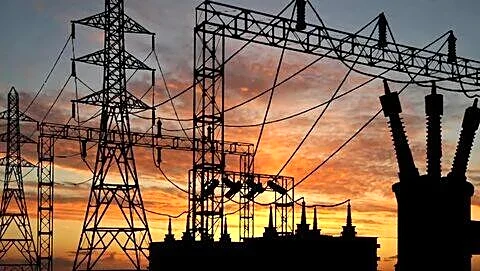
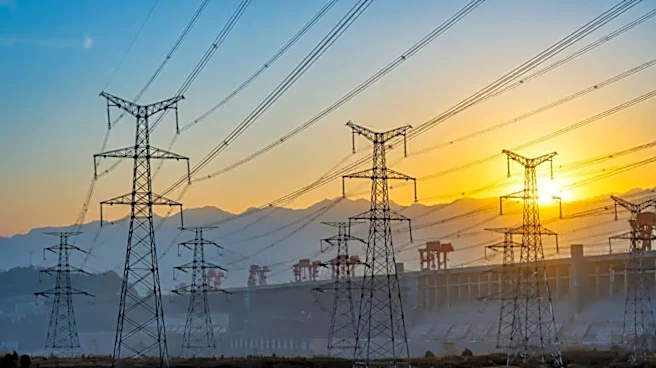
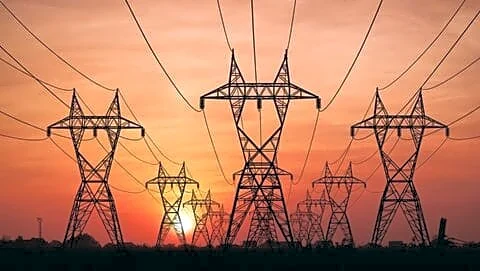
India’s electricity demand is climbing into uncharted territory. For the third straight day on Wednesday, the country’s peak power demand touched a new all-time high this week, crossing 265 gigawatts (GW) as large parts of north, west and central India continue to reel under an intense heatwave. The surge is being driven largely by round-the-clock use of air-conditioners, coolers and fans as temperatures in several cities hover above 45 degrees Celsius.
Just weeks ago, India had celebrated successfully meeting a record peak demand of 256.1 GW on April 25 without any major shortage. That itself had surpassed the previous national record of 250 GW set in May 2024. Now, the country has already gone well beyond that figure – underlining how rapidly
electricity consumption is rising during extreme summers.
But this is no longer just a heatwave story. India’s record electricity consumption is now colliding with another major crisis: rising fuel insecurity triggered by the ongoing US-Iran conflict, which has disrupted global oil markets, pushed up crude prices and increased pressure on energy-importing countries like India.
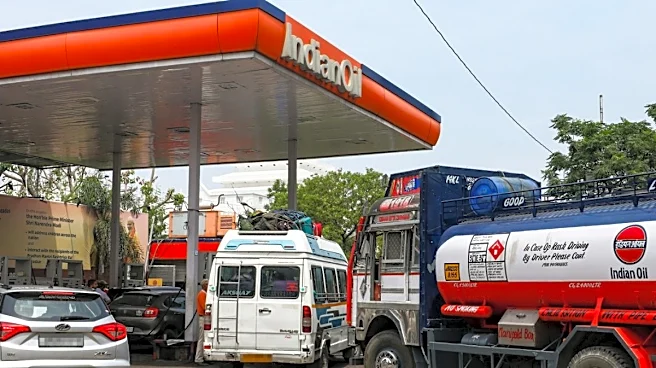
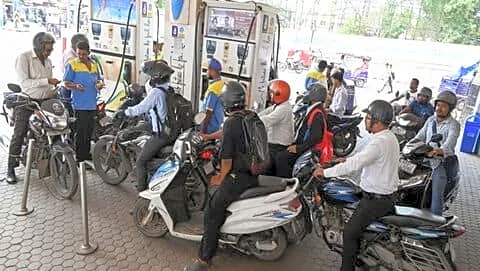
As petrol and diesel prices rise again after years of relative stability, the government has increasingly pushed citizens and industries towards reducing fuel consumption, using public transport where possible and accelerating the shift towards electric mobility. Prime Minister Narendra Modi himself has urged fuel conservation measures, while even his motorcade size was reduced to save fuel amid the global oil shock.
The result is an unusual moment for India’s energy economy: the country is simultaneously trying to reduce dependence on imported oil through EV adoption while also facing record electricity demand because of heatwaves and rising cooling needs.
Why India’s Power Demand Is Suddenly Exploding
Across many parts of India, daytime temperatures have surged past seasonal averages while nights have remained unusually warm. That means cooling appliances are running for longer hours, often continuously through the night. Power consumption rises sharply every time temperatures climb because millions of households switch on air-conditioners simultaneously.
Cooling demand has now become one of the single biggest contributors to peak electricity usage during Indian summers. Urban centres are seeing particularly sharp spikes as AC ownership rises rapidly across middle-class households.
The demand surge is especially visible in north India. Delhi’s electricity demand crossed seasonal thresholds unusually early this year, while neighbouring NCR cities including Noida and Gurugram have also reported steep rises in consumption within days.
How Big Is The Power Demand Compared To Previous Years?
The jump becomes even more striking when compared to recent years.
India’s previous all-time peak demand record before 2026 stood at around 250 GW in May 2024.
During the relatively milder summer of 2025, peak demand remained lower at roughly 242-243 GW because of favourable weather conditions and an earlier monsoon.
In 2026, India successively crossed 252 GW, 256 GW, 260 GW and now over 265 GW within weeks.
That means India’s electricity demand has surged by more than 20 GW compared to last summer – a massive increase in grid terms.
For perspective, a 20 GW increase is larger than the total electricity demand of several smaller countries combined.
How India’s EV Push Is Adding Up
India is trying to rapidly cut dependence on imported fuel. The ongoing Iran war has exposed how vulnerable oil-importing economies remain to geopolitical shocks. India imports a large share of its crude oil requirements, much of it historically linked to West Asian supply routes affected by the conflict.
That is one reason the government has intensified its push for electric vehicles, biofuels and alternative energy systems. In recent weeks, industries have been advised to reduce idle fuel usage and shift from oil-based systems to electricity where possible.
Officials and policymakers increasingly see EV adoption as an energy security strategy.
But there is a catch. As millions of electric scooters, cars and commercial vehicles gradually enter Indian roads, they will add further pressure on an electricity grid that is already facing unprecedented summer demand peaks.
That means India’s energy transition is creating a new balancing act: reduce oil dependence without overwhelming the power system.
India’s Cooling Boom Is Changing The Energy Landscape
How ACs Are Driving The Power Demand
India is in the middle of a cooling revolution. Rising incomes, expanding urbanisation and increasingly unbearable summers are pushing millions of households towards air-conditioners for the first time. A decade ago, ACs were still considered luxury products in much of India. Today, even tier-2 and tier-3 cities are witnessing a sharp rise in cooling appliance sales.
The problem is that cooling demand creates peak load stress – huge electricity spikes concentrated within specific hours of the day.
Unlike factories, which consume power steadily, residential cooling demand surges suddenly during hot afternoons and evenings. That places enormous strain on transformers, transmission networks and local distribution systems.
This is already visible in several cities where local outages and transformer failures are becoming more common during extreme heat spells.
Can India’s Grid Handle This Pressure?
So far, India’s grid has managed to avoid a nationwide crisis despite record demand. The government has repeatedly highlighted that recent peak demand records were successfully met without major shortages. Coal stockpiles are also currently stronger than during the severe power crunch seen in 2022.
But the pressure points are becoming increasingly visible. Coal still contributes more than 70 per cent of India’s electricity generation, even as renewable energy capacity expands rapidly. Solar power is helping significantly during daytime peaks, but battery storage infrastructure remains limited, making evening demand harder to manage after sunset.
That is why energy experts increasingly argue that India now urgently needs smarter electricity grids, large-scale battery storage, stronger transmission networks, and faster renewable integration.
Without those investments, future summers could become far more difficult to manage.