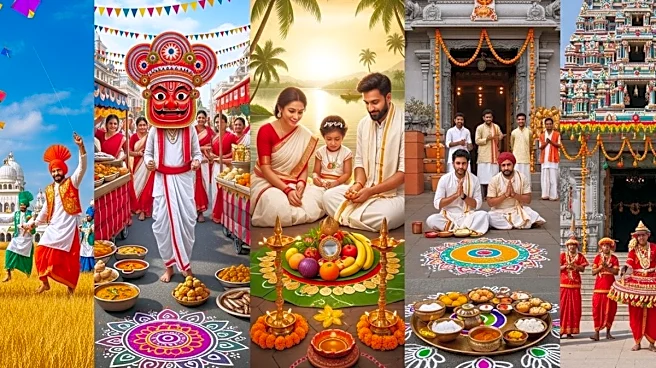



India, a country of vibrant cultures and rich traditions, observes multiple New Year festivals on April 14th and 15th across different states. Each region celebrates its own unique version of the new year, reflecting local customs, historical significance, and seasonal changes. Let’s take a look at how six states mark this special occasion in their distinct ways:
Baisakhi (Punjab, Haryana) – April 14
In the heart of Punjab, Baisakhi is not just a harvest festival but also an important cultural and religious occasion.
For Sikhs, it marks the formation of the Khalsa in 1699 by Guru Gobind Singh.
The day is celebrated with kirtans (religious songs), Bhangra and Gidda dances, and of course, prayers at Gurdwaras.
For farmers, it’s a celebration of the harvest season, where they express gratitude
for the bounty of the land.
Puthandu (Tamil Nadu) – April 14
In Tamil Nadu, Puthandu marks the Tamil New Year, with families waking up early for a ritual bath and offering prayers to welcome the new year.
The “Kanni” or the first sight of the day is considered auspicious, and homes are adorned with fresh flowers and mango leaves.
The special dish of the day is “Mango Pachadi”, which is made with a mix of raw mango, jaggery, and other ingredients to symbolize the different aspects of life. People also enjoy a grand feast with traditional Tamil delicacies.
Pohela Boishakh (West Bengal) – April 14
The Bengali New Year or Pohela Boishakh is one of the most widely celebrated festivals in West Bengal and Assam.
It begins with a visit to the temple, followed by a hearty meal that includes dishes like “Shorshe Ilish” (hilsa fish in mustard sauce).
Bengali sweets, like Rasgulla and Sandesh, are prepared in abundance. The festival is also marked by colourful processions, cultural performances, and the exchanging of gifts between families and friends.
Vishu (Kerala) – April 14
In Kerala, Vishu is the traditional New Year festival that holds deep religious significance.
The highlight of the celebration is the “Vishu Kani”, where the first thing a person sees at dawn is a display of auspicious items like rice, fruits, flowers, and coins, believed to bring prosperity.
People also participate in the Vishu feast, which includes a variety of vegetarian dishes. Kollam (the traditional floral arrangement) and fireworks light up the sky during this vibrant festival.
Bohag Bihu (Assam) – April 14
Bohag Bihu marks the Assamese New Year and the start of the agricultural season.
The festival spans three days and is celebrated with traditional Bihu dance, songs, and the preparation of Pitha (rice cakes).
On the first day, people clean their homes and wear new clothes to signify renewal.
On the second day, families engage in feasting and fun-filled activities, while the third day involves visiting elders and seeking blessings for a prosperous year ahead.
Sajibu Cheiraoba (Manipur) – April 14
In Manipur, the Sajibu Cheiraoba festival marks the traditional Manipur New Year. It usually falls on April 14th, and is celebrated with grand feasts and cultural rituals.
The day begins with ritualistic prayers, followed by a visit to family members and neighbours.
A highlight of the celebration is the preparation of “Iromba” (a traditional dish made of mashed vegetables), and various community gatherings take place to mark the new year with music, dance, and traditional games.
Sajibu Cheiraoba is deeply connected to the agricultural calendar, marking the beginning of a new crop season.
The Uniqueness of India’s New Year Celebrations
While the date for these festivals may coincide, the customs, rituals, and even the foods prepared on these days vary greatly across regions. These celebrations are a testament to India’s cultural diversity and the deep-rooted traditions that continue to bring people together, regardless of their differences.
Whether it’s the harvest season or a time to start afresh, each of these festivals carries its own symbolism and offers a unique glimpse into the life and traditions of the people.
As these six states celebrate their own version of the new year on April 14th and 15th, it’s a reminder of how India’s cultural mosaic celebrates unity in diversity.
/images/ppid_a911dc6a-image-177608763301327191.webp)





/images/ppid_a911dc6a-image-177608602913220410.webp)
/images/ppid_a911dc6a-image-177608553292418239.webp)