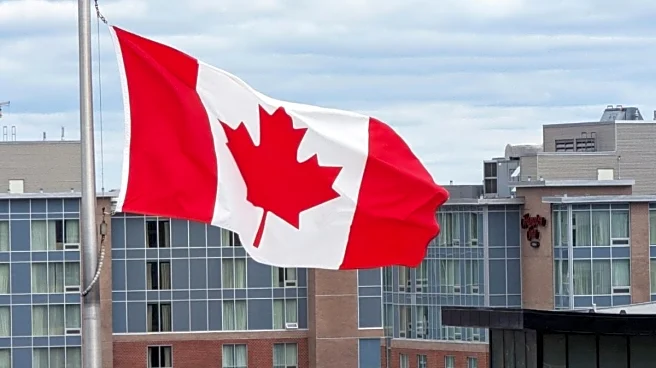

The death of an Indian-origin man due to suspected cardiac arrest, awaiting treatment for over eight hours in a Canadian hospital, has triggered anger, grief, and uncomfortable questions across social
media and diaspora circles. For many Indians, the incident has shaken a deeply held belief: that Canada’s publicly funded healthcare system is among the safest and most reliable in the world.
The tragedy has also reopened a debate that Canada itself has been struggling with for years. Can a healthcare system be considered world-class if access to care is slow, unpredictable, and increasingly rationed by long waiting lists? And for immigrants and temporary residents, does “free healthcare” sometimes come at a hidden cost?
Let’s examine how Canada’s healthcare system works, where it is under strain, and why the issue resonates so strongly with Indians — both at home and abroad.
The Promise Of Universal Healthcare
Canada’s healthcare model is often held up as a gold standard. Under its publicly funded system, medically necessary hospital and physician services are largely covered for residents, at no or minimal cost. Patients do not receive hospital bills for emergency care or surgery. In theory, wealth or insurance status does not determine who gets treated.
For decades, this promise has been a cornerstone of Canada’s global reputation. It is also one of the factors that attracts immigrants, international students, and skilled workers from countries like India, where healthcare quality often depends on how much one can pay.
But universal coverage does not automatically guarantee timely care. In Canada, access is regulated through queues, referrals, and prioritisation protocols — systems that work best when hospitals are well-staffed, and demand is manageable.
Where The System Is Struggling
In recent years, those conditions have weakened. Hospitals across Canada are grappling with staff shortages, ageing infrastructure, and rising patient loads. Emergency departments in major cities routinely report waiting times of six to 12 hours. Non-urgent surgeries can be delayed for months, sometimes years.
Family doctors are in short supply, leaving many residents without a primary care provider. Specialist referrals often move slowly, creating bottlenecks even for patients whose conditions worsen while they wait.
Healthcare workers have warned that the system is operating close to its limits. Burnout among doctors and nurses surged during the COVID-19 pandemic and has not fully eased. Provinces struggle to recruit and retain staff, particularly in emergency medicine and rural care.
A 2025 survey by the Canadian Federation of Nurses Unions found that 94% reported burnout symptoms, with 45% screening positive for severe burnout. This is a dramatic increase from pre-pandemic levels, where roughly 78% of nurses in one study reported feeling burnout.
While data from the Canadian Medical Association’s (CMA) 2025 National Physician Health Survey shows that 46% of physicians reported high levels of burnout. While this is a decrease from a peak of 53% in 2021, it is still significantly higher than the 30% reported in 2017.
In this context, any delay, especially in emergency settings, can have serious consequences.
When Delay Becomes The Story
The death of the Indian-origin patient has struck a nerve because it puts a human face to systemic stress. While the full medical details may take time to emerge, the allegation of delayed care has resonated with many who have experienced or witnessed long waits in Canadian hospitals.
For Indian families abroad, the incident feeds into a growing unease. Stories of emergency room delays, cancelled procedures, and overstretched hospitals circulate widely within immigrant communities. What was once dismissed as anecdotal is now being discussed as a structural problem.
The question many are asking is blunt: if a medical emergency is not treated quickly, does the promise of free healthcare still hold value?
Are Immigrants More Vulnerable?
Officially, Canada’s healthcare system does not discriminate between citizens and permanent residents once coverage is established. International students and temporary workers are usually covered through provincial plans or mandatory insurance.
Both citizens and permanent residents (PRs) are entitled to public health insurance, which covers medically necessary hospital and physician services free at the point of use.
Healthcare is administered by each of Canada’s 13 provinces and territories, and they each have their own health plan.
Newcomers, including permanent residents (and returning citizens), may face a waiting period of up to three months before their public health insurance coverage begins, depending on the province or territory of residence. Private insurance is recommended to bridge this gap.
Yet vulnerability can still exist. New immigrants may be unfamiliar with how the system works, when to seek emergency care, or how to navigate referrals. Language barriers, fear of being dismissed, or uncertainty about eligibility can delay help-seeking.
Some critics argue that overcrowded emergency rooms and rigid triage systems disproportionately affect those without advocates, such as elderly patients, newcomers, or people unfamiliar with the system’s nuances. While there is no evidence of deliberate bias, the experience of care can feel unequal when systems are under pressure.
How Canada’s Healthcare Compares With India’s
India’s healthcare landscape is often criticised for being unequal, underfunded, and heavily reliant on private providers. And yet, in one crucial respect, India often outperforms Canada: speed.
Private hospitals in India can deliver rapid diagnostics, specialist consultations, and emergency interventions, often within hours. For those who can afford it, waiting lists are rare. In critical cases, speed can mean survival.
The trade-off is cost. High-quality private care in India can be financially devastating without insurance. Public hospitals, while affordable, are frequently overcrowded and under-resourced.
Canada offers the opposite bargain. Care is largely free, but access is rationed. In non-emergency situations, delays are built into the system. When those delays spill into emergencies, the consequences can be severe.
A Question Of Equity Versus Urgency
At the heart of the debate lies a philosophical choice. Canada’s system prioritises equity — ensuring that everyone, regardless of income, has access to care. But equity often comes at the expense of urgency, especially when resources are limited.
India’s private healthcare prioritises urgency for those who can pay, often at the cost of equity. Both models carry ethical and practical risks.
The tragedy involving the Indian patient forces a difficult question into the open: Is a system that treats everyone equally acceptable if it sometimes treats people too late?
How The World’s Best Systems Compare
To understand Canada’s position, it helps to look at countries widely regarded as having the strongest healthcare outcomes.
In nations like Germany and France, healthcare is universal but delivered through a mixed model. Public insurance is mandatory, but private providers play a significant role. Patients often have faster access to specialists and shorter waiting times than in Canada.
Japan combines universal coverage with one of the highest doctor-to-patient ratios in the world. Clinics are easily accessible, and wait times for consultations are typically short, even though costs remain tightly regulated.
These systems invest heavily in capacity — doctors, nurses, hospital beds — ensuring that universality does not translate into scarcity. Canada, by contrast, has struggled to scale infrastructure at the pace demanded by population growth and ageing demographics.
Why Canada Is Falling Behind
Canada’s healthcare spending as a share of GDP is comparable to other developed nations, but outcomes are increasingly uneven. In 2023, Canada was among the higher spenders, with figures 11.2%-11.6% of GDP, placing it near countries like the UK, France, and Sweden.
Analysts point to fragmented provincial governance, slow adoption of technology, and resistance to private-sector involvement as contributing factors.
Unlike Germany or France, Canada has limited options for patients to bypass queues by paying out of pocket within the system. This preserves equity, but it also removes flexibility when public capacity is stretched.
The result is a system that works well when demand is stable, and falters when it is not.
What This Means For Indian Migrants
For Indians considering migration, the incident raises practical questions that go beyond visas and salaries. Healthcare access, especially in emergencies, is now part of the calculus.
In 2025, nearly 90,000 Indians arrived in Canada as Permanent Residents, while hundreds and thousands arrived as Temporary Residents (with study/work permits). By mid-2025, over 59,000 Indians became new Permanent Residents (PRs), while India led in temporary permits (over 382,000 in Q1) and new citizens (over 20,000 in Q1).
Roughly 1.8 million Indian-origin people comprise Canada’s over 41 million population, that is 5% of the demographics.
Families may need to understand how emergency departments operate, what waiting times are typical, and how to advocate within the system. Employers and educational institutions may face pressure to provide better guidance and supplementary insurance options.
Thus, Canada’s healthcare system offers security against catastrophic medical bills, but it does not guarantee speed.
Lessons For India’s Own Healthcare Ambitions
The debate is equally relevant within India. As the country expands public healthcare coverage through schemes like Ayushman Bharat, Canada’s experience offers a cautionary tale.
India has nearly 1.4 million registered allopathic doctors and over 750,000 AYUSH practitioners, alongside around 70,000 hospitals (about 44,000 private and 26,000 public), though availability varies, with a doctor-population ratio around 1:811 (allopathic) or 1:868 (combined) as of early 2025, still short of the WHO norm. India is actively increasing medical seats through new colleges (131 operational) and AIIMS to boost this.
Universal coverage must be matched with capacity. Without enough doctors, nurses, and hospitals, access will inevitably be rationed. Delays can undermine public trust just as quickly as high costs.
Thus, universal coverage must be matched with capacity. Without enough doctors, nurses, and hospitals, access will inevitably be rationed. Delays can undermine public trust just as quickly as high costs.
India’s healthcare roadmap focuses on Universal Health Coverage (UHC) via Ayushman Bharat (PM-JAY for insurance, HWCs for primary care), a massive push for Digital Health (ABDM), and a shift towards Preventive & Wellness Care, aiming for accessible, affordable, quality care by strengthening infrastructure, integrating tech (AI, blockchain), boosting workforce (nurses, allied staff), and leveraging traditional medicine (AYUSH) for a holistic, inclusive system by 2025-2030 and beyond.
What To Conclude
The death of an Indian patient has become a mirror reflecting larger truths about modern healthcare systems. No model is perfect. Free care can be slow. Fast care can be expensive. Equity and urgency often pull in opposite directions.
The story cuts through romanticised notions of life abroad and forces a more grounded conversation. Healthcare is not just about coverage; it is about timing, trust, and capacity.
As Canada debates reforms and India expands its own public systems, one lesson stands out. In healthcare, delays are not just administrative failures. They can be matters of life and death.
/images/ppid_59c68470-image-177079012148080585.webp)

/images/ppid_59c68470-image-177079009037957749.webp)
/images/ppid_59c68470-image-177079006320740736.webp)
/images/ppid_a911dc6a-image-177079006379879775.webp)

/images/ppid_a911dc6a-image-177079003289086091.webp)




/images/ppid_a911dc6a-image-177079002610010543.webp)
/images/ppid_a911dc6a-image-177079002842398954.webp)
/images/ppid_59c68470-image-177079002661354065.webp)