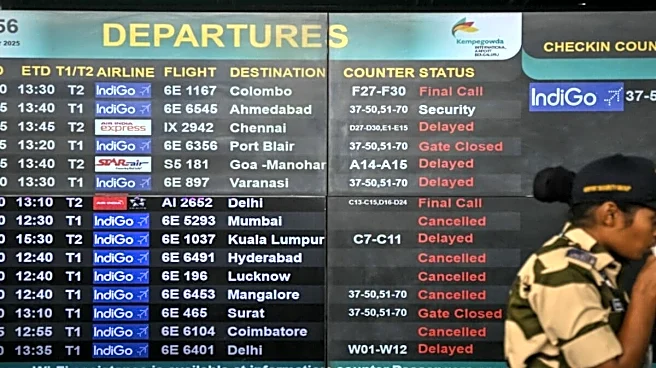




Domestic airfares on several high-demand routes are rising sharply ahead of Durga Puja, Dussehra and Diwali, with some one-way tickets now costing more than short international flights.
A ticket that normally costs Rs 6,500-7,000 is now being quoted at around Rs 15,000 on some routes. This shows an increase of roughly 115-131%, or about 122% when compared with the midpoint of the usual fare range.
In simple terms, a Rs 15,000 ticket now costs more than 2.2 times the usual Rs 6,500-7,000 fare.
The rise comes as airlines prepare for increased travel from the third week of October to mid-November. Higher aviation turbine fuel (ATF) prices, festive demand and limited capacity on key routes are also contributing to the pressure on fares.
Fares Surge In Key Routs
A direct flight
from Mumbai to Kolkata on October 17 is currently priced at a minimum of Rs 15,568. The usual fare on the route is around Rs 7,000.
The situation is similar on the Bengaluru-Kolkata route, where the minimum ticket price is Rs 16,340.
Delhi-Mumbai fares are also already showing a sharp increase ahead of Diwali, which is around two months away. A ticket currently costs Rs 9,878, almost Rs 10,000, compared with a usual fare of around Rs 6,500.
For Durga Puja and Dussehra, which are around a month away, a direct flight to Kolkata is currently available at Rs 14,163, while the highest fare is Rs 25,000.
Also a one-way Mumbai-Kolkata fares at Rs 12,000-14,000 per person for October 12-18 during the Durga Puja period.
During Diwali, one-way fares on Pune and Delhi routes are around Rs 8,000 per person. A round trip for a family of six has been estimated at nearly Rs 90,000.
What is pushing fares higher?
ATF prices were increased by 5.46%, or Rs 6.28 per litre, to Rs 121.28 on September 1. This followed a Rs 5 per litre increase in August. ATF accounts for around 35-40% of airline operating costs.
Festive demand is expected to rise sharply, with airlines anticipating more passengers travelling for Dussehra, Diwali and Durga Puja. Dynamic pricing allows fares to rise on popular routes as demand increases.
Limited capacity is another factor. Trains on routes such as Mumbai-Kolkata and Delhi-eastern India are already full or waitlisted, pushing more travellers towards air travel.
An airline official, speaking on condition of anonymity, said, “Airfares are dynamically priced and vary based on factors such as travel dates, booking windows, route demand, and proximity to the date of travel.”
‘Airlines Are Greedy’
Air Commodore BS Siwach, Director General, Aviation Safety, criticised airlines over the fare increases and said the problem was also linked to demand exceeding supply.
“The airlines are greedy and want to make money. They are utilising the festive period to do so. They will always blame ATF and other factors for the price hike, but that is not entirely the case,” Siwach said.
“There is also a demand-supply crisis. The airlines are creating a monopoly due to the lack of other players in the market. Also, we do not have enough aircraft to cater to the demand during the festive period,” he said.
Siwach said travellers could avoid some of the pressure by booking tickets in advance.
‘Predatory Pricing Trend’
Aviation expert Mark Martin said airfares could rise further, blaming a lack of competition and insufficient growth in India’s airline industry.
“This predatory pricing trend is going to rise more. This is what happens when you have a monopoly. Our aviation sector has not grown with options,” Martin said.
Referring to the closure of Jet Airways and Go First, Martin said the airline market had shrunk. He accused some airlines of taking advantage of their market size.
“Some airlines in India today, come off more as territorial gundas than being mature. They ask for ‘munh maange rakam’ by taking advantage of their market size,” he said, adding that the trend had earlier been criticised by the Competition Commission of India.
Martin said consumers would remember airlines that charged unreasonable fares and predicted a possible resurgence in rail travel.
ATF Not A Concern
Martin also rejected ATF prices and the Iran war as reasons for the current airfare increase. “The airfare rise has got nothing to do with ATF and the Iran war. Governments in other countries have increased the cost of jet fuel, but India did not. Therefore, it gives them no reason to increase the fares,” he said.
On the government’s role, Martin said authorities needed to check “monopolistic tendencies and predatory market tendencies of airlines”.
He also questioned the appeal of IndiGo’s business-class product, saying consumers understood the value of business class and that it was “not merely a seat”.
Fares Could Rise Further
Industry estimates suggest fares on popular sectors could rise by 20-30% as Dussehra and Diwali approach, with even higher increases on peak dates.
Last year, festive fares also rose significantly. During Diwali 2025, the lowest available one-way fares on popular domestic routes such as Mumbai-Delhi started at around Rs 9,500, representing up to a 65% increase over the previous year. Delhi-Kolkata one-way fares climbed to around Rs 9,350 during last year’s festive peak, an 80% increase over previous baseline periods.
Fares remained high as airlines used dynamic bucket pricing, under which lower-cost fare tiers sold out rapidly weeks before major holidays such as Diwali and Christmas. Major routes, last year, also saw sudden increases, with some high-demand holiday and festival weeks recording price rises of 30% to more than 400%, depending on how late travellers booked.
Domestic flights costlier than international hops
The fare surge is also making some domestic flights more expensive than short-haul international journeys.
On routes such as India-Nepal, India-Thailand, India-Bangladesh and India-Sri Lanka, budget airlines and promotional fares can keep one-way tickets between Rs 5,000 and Rs 9,000 on non-peak days. This means some domestic festive fares can now exceed the cost of similar-distance international flights.
A weaker rupee and higher overseas hotel costs have made discretionary international travel less attractive overall. However, the comparison remains striking when a one-way domestic ticket costs more than a flight to another country.
How travellers can avoid the surge
Travellers can book early and avoid the days immediately before and after major festival dates. Being flexible with travel dates and timings, and considering nearby airports or alternative transport where possible, can also help.
Martin said Indian travellers tend to be loyal to low fares rather than airlines. He also pointed to concerns among some passengers about IndiGo following the December event when 2,000 flights were cancelled.
“The unreasonable surge in airfare will eventually be negative for a few airlines,” Martin said.
Travellers can also track ATF and fare trends. If fuel prices continue to rise, airlines may pass on another 2-2.5% in input costs before the festive season peaks.
News18 reached out to IndiGo and Air India for their response on the issue, but both declined to comment.



/images/ppid_59c68470-image-17891975284205884.webp)