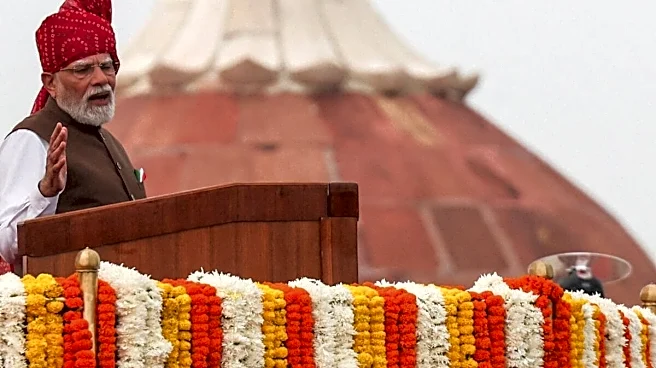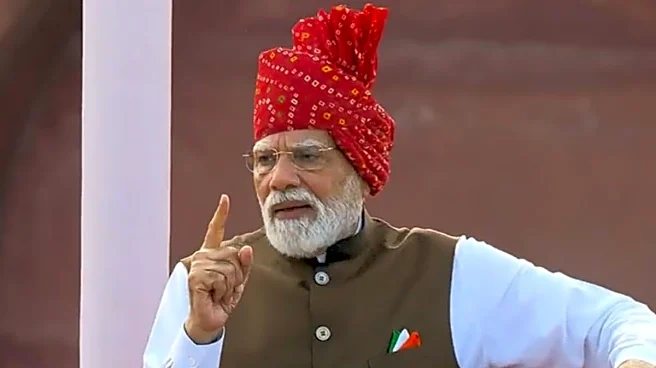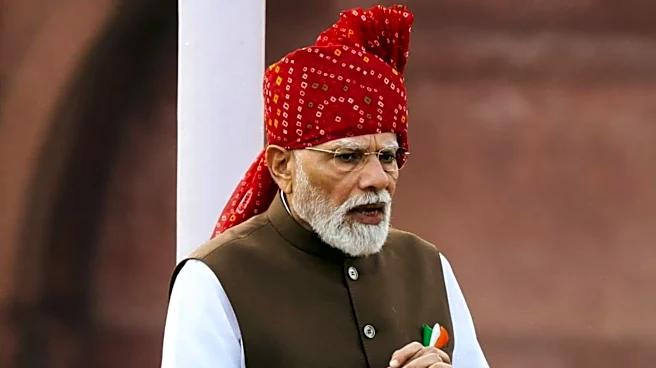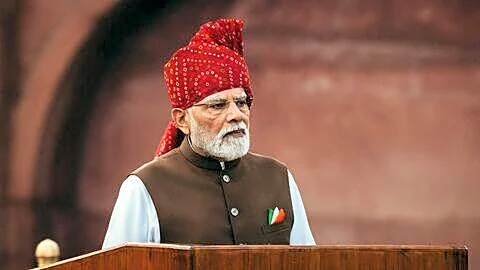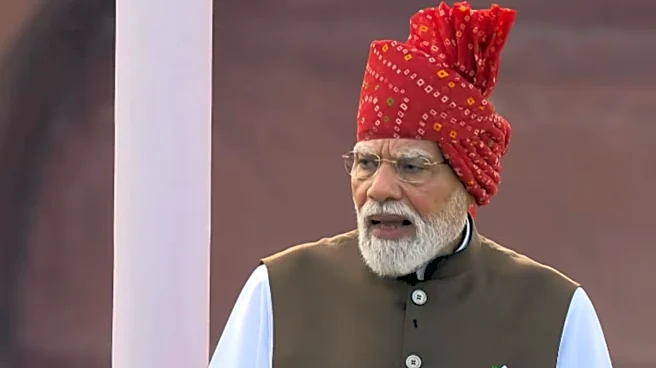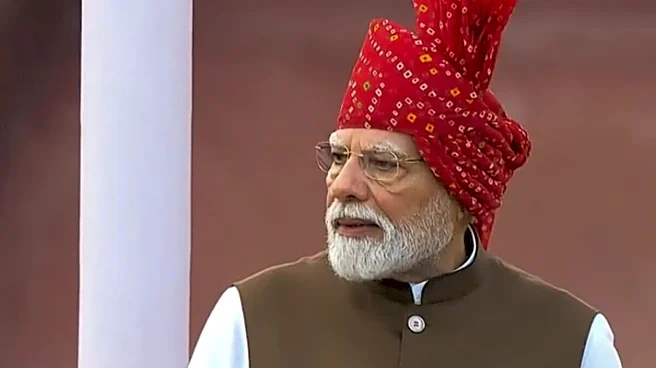

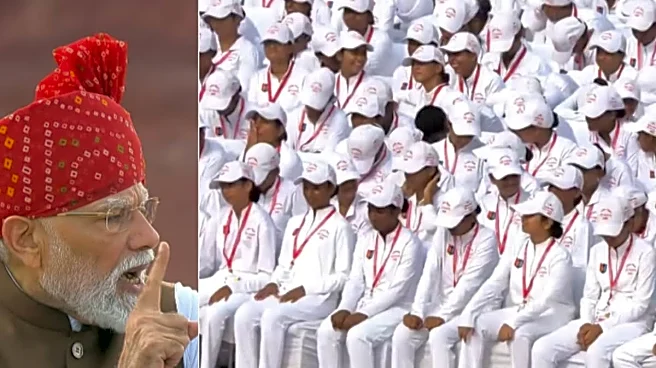
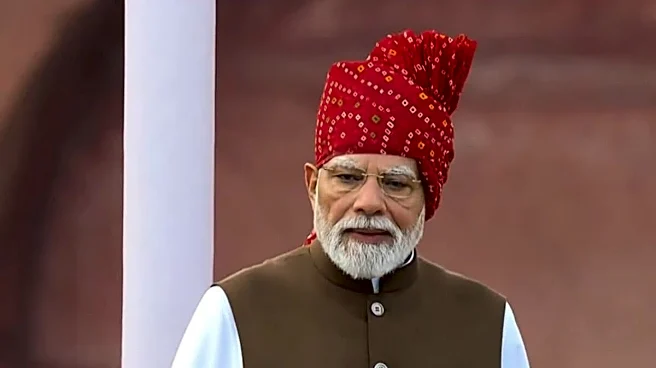
Prime Minister Narendra Modi’s 80th Independence Day address from the Red Fort on Saturday laid out a broad policy and political direction for the next phase of the government’s journey towards a developed India by 2047.
While the Prime Minister did not announce a legislative calendar or spell out a list of Bills for the coming 12 months, his speech made clear the areas where the government intends to push ahead, from reforms, manufacturing and technology to defence, youth empowerment and women’s political representation.
The address was particularly significant for its emphasis on reforms.
PM Modi said India cannot move towards the goal of a Viksit Bharat with policies and regulations of the past and called for systems to be aligned with the aspirations
of a future-ready India.
ALSO READ | ‘Beat Of Every Heart’: PM Modi As ‘Vande Mataram’ Echoes At Red Fort For First Time After Independence
“We have to accelerate the pace of our reforms,” he said, adding that policies and regulations must be formulated according to the “dreams of the future”.
This makes regulatory and structural reform one of the clearest themes emerging from the speech.
The Prime Minister also underlined that the Centre, state governments and industry would have to work together to take these reforms forward.
Women’s Representation Gets Fresh Political Push
One of the strongest political messages in the address was on women’s representation in legislatures.
Referring to the Nari Shakti Vandan Adhiniyam, PM Modi said Parliament had already passed the legislation but urged political parties to come together for its implementation.
He called for 33 per cent representation for women in state Assemblies and the Lok Sabha, saying women must have a greater role in India’s policymaking.
The emphasis is notable because women’s reservation is a constitutional and political issue that has remained closely linked with the broader debate around delimitation.
ALSO READ | 10 Top Quotes From PM Modi’s Independence Day Speech Everyone Is Talking About
However, PM Modi did not announce a new Bill or give a specific legislative timeline from the Red Fort. His message was instead an appeal to political parties to come together and ensure that women get their due representation.
For the government, the issue therefore emerges as an important political priority going forward, while the speech itself stopped short of outlining the precise legislative route.
Sapta Dhara: The Policy Framework For The Next Phase
The most comprehensive part of PM Modi’s address was his articulation of the “seven streams of strength”, or Sapta Dhara, which he presented as a new engine for India’s development.
The seven areas are manufacturing; agriculture and food products; technology and innovation; Gati Shakti; defence power; the green and blue economy; and India’s soft power.
The Prime Minister said that through these seven streams, India should aim to achieve in the next five to seven years what had remained unfinished over the previous five to seven decades.
Sapta Dhara is being identified as the central framework of the speech, with the belief that PM Modi presented it as a means to accelerate the country’s journey towards Viksit Bharat.
ALSO READ | ‘I Have Faith In The Youth Of My Country’: PM Modi Says Gen Z Will Help Turn India’s Dreams Into Reality
The message is significant for the next 12 months because it gives the government a broad policy architecture rather than a single flagship legislative promise.
Manufacturing, Exports And Self-Reliance
Manufacturing was placed at the forefront of this framework.
PM Modi called for India to build the entire value chain, from components and design to finished products, and become a trusted hub of global supply chains.
He stressed that Indian factories and products must compete globally on cost, quality and scale, and repeatedly emphasised quality as a key part of India’s global brand.
The Prime Minister also set ambitious targets for Indian companies, asking why 50 Indian companies should not feature among the Fortune 500 in the coming decade, why an Indian bank should not be among the world’s top five and why an Indian pharmaceutical company should not be among the world’s five largest.
He also called for Indian products and agricultural produce to reach global markets. This suggests that domestic manufacturing, exports, MSMEs and global competitiveness will remain central to the government’s economic agenda.
Technology And Youth At The Centre
Technology emerged as another major pillar. PM Modi identified AI, quantum technology, space, robotics and data centres as areas where India must build capability and become an innovation hub rather than merely a market for the world.
The Prime Minister also made a significant announcement for young Indians: the government will train one crore young people in AI skills in the coming year. He said the objective is to equip India’s youth to lead in the global AI ecosystem.
He further announced free online coaching for competitive examinations, aimed particularly at easing the financial burden on poor and middle-class families.
Youth therefore emerged not merely as a beneficiary group but as a central force in the government’s Viksit Bharat strategy. PM Modi said the youth would be both the biggest contributors to and beneficiaries of India’s developed-country journey.
Defence, Energy And Strategic Capability
Defence self-reliance was another clear priority. PM Modi said India must become self-reliant in defence and move towards becoming a global supplier of next-generation defence technologies.
He specifically referred to drone systems, hypersonic defence technology and cybersecurity, while linking India’s defence capabilities with the country’s wider strategic self-reliance.
Energy security also featured prominently, with PM Modi calling it “the demand of our time” and stressing the need to strengthen India’s capabilities and protect national interests.
The direction is therefore clear: the government intends to link economic self-reliance with strategic and energy security, while expanding India’s ability to produce critical technologies domestically.
Infrastructure And Green Growth
The Prime Minister’s fourth stream, Gati Shakti, focused on seamless connectivity, high-speed rail, highways, airports, multimodal logistics and port-led development.
The green and blue economy was another pillar, with PM Modi highlighting green hydrogen, renewable energy, energy storage, green mobility, green manufacturing, fisheries, coastal tourism and ocean technology.
These priorities point towards continued government attention to infrastructure expansion, clean-energy capabilities and India’s maritime potential.
The Political Message: Viksit Bharat, Youth And Stability
Alongside the policy agenda, PM Modi used the address to underline the government’s record over the past 12 years.
He highlighted growth in defence production, electronic manufacturing, railway coach production, internet users and digital transactions, while saying India’s transformation reflected the efforts of citizens across social and economic groups.
He also described India as having a “stable political mandate, a stable government, a vibrant democracy, a strong judicial system and a Constitution that guides us all.”
The speech thus combined governance achievements with a forward-looking political narrative: the government is presenting the next phase as one in which India’s existing momentum must be accelerated to meet the 2047 goal.
What The Next 12 Months Signal
Taken together, PM Modi’s Independence Day address points to a government likely to focus on faster reforms, women’s political representation, youth and AI skilling, manufacturing, exports, infrastructure, defence self-reliance, energy security and emerging technologies.
Importantly, the speech should not be read as a formal legislative calendar.
PM Modi announced specific initiatives, including the AI-skilling target for one crore youth and free online coaching, and made a direct political appeal on women’s reservation.
But for several other areas, he laid down policy priorities rather than announcing individual Bills.
The clearest takeaway is that the government’s next phase is being framed around implementation and acceleration. PM Modi said India cannot continue with systems designed for the past and must align policies and regulations with the country’s future ambitions.
At the centre of that roadmap is the Viksit Bharat 2047 goal, with the Prime Minister placing youth power, reforms, economic strength, technological capability and national self-reliance at the heart of the journey.
The political message was equally direct: the government wants to carry the momentum of its past 12 years into the next phase, while seeking cooperation from states, industry and political parties on issues such as women’s representation.
The next 12 months, therefore, are likely to be defined less by one single legislative theme and more by an effort to push multiple strands of the Prime Minister’s Sapta Dhara framework simultaneously.
ALSO READ | ‘Naxals, Maoist Violence No Longer Have Strength To Survive’: PM Modi Warns Of ‘Dimagi Naxal’