
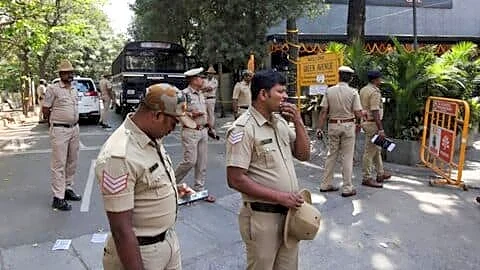

The Bengaluru traffic police have imposed restrictions on certain categories of vehicles on the city’s major flyovers and the elevated corridor leading to Kempegowda International Airport, citing road safety and smoother traffic movement.
The ban on two-wheelers on the International Airport Road Elevated Corridor came into effect on Friday morning. Restrictions have also been enforced on the BGS flyover, Peenya Elevated Corridor and the double-decker flyover between Silk Board and Ragigudda.
The traffic police said the restrictions will be monitored through CCTV cameras.
“This initiative undertaken by the Bengaluru Traffic Police in the interest of public safety and smooth traffic movement will be under CCTV surveillance,” the department said in a statement
on Thursday.
Two-Wheeler Ban On Electronic City Flyover From September 11
The traffic police have also announced that two-wheelers will be banned on the Electronic City flyover from next Friday, September 11.
The move is part of the traffic department’s wider restrictions on specific vehicle categories on selected flyovers and elevated corridors across Bengaluru.
What Are The Vehicle Restrictions?
BGS Flyover
On the BGS flyover in West Bengaluru:
• All goods vehicles, including three-wheelers, are prohibited during morning and evening peak hours.
• Heavy goods vehicles are prohibited throughout the day.
Peenya Elevated Corridor
On the Peenya flyover
• Auto-rickshaws are banned throughout the day.
• Goods vehicles are prohibited during peak hours.
The traffic police have also imposed restrictions on the International Airport Road Elevated Corridor and the double-decker flyover connecting Silk Board and Ragigudda.
Police Cite Road Safety And Traffic Management
Karthik Reddy, Joint Commissioner of Police (Traffic), said several factors were considered while deciding the restrictions.
“Key factors considered while taking decisions on restrictions were road safety, road design and the width of the flyover, reducing the severity of accidents and mitigating traffic congestion caused by vehicle breakdowns,” Reddy said.
He added that the traffic department also considered congestion at flyover entry and exit points, emergency traffic management, and the safety of pedestrians and two-wheeler riders.
“Other considerations included easing congestion at the entry and exit points of flyovers, traffic management during emergencies, the safety of pedestrians and two-wheeler riders, and a comprehensive road safety approach,” Reddy added.

/images/ppid_59c68470-image-17885150901599276.webp)

/images/ppid_59c68470-image-178842006274797627.webp)