

/images/ppid_59c68470-image-178001753366750610.webp)
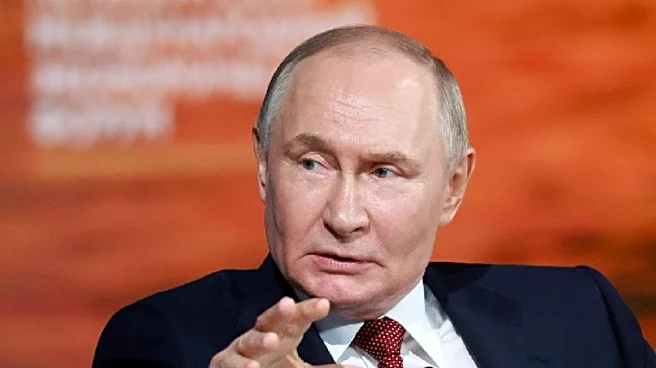
Russian President Vladimir Putin is backing a $26 billion state-supported programme aimed at extending human life through experimental biomedical research, according to a report by The Wall Street Journal. The initiative focuses on frontier technologies such as 3D bioprinting of human tissue and xenotransplantation, including efforts to grow transplantable human organs inside genetically modified pigs. The programme is being positioned as a long-term national priority combining government funding, research institutes and private scientific networks.
If successful, the project would place Russia among a small but growing group of governments and tech figures investing heavily in longevity science, alongside entrepreneurs such as Jeff Bezos, Sam
Altman and Bryan Johnson, who have funded similar research initiatives.
Launched in 2024, the programme reportedly aims to advance gene therapy and regenerative medicine, with internal projections cited in the report suggesting it could eventually contribute to saving up to 175,000 lives, though this figure has not been independently verified.
Early research milestones reportedly include the creation of bioprinted human cartilage tissue and a functioning mouse thyroid gland. However, the long-term goal is far more ambitious, with researchers aiming toward full organ replacement capabilities in humans by the end of the decade.
The initiative is said to be overseen by Putin’s daughter, endocrinologist Maria Vorontsova, and physicist Mikhail Kovalchuk, a senior figure in Russia’s scientific establishment who has long advocated the idea that advances in biology and engineering will make it possible to repair and replace human organs.
“It is difficult to discuss immortality, but the ability to repair man will undoubtedly increase,” Mikhail Kovalchuk has said in remarks to Russian media. Kovalchuk has also faced criticism for controversial statements in the past, including claims suggesting US involvement in the COVID-19 pandemic and broader theories about technology being used to reshape human society.
Putin, 73, has long maintained a public image centred on physical fitness and vitality, frequently appearing in sporting and outdoor activities. During the COVID-19 pandemic, he was also reported to have adopted strict isolation and sanitisation protocols around his personal interactions.
The Wall Street Journal report also notes his interest in cryotherapy and extreme wellness practices, including exposure to sub-zero temperatures in controlled environments. In a separate reported exchange with Chinese President Xi Jinping, Putin was heard discussing the possibility of extending human life through organ replacement.


/images/ppid_59c68470-image-178028253263433528.webp)


/images/ppid_59c68470-image-178023253288468124.webp)


/images/ppid_59c68470-image-178003503744121365.webp)

/images/ppid_59c68470-image-178024002907416086.webp)