



Terrorist attacks on 9/11 and 26/11 seem to have happened during the same month of the year. They did not. Actually, 9/11 is written out of American habit, which mentions the month before the date. So, it was September 11 (in the year 2001). And 26/11 follows the Indian habit of writing the date before the month. It was the 26th of November (2008).
National habits take decades, or even centuries, to form. Perhaps that explains why they are so adamant. We are in the habit of measuring temperature inside the human body in degrees Fahrenheit. We know that 98.4 degrees Fahrenheit is normal human body temperature. Many of us also know that the maximum body temperature that man can survive is 109.4 degrees F. But we may not know that its equivalent
in centigrade is 43.
When it comes to temperature outside the human body, we know that 40 degrees Celsius is when it begins to feel hot. But we might not know that, in Fahrenheit, it is 104 degrees. We understand instantly that the heatwave in Delhi has reached the level of 45 degrees Celsius. But most of us would not know its equivalent in Fahrenheit.
Some of these habits persist well beyond the change of norm across the world. For example, it is more logical to measure geographical distances in kilometres. Far more scientific, too, because it takes only an instant to change from centimetres to metres or kilometres. That ease is not available while converting inches into yards, or miles. In India, we adopted the metric system fast. So, we will think of the distance between Delhi and Lucknow as roughly 500 kilometres. Americans or Britishers still think of distance in terms of miles, and weight in terms of pounds, and volume in gallons. The Indian mind might not be able to immediately calculate the number of litres that will make five gallons.
This is not to say that the whole of India adopted the entire metric system for every measure. Many Indians still think of their height in feet and inches, not centimetres. The tailor in India is still accustomed to measuring the length, or the waist, of the kurta in inches.
Habit, once formed, seems to have an addictive effect. Americans began to break the habit of tobacco faster than Indians. More than half a century ago, when this correspondent was studying in Delhi College of Engineering, the ‘paanwaala’ outside the main gate sold cigarette packets which had a caption, “Statutory Warning: Cigarette smoking is injurious to health”. There was one brand that resisted even this warning. It printed on the box, “Legal Warning: Cigarette smoking is injurious to health”. This was radically milder than what the American manufacturers of cigarettes were then compelled to write: “The Surgeon General has determined that tobacco consumption is injurious to health”. Meaning in America, while it was a clear and present medical danger, India was dragging its feet by going to the extent of calling it “Legal Warning”. What we see in India now, the scary picture and the lethal caption “Tobacco Kills” on the cigarette packet, could be achieved after overcoming tremendous pressure from the cash-rich Tobacco Lobby, over a long period of time. This correspondent remembers interviewing a Health Minister in 1997, who did not have an explanation for the fact that while cigarette packets carried the health warning, bundles of ‘beedi’ did not carry it.
Very often, we become victims of habits that were calculatedly imposed upon us by our enemies. For instance, the use of the word “militant” instead of “terrorist” in Kashmir.
This reporter was the first journalist in the world to announce that terrorism would erupt in the Kashmir Valley. That was in July 1989. Terrorism did erupt in Kashmir five months later, with the kidnapping of the then Union Home Minister’s daughter. But, even this reporter did not realise that he was making the mistake of referring to the terrorist as “militant”. The term “militant” was coined by Pakistan, and gained so much currency in the valley that unsuspecting journalists picked up the term without realising that “militant” means much less than “terrorist”.
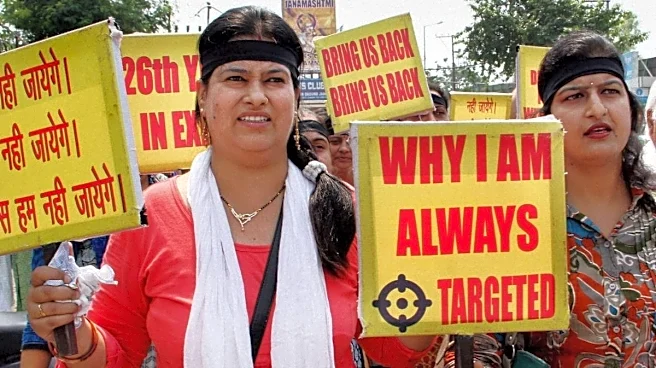
This journalist took many years to discover his mistake of calling the 1990 exodus of Kashmiri Pandits from the valley, “migration”. This mistake was pointed out more than three decades later, to this journalist, who had now become a professor of a university, by one of his students, Sukanya Bhan. She did a story that Kashmiri Pandits did not “migrate” voluntarily, but they were driven out by force. This journalist did a story and publicly apologised for having used the term “migration” without realising how badly it had hurt the victims. Naturally, most of the journalists who picked up this term “migration” did it because it was the going habit of the time, without realising that this habit was injected, very cleverly, by the enemy across the border.
Manoj Raghuvanshi has been practising journalism for over 48 years. He is also a professor of journalism. Views expressed in the above piece are personal and solely those of the writer. They do not necessarily reflect News18’s views.

/images/ppid_59c68470-image-178904752605986808.webp)





/images/ppid_59c68470-image-178910755779027415.webp)


