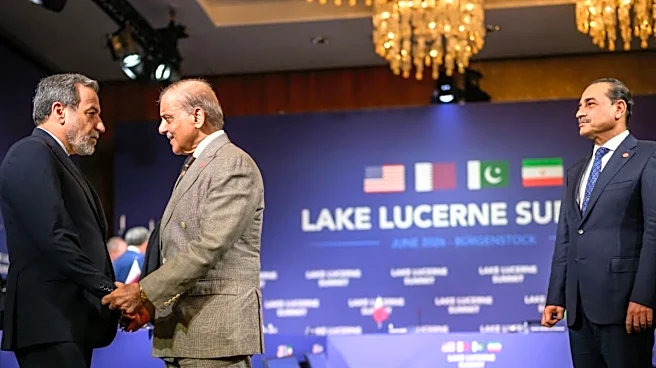






Mediators have sent Iran a proposal aimed at ending the war in West Asia, offering a 10-day ceasefire to create space for talks on reviving an interim deal with the US that was reached last month, a senior Iranian official told Reuters on Monday.
The move comes as diplomatic efforts intensify amid the escalating conflict between Tehran and Washington, with renewed fighting entering its second week after an understanding was reached between the two sides last month.
The Wall Street Journal also reported that Qatar and Pakistan, the primary mediators, are working to push Washington and Tehran towards a new ceasefire.
Mediators are concerned that the US and Iran could settle into a pattern of keeping the fighting below the level of an all-out war
while continuing to disrupt regional economies for an extended period.
One of the major concerns is the impact on global shipping. Traffic through the Strait of Hormuz has fallen sharply, with only around 10 ships now passing through the key waterway each day. Qatar has proposed a 10-day ceasefire along with an end to restrictions on shipping through the strait to help ease tensions, WSJ reported.
Iran Warns Of ‘Full-Scale War’
The diplomatic efforts come after Iranian President Masoud Pezeshkian said earlier that his country was fighting a “full-scale war” with the US as Washington expanded its strikes across Iran.
“The reality is that today the Islamic Republic of Iran is engaged in a full-scale war,” Pezeshkian said, according to a statement from the presidency.
Pezeshkian’s statement came after Yemen’s Houthi rebels threatened to broaden the war even further by announcing they would blockade Saudi ports. Such a move could affect Riyadh’s ability to use alternative routes to export some oil outside the Strait of Hormuz.
Pezeshkian’s statement came after Yemen’s Houthi rebels threatened to widen the conflict by announcing plans to blockade Saudi ports, raising concerns over global energy supplies and trade routes beyond the Gulf region.
In a statement, the Houthis’ armed forces said they were declaring “a maritime embargo against the criminal Saudi enemy, based on the equation of ‘an eye for an eye’, effective immediately”, in response to what they described as “an unjust and oppressive siege” imposed on Yemen by Saudi Arabia.
Iran had been pressing the Houthis to close the Bab el-Mandeb Strait, a key gateway to the Red Sea, if the United States continued attacks on Iranian infrastructure.
A complete closure of the Bab el-Mandeb Strait could cut global oil supplies by around 7 per cent, as it would prevent much of Saudi Arabia’s oil exports from leaving the region. The disruption would add to the major reduction in oil flows caused by the ongoing Gulf conflict, which has already cut shipments by around 10 per cent of global supply.
(With inputs from agencies)

/images/ppid_59c68470-image-178459006063044345.webp)

/images/ppid_59c68470-image-178455756566236248.webp)
/images/ppid_59c68470-image-178455004043071376.webp)



/images/ppid_59c68470-image-178454752836240070.webp)